Get Full Government Meeting Transcripts, Videos, & Alerts Forever!
Get email alerts on the Immigration Policy topic
No spam. Unsubscribe anytime.
Michigan House passes package curbing local ‘sanctuary’ policies, with penalties tied to state funding
Summary
The Michigan House voted to prohibit local governments from enacting sanctuary policies and to allow the state to withhold certain funds from jurisdictions that adopt such policies; related bills passed on party-line votes and were given immediate effect.
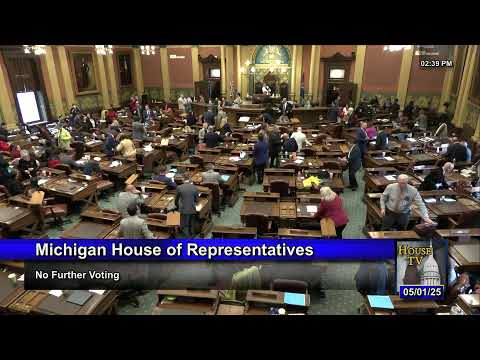
The Michigan House of Representatives passed a package of bills aimed at prohibiting local ‘‘sanctuary’’ policies and enabling the state to withhold specified funds from jurisdictions that adopt such policies.
House Bill 4338, introduced by Rep. Cabot, and companion measures including House Bill 4339 and House Bill 4342 were debated on the floor and passed by roll call votes. The clerk announced final tallies: HB 4338 passed 58-48, HB 4339 passed 58-48, and HB 4342 passed 57-49. Majority Floor Leader Matthew Posthumus moved and secured immediate effect for the measures.
Why it matters: supporters said the bills restore cooperation with federal immigration authorities and protect public safety; opponents warned they would divert local law enforcement resources and chill crime reporting by immigrant communities.
Supporters emphasized enforcement and accountability. Rep. Shriver, speaking to the package, described sanctuary jurisdictions as ‘‘eroding the foundation of our nation’’ and urged colleagues to oppose sanctuary policies. Rep. Cavett said the bills ‘‘put public safety and the rule of law first’’ and argued they ‘‘ensure law enforcement can do its job without interference.’’ Rep. DeSena summarized the package as ‘‘common sense’’ measures that ‘‘put the rule of law, the safety of our citizens, and the sovereignty of our state first.’’
Opponents said the bills would make communities less safe by discouraging cooperation between immigrant residents and local law enforcement. Rep. Miller said the measures ‘‘tie the hands of law enforcement’’ and would ‘‘discourage crime reporting from immigrant communities, putting others at risk.’’
Votes and next steps: The bills were taken up on third reading, passed by recorded roll-call votes, and the majority moved for and obtained immediate effect. The clerk recorded the tallies listed above. The bills will proceed to whatever enrollment and transmittal steps the House follows for enacted legislation; the transcript records the vote counts and the immediate-effect motions but does not specify subsequent Senate or gubernatorial action.
Context: House sponsors framed the measures as ensuring taxpayer dollars are not used to ‘‘subsidize lawlessness’’; opponents raised constitutional and public-safety concerns. The debate took place on the House floor during the order of third reading of bills.