Get Full Government Meeting Transcripts, Videos, & Alerts Forever!
Get email alerts on the Public Health topic
No spam. Unsubscribe anytime.
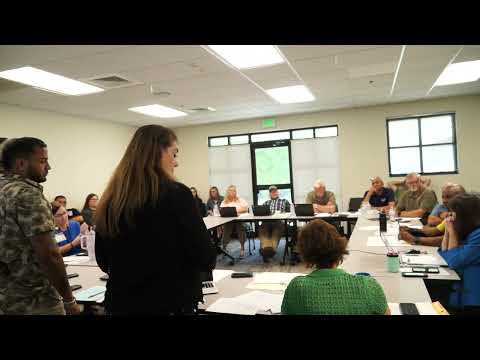
Scotland County approves travel for three to attend opioid conference after debate over Narcan machines and funding
Summary
Scotland County commissioners voted to fund travel for three attendees — including Judge Wilson and a Department of Social Services attorney — to a national opioid conference after discussing Narcan dispensing machines, the county's opioid funds and local overdose data.
Scotland County commissioners voted to approve travel funding for three people to attend a national opioid conference, following a debate about the value of the conference, how opioid funds are spent and concerns about unattended Narcan dispensing machines.
The motion approved coverage for three attendees: Judge Wilson, a Department of Social Services attorney identified in the meeting as Brandy Bullock, and a county "chief" whose full name was not specified in the transcript. The motion passed on a voice vote after discussion; the meeting record does not list a mover or seconder by name and did not record roll-call vote counts.
A participant raised concerns about unattended Narcan dispensing machines, saying that in some counties people take the naloxone and then sell it. That participant suggested instead directing people to fire stations, where naloxone can be requested. Meeting speakers also discussed the structure of the conference, noting it contains break-out tracks and working groups focused on practice changes that could be implemented locally.
Judge Wilson said his attendance was paid through an Administrative Office of the Courts (AOC) scholarship and that those scholarship funds were not coming from the county travel allocation. County staff identified Brandy Bullock as the Department of Social Services (DSS) attorney; meeting participants said DSS would refer eligible people to the county program and that there is a separate DSS attorney track at the conference.
Officials noted the county has $20,000 allocated from opioid-related funding and discussed stretching those dollars because the grant funds will eventually run out. One participant emphasized the need for data-driven follow-up, saying the county is the state leader for emergency department visits for opioid overdoses and that any conference attendance should tie to measurable outcomes. Several speakers said the conference team would return with statistics and a summary of outcomes after the event.
During the discussion, a participant described a recent local meeting in which a participant had to disclose personal nonprescription naloxone use as part of a presentation; speakers said some conference sessions gather first-person testimony and that some presenters might need a different forum for sensitive material.
After discussion, a motion to approve travel for three designated attendees carried on a voice vote. Meeting participants said staff would work out travel details and invoices through the usual county processes and would return to report conference findings and data to the commissioners.
Votes at a glance: Motion to approve travel and attendance for three county representatives to a national opioid conference — approved by voice vote; mover/second not recorded in transcript; vote counts not recorded.
Ending: Commissioners directed staff to follow existing county travel and procurement procedures for arranging attendance and to provide a data-driven report to the board after the conference.