Get Full Government Meeting Transcripts, Videos, & Alerts Forever!
Get email alerts on the Medicaid Waiver Health Care topic
No spam. Unsubscribe anytime.
Lobbyists warn CMS waiver uncertainty could threaten Maryland hospital funding; assisted-living inspection bill falls short
Summary
County consultants told the General Assembly Committee that potential federal changes to Medicaid waivers and the AHEAD model pose fiscal risk to Maryland and Prince George's County; a proposed assisted-living inspection bill for the county did not pass, while nursing-home inspection reporting passed at the state level.
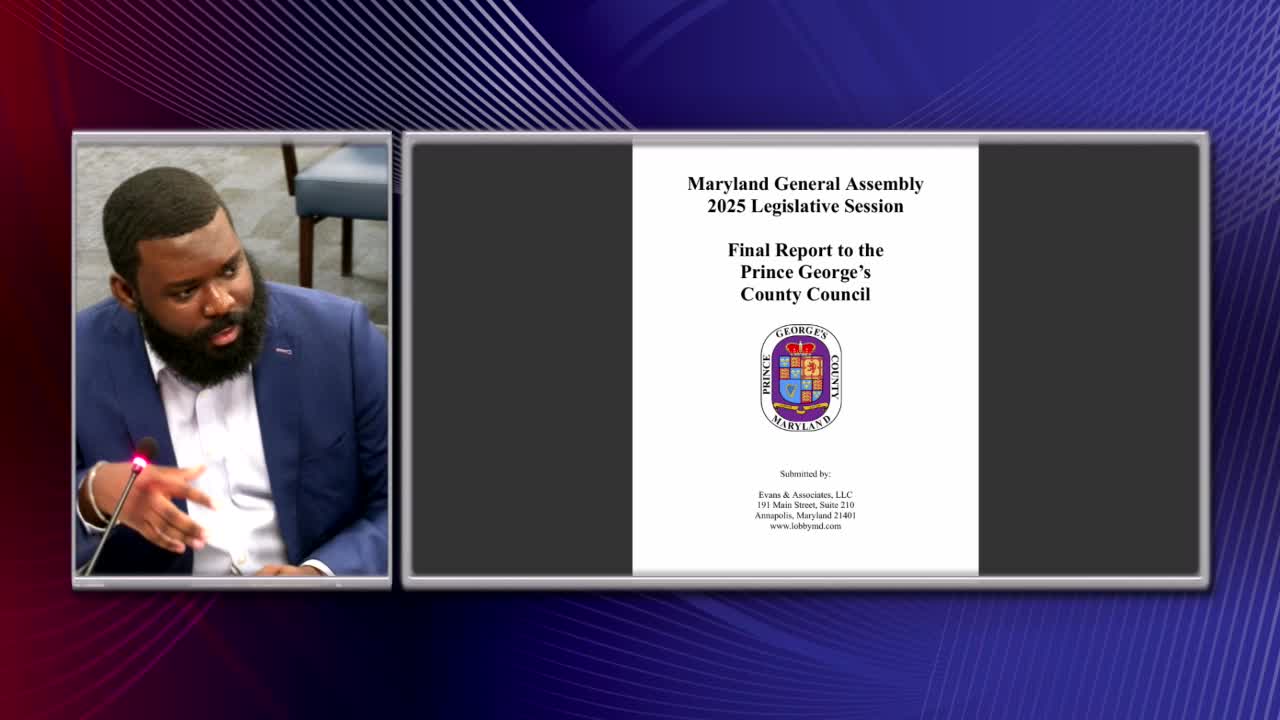
County health-policy consultants and lobbyists briefed the General Assembly Committee on health-care bills and the potential budgetary impact of federal waiver changes.
Ron Young of Evans and Associates said Maryland’s current CMS waiver structure, which supports global hospital budgeting and other programs, is unique and “could be at risk” if federal policy changes. Young said the Trump administration had signaled plans to end Maryland’s waiver and that such a move could force hospitals to return to fee-for-service reimbursements, with consequences for smaller hospitals and county health systems.
Young and other presenters described the proposed AHEAD model and the Total Cost of Care waiver framework; they said the future of these programs is uncertain and that any federal cuts could trigger significant state and local fiscal consequences. He said discussions about a special session, and possible state-level responses, were likely should federal policy reduce waiver funding.
On state legislation affecting long-term care oversight, Ron Young and other presenters reported that a high-profile Prince George’s County bill to increase assisted-living program inspections (a local priority) did not pass this session. Presenters pointed to recent state action requiring more frequent nursing-home inspection reporting: Senate Bill 376, which passed and takes effect in July, requires semiannual reporting to counties and quarterly reporting to the General Assembly on nursing-home inspection activity and to disaggregate inspection data by county.
Committee members discussed where assisted-living oversight could be strengthened and asked presenters to identify possible vehicles for advancing inspection proposals in the interim. Presenters recommended tracking the Department of Health’s forthcoming reports and using the new nursing-home reporting structure, SB376, as a potential source of data to support further legislation.