Get Full Government Meeting Transcripts, Videos, & Alerts Forever!
Get email alerts on the Human Services topic
No spam. Unsubscribe anytime.
Senate committee advances human services omnibus after debate over nursing-home transparency, program cuts and workforce items
Summary
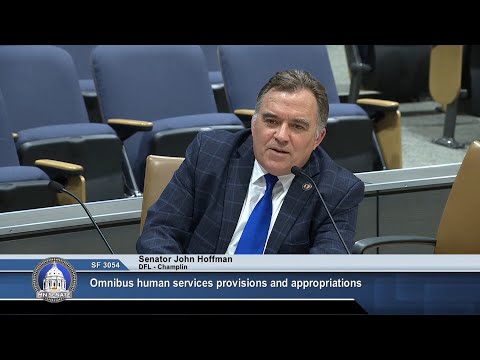
The Senate Finance Committee on April 25 recommended passage of the human services omnibus (Senate File 3054) after adopting multiple technical and policy amendments, including a transparency requirement for nursing-home transfers to for‑profit ownership and several program cancellations requested to meet target reductions.
The Senate Finance Committee on April 25 recommended passage of the human services omnibus (Senate File 3054) after a full evening of debate and multiple amendments addressing long-term care ownership transparency, disability waiver cost-control measures, workforce supports and several targeted grants.
Why it matters: The bill makes multiple changes to Medicaid and human services programs, reallocates and cancels several grants, adjusts long-term care payment policies, and advances several workforce and licensing initiatives. Provisions include measures to increase transparency around nursing home transfers to for‑profit ownership, pilot and grant funding for aging and disability supports, and administrative funding for grant oversight.
Most important facts
- Transparency for nursing home transfers: The committee included language based on Senate File 2972 requiring notice to the commissioners of health and human services at least 120 days before the transfer of ownership or control of a nonprofit nursing home or nonprofit assisted-living facility to a for‑profit entity. Supporters described the provision as a transparency measure; critics warned the language may deter buyers in rural areas where facilities are financially fragile.
- Amendments and key votes: The committee adopted multiple amendments including A43 (technical), A45 (technical/effective date fixes), A44 (a package of policy changes, including the nursing home transfer notification language) and A47 (appropriation conforming changes). A roll-call vote was taken on A44; the clerk recorded 6 ayes and 5 nays and the amendment passed on the recorded tally.
- Program cancellations and transfers: The package cancels several previously appropriated grants and transfers, including cancellation of safe recovery site appropriations from an opioid fund and a transfer of $1 million from an opioid-related fund to the general fund. The bill also cancels a human services contingency account established in 2024 and repurposes certain funding lines.
- Workforce and training measures: The bill includes funding and language for pilot programs and workforce initiatives, including a provisional EIDBI (Early Intensive Developmental and Behavioral Intervention) provider license with administrative funding, support for critical-access nursing facilities, funding tied to nursing facility workforce standards board rules, and a pilot for single administrative structure and delivery of nonemergency medical transportation (NEMT).
- Fiscal and process concerns: Committee members repeatedly raised concerns about missing fiscal notes and implementation details. Multiple requests for fiscal estimates were discussed; authors and staff said several late amendments required updated fiscal notes that were not yet available. Committee members and staff also discussed information‑technology updates needed for other legislation (for example, paid family and medical leave) and the department’s capacity to produce rapid fiscal analysis.
Discussion highlights and concerns
Committee debate centered on how best to balance transparency and preserving capacity in rural long‑term care markets. Senators from Greater Minnesota emphasized that limiting buyers could lead to closures and loss of local beds. Supporters of transparency cited cases of reduced quality under private-equity ownership and argued the public interest requires notice and oversight when publicly funded systems are affected by ownership changes.
Other substantive issues raised included: - Whether disability waiver rate changes and limits on rate exceptions are appropriate cost-control tools versus reducing access to services. - Whether cancellations of targeted grant programs (peer specialist grants, safer recovery site grants and other line items) were acceptable trade-offs to meet budget targets. - Need for more administrative funding for grant administration and for the Department of Human Services to deliver timely fiscal notes.
Votes and outcome
- A44 (policy package including nursing home transfer transparency) passed on a roll call: 6 ayes, 5 nays. (Recorded roll-call minutes were read into the record.) - The committee adopted the full omnibus as amended and instructed staff to make technical and conforming changes; the final motion to recommend passage carried by voice vote.
Ending
Committee members agreed to continue conversations on outstanding implementation issues, including nursing home capacity in rural areas and the department’s ability to produce precise fiscal estimates for late amendments. The bill moves forward for further Senate consideration; members flagged items for continued work in conference committee.
Selected quotes
- "We just want you to be transparent. I don't think there's anything wrong with that," Sen. Lindsey Mohammed said in support of the nursing home transparency language. - "If there's something missing there, bring it to me," Sen. Hoffman said in response to concerns about the transparency and oversight measures.
(See 'Actions' and provenance sections for amendment outcomes and transcript evidence.)