Get Full Government Meeting Transcripts, Videos, & Alerts Forever!
Get email alerts on the City Finance Forecast topic
No spam. Unsubscribe anytime.
City economist: ongoing deficit narrowed to $19.7 million but risks remain
Summary
City economist Peter Holzman told the Finance Committee the five‑year ongoing gap in the General Fund is about $19.7 million, improved from prior forecasts, but warned of near‑term revenue uncertainty tied to trade policy and that fiscal year 2026–27 remains the "pinch" year for expenses and PERS increases.
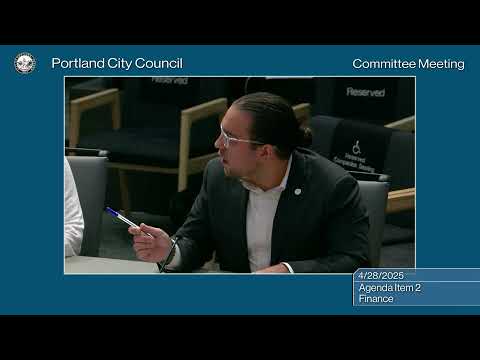
Portland’s projected ongoing General Fund gap narrowed to about $19.7 million in the city’s latest fund‑forecast update, but city officials told the Finance Committee on Thursday that near‑term economic and accounting uncertainties could change that outlook.
For the record, Peter Holzman, the city economist, told the committee the $19.7 million figure reflects only ongoing appropriations carried forward, not expiring one‑time programs or any new proposals the council might adopt: “this piece of that 90,000,000 is what council has adopted as ongoing.”
Holzman and council members said the forecast improved from a roughly $27 million total deficit in December and about $21 million in February to the current ongoing gap of $19.7 million. Holzman said the single largest accounting change affecting the revision was a decision to apply some Build Portland bond reserves to early years of debt service, which “reduces that expense by about $200,000 per year.”
Holzman cautioned that outside developments could yet widen the gap: recent tariff announcements and shifts in international trade policy have produced elevated uncertainty across the private sector and public revenues. "It's really hard to project how our revenues are going to respond," he said, noting large firms have pulled earnings guidance and that tail risks—while unlikely—have grown more severe.
Committee members pressed staff on timing and specific exposure. Holzman said the forecast assumes the North Macadam tax‑increment financing (TIF) returns in fiscal 2026–27; if that TIF revenue is not available in the forecast’s pinch year the city would need deeper cuts. He identified fiscal 2026–27 (FY27 in the transcript) as the forecast’s key pinch year when the next PERS cost increase is expected.
Council members also discussed reserve and contingency strategy. Holzman recommended the council leave policy flexibility and contingency in place for the next six months so the city can respond to evolving conditions. He described Portland’s General Fund reserve policy as lower than some bond‑rating and government finance guidance but said the city benefits from a relatively resilient revenue mix; business‑license taxes, he noted, are the most exposed. He provided a numeric sense of that exposure: business‑license taxes total about $205 million of roughly $750 million in General Fund revenue—“I think it's, like, 30 to 40%,” he said.
On a related topic, the forecast showed no change in the five‑year total for the Portland Clean Energy surcharge fund, though Holzman said annual cash‑accounting differences affect year‑to‑year balances. Councilor Green asked why that fund uses cash accounting; Holzman said the accounting choice dated to when proponents and the revenue division set up the program and that the choice affects year‑to‑year volatility in reported receipts.
The committee did not take formal action during the presentation. Members asked staff to return with more detailed reserve and contingency proposals during upcoming budget deliberations and to track how external trade policy developments affect revenue collections in coming months.
What’s next: Holzman and budget staff will continue to monitor revenue collections and report updates as the mayor’s budget is prepared and as new data about the national and international economy emerges.