Get Full Government Meeting Transcripts, Videos, & Alerts Forever!
Get email alerts on the Complete Streets topic
No spam. Unsubscribe anytime.
Lakewood planning commission, council discuss Complete Streets ordinances and public process amid Bunce Road concerns
Summary
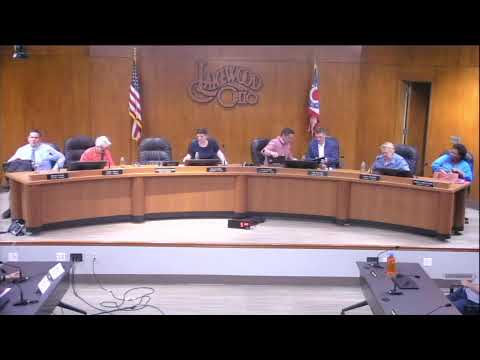
A joint session of the City Council Committee of the Whole and the Planning Commission on April 28 reviewed draft Complete Streets ordinances, debated emergency-effect language, tiering and public-review procedures, and heard public comment — including concerns from Bunce Road residents.
Lakewood — At a joint meeting April 28, the City of Lakewood’s Planning Commission and Council members reviewed two draft ordinances to codify Complete Streets principles and to create a citizen advisory board, and they received several hours of public comment focused largely on Bunce Road and on whether the ordinances should use emergency-effective language.
Council President Kyle Keppel and Vice President Baker explained that the ordinances are intended to fold the Active Transportation Plan’s safety and multimodal design principles into the city’s infrastructure process, to create a clearer pathway for public engagement and to require reporting on progress. Keppel said the proposal tiers projects: Tier 1 would cover corridors identified in the Active Transportation Plan and receive a two-stage design review with Planning Commission input; Tier 2 would apply a lighter touch so routine resurfacing and smaller projects still “consider” complete-streets elements.
Multiple residents from Bunce Road and other neighborhoods urged the council to pause or slow the legislation, complaining that emergency-effect language would short-circuit public comment and that the city should do more outreach before adopting a permanent advisory board. Jeff Dujic, who identified himself as a Bunce Road resident, asked the council to “give this some time. Let's listen to all viewpoints.” Kim McDonald, another Bunce Road resident, said she was “comfortable with our street as it is” and urged caution about designs that would mix pedestrians and cyclists on multimodal paths.
Council members and planning commissioners discussed several recurring technical and process issues raised by residents and staff: the definition of “transportation project” and whether county, ODOT or RTA-led projects should be included; how Community Development Block Grant (CDBG) timelines constrain design review for small resurfacing projects; whether trees, stormwater and sustainability goals should be explicit; and how often the Active Transportation Plan should be updated (the draft currently says “at least every 10 years” and commissioners and councilmembers suggested five years or a rolling five-year outlook).
Director Mark Gordon (Public Works) explained that CDBG-funded resurfacing decisions follow a tight calendar: entitlement of funds often arrives late in the budget cycle, designs must be produced quickly and projects are often required to be completed in the same calendar year. He said that urgency is why the draft set CDBG-funded resurfacing as Tier 2, where staff can apply complete-streets elements without the longer two-stage process reserved for Tier 1.
Planning Commission Chair Jer McDermott and several commissioners pressed for clarity on what the Planning Commission’s formal role would be in the two-stage review. Law Director Argo advised that Ohio case law and the city charter limit a council’s ability to compel the administration to refer certain street-design decisions to a commission; the law director recommended voluntary coordination and clarified that mandatory referrals are narrow under the charter and appellate precedent. Commissioners responded that the proposed process could be implemented voluntarily by the administration and urged clearer definitions for stage submissions so the public can see both the early conceptual ideas and the later near-final plans before construction.
Council members said they would continue revising the draft and that the joint meeting would be followed by additional working sessions. No ordinances were adopted at the meeting; the session concluded after planning commissioners and council members agreed to reconvene for further edits and public-input work.
A procedural motion to approve March 24 minutes had been handled earlier in the session by voice vote.