Get Full Government Meeting Transcripts, Videos, & Alerts Forever!
Get email alerts on the Legal Services topic
No spam. Unsubscribe anytime.
Legal Aid Society of Cleveland briefs Lakewood council on services, eligibility and tenant outreach
Summary
Representatives from the Legal Aid Society of Cleveland outlined civil legal services they provide to low-income residents, described how to apply, and answered council questions about funding and local outreach. Council members pressed for a breakdown of cases handled in Lakewood and discussed past city-funded tenant representation.
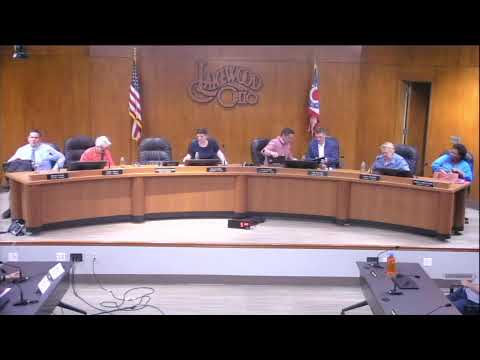
Lakewood — Representatives from the Legal Aid Society of Cleveland told the City Council’s Committee of the Whole on April 28 that the nonprofit provides civil legal services across northeast Ohio and described how Lakewood residents can access advice, brief clinics and full representation.
Kimberly Barnat Mills, managing attorney for community engagement at the Legal Aid Society of Cleveland, opened the presentation by reciting the organization’s mission: “Our mission is to secure justice, equity, and access to opportunity for and with,” she said, emphasizing the phrase “for and with” to describe the organization’s partnership model with clients.
The presentation explained that Legal Aid handles civil—not criminal—matters and provides a spectrum of help ranging from information and brief advice to assisted pro se work and extended litigation. Staff described practice areas that include housing (eviction defense, repairs, discrimination), family law (protective orders, custody when domestic violence is involved), public benefits appeals, bankruptcy and consumer work, health and Medicaid appeals, immigration-related civil matters and group representation for neighborhood associations and tenant organizations.
Mike Russell, senior attorney in the community engagement practice and a Ward 3 Lakewood resident, and Matt Vinsell, manager of Legal Aid’s housing practice group, described how recently allocated local COVID-relief funding allowed the nonprofit to increase its presence in Lakewood municipal court. Vinsell said that expanded presence has helped the organization spot landlords who frequently file evictions and to intervene earlier to arrange rent deposits, referrals to rental assistance, or negotiations that avoid eviction judgments. He said Legal Aid has used the funding mostly on eviction representation and related housing-condition work.
Council members pressed Legal Aid on how local funds have been spent and requested more granular case data. Alderman Trevid asked for a breakdown of the 95 unique legal cases Legal Aid reported in Lakewood over the past year; Legal Aid agreed to provide those numbers. Councilwoman Hamilton Steiner probed asset rules used in intake and was told Legal Aid typically excludes a home or work vehicles from the $15,000 asset limit and applies a 200 percent of federal poverty guideline threshold for eligibility; staff said some federal and other funders impose the 200% limit.
Legal Aid described intake and how residents can apply. Key details provided by staff: - Phone intake: (888) 817-3777 (the most popular route); staff aim to return calls within two to three business days. - Online intake is available in English and Spanish and offices are open to the public in Cleveland (West Sixth Street) and in Elyria and Jefferson on specific weekdays. - Brief advice clinics are available weekly across the service area and offer 10–20 minute consultations that frequently resolve straightforward questions or point residents to next steps. - Eligibility: most clients work but fall at or under 200% of the federal poverty level; an asset limit of $15,000 was cited (excluding the primary home and vehicles used for transportation).
Council members thanked Legal Aid for local outreach plans. Legal Aid staff said they have scheduled a series of “Know Your Rights” presentations in Lakewood (Madison and Main branches of the Lakewood Public Library) this summer focused on tenant rights, community economic development and consumer issues. Council Vice President Baker and others raised sustainability questions about federal funding: Legal Services Corporation (LSC) is a major funder, and Legal Aid staff said their development team has diversified revenue and that federal funding comprised roughly 15–20% of their budget at the time of the meeting, with continued appropriations expected through September under current congressional action.
Council members and Legal Aid staff discussed next steps including: Legal Aid providing requested case breakdowns to council; continuing to coordinate with the city on landlord training and tenant education; and sharing printed materials and clinic calendars with city clerks for distribution.
A separate, procedural motion at the meeting’s start approved the March 24 Committee of the Whole minutes by voice vote; the motion passed after an oral “aye.”