Get Full Government Meeting Transcripts, Videos, & Alerts Forever!
Get email alerts on the Housing topic
No spam. Unsubscribe anytime.
City staff review RV‑park rules, enforcement gaps and options to limit long‑term stays
Summary
City engineer Thomas Arnaud summarized Chapter 25 RV‑park requirements, identified enforcement challenges around skirting and long‑term occupancy, and staff said park supervisors should enforce standards while the city considers code clarifications and possible limits on continuous stays.
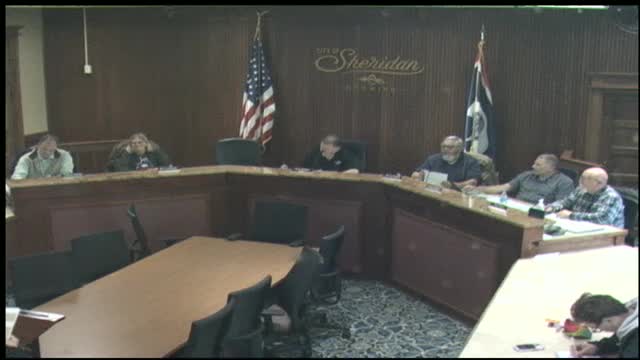
City Engineer Thomas Arnaud told the City Council during the April 20 study session that Chapter 25 of the municipal code sets standards for recreational vehicle (RV) parks in Sheridan, including placement, occupancy, sanitation, a required park supervisor and required accessory structures, but staff are encountering enforcement challenges as some parks shift toward more permanent occupancy.
Arnaud said the city adopted a dedicated RV park permit process in 2023 to centralize reviews and ensure compliance across building, planning, utilities and fire departments. He said permits require a complete plan showing required buildings and improvements and that a certificate of occupancy will not be issued until the RV park is constructed as approved.
Enforcement issues and examples
Arnaud and councilors discussed photos staff shared showing skirting, fencing, lawn furniture, fire pits and oversized propane tanks at some parks. Arnaud said those additions make it harder to show that units are “readily removable,” a requirement in Chapter 25 intended to keep RV parks temporary in character.
Arnaud said some existing parks are grandfathered; if they seek changes they must bring the property into current compliance. He described cases in which the city is withholding phase‑2 approvals for a development called Grand Central Station until phase‑1 landscaping and code items are corrected.
Council response and options
Councilors and staff discussed several options: better enforcement by code compliance, putting more responsibility on park supervisors and owners to keep park registers and enforce stay limits, adding a 30‑day limit for remaining in a single RV space before moving to a different space, and requiring park managers to address skirting and combustible materials. Councilman Brands and others urged routine compliance checks in gateway and entryway corridors because those properties are highly visible.
Staff noted operational constraints: most enforcement is complaint driven, and the city lacks an explicit, quantitative definition of “readily removable,” which complicates routine inspections. Mr. O'Kringer (staff) suggested a mayor‑driven committee to recommend ordinance changes because staff changes to operations alone will not fix code gaps.
Safety concerns
Fire risk was raised by councilors and staff. A staff member warned that 100‑pound or larger propane tanks on site pose removal and safety risks in a fire and that the fire department cannot move large tanks by hand.
No formal action recorded
The discussion closed without a council motion. Staff said they would continue to enforce Chapter 25 where possible, focus on park manager responsibility for on‑site compliance, and use permit conditions for new phases to require corrections to prior work.
Provenance
The topic was introduced when Arnaud opened with definitions from Chapter 25 and concluded with discussion of enforcement tools and the suggestion of a mayor‑driven committee.