Get Full Government Meeting Transcripts, Videos, & Alerts Forever!
Get email alerts on the Transportation topic
No spam. Unsubscribe anytime.
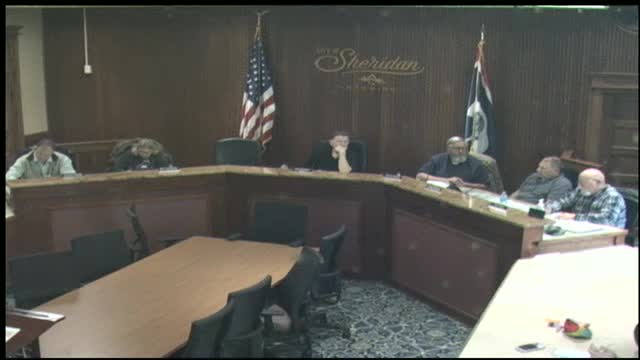
Sheridan officials discuss e-bike classifications, enforcement and pathway rules
Summary
Police Chief Travis Kotisko briefed the City Council on state definitions of electric bicycles and the enforcement challenges for higher‑powered models, and councilors urged public education and local pathway rules.
Police Chief Travis Kotisko told the City of Sheridan City Council at a study session April 20 that state statute defines an “electric bicycle” by motor power under 750 watts, leaving higher‑powered electric bicycles undefined and potentially subject to motorcycle rules.
Kotisko said the state definition matters because many statutes treat bicycles and electric bicycles the same when they fall under the 750‑watt threshold. “Google search ebike on your phone right now and you will find them 2,500 watts,” Kotisko said, noting that higher‑powered models are common and not covered by the e‑bike definition in statute.
The distinction affects where e‑bikes can be used and what equipment or licensing is required, Kotisko told councilors. He cited a sidewalk rule in statute that says “no person shall drive any motor vehicle … other than by human power on a sidewalk,” and explained that an actively pedaled bicycle is allowed on sidewalks while use with motor assist can change the legal classification.
Why it matters
The classification determines local enforcement, whether a vehicle must be registered or insured, and where it can be ridden (sidewalks, pathways or roadways). Kotisko warned that many buyers may not realize the motor size of bikes purchased online or at retail stores, which could put riders outside the state e‑bike definition.
Details from the presentation
- Kotisko summarized statutory language used by staff: the “electric bicycle” definition that Kotisko read includes a bicycle or tricycle with a rider saddle, operable pedals and an electric motor of less than 750 watts. He said that statues cited in the presentation treat bicycles and e‑bikes under 750 watts as having the same rights and duties as bicycle riders when operating on roadways.
- Kotisko noted three classes of e‑bikes by how the motor assists pedaling; class 3 e‑bikes assist up to 28 mph. He said manufacturers normally label a bike’s class on the frame and that modifying a bike’s motor output without re‑labeling raises compliance issues.
- Kotisko said the statute contains a clause allowing local jurisdictions to regulate the use of any class of electric bicycle on trails, including non‑motorized trails, giving the City authority to regulate use on local pathways.
Council reaction and next steps
Councilors generally supported a public education approach. One councilor said, “Public education is probably really important on this because, right now we don't have any restrictions on it.” Kotisko agreed that the city should start with education and noted staff would include related material in the upcoming budget discussion.
No formal action recorded
Council discussion ended without a recorded motion or vote. Kotisko and councilors identified public education, targeted signage at blind spots on local pathways, and the option for the council to restrict e‑bike classes on specific trails as next steps for the city to consider.
Provenance
The topic was introduced in Chief Kotisko’s remarks on state definitions and classifications (transcript excerpt: “Electric bicycle … electric motor less than 750 watts. Google search ebike on your phone right now and you will find them 2,500 watts.”) and concluded with councilors urging education and staff noting budget follow‑up.