Get Full Government Meeting Transcripts, Videos, & Alerts Forever!
Get email alerts on the Education College Access topic
No spam. Unsubscribe anytime.
Say Yes Syracuse reports $932,116 in awards, unveils local college-attainment network
Summary
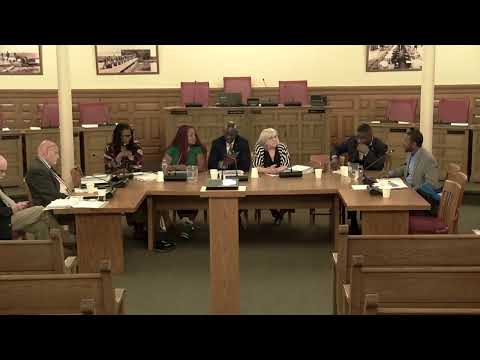
Ahmed, executive director of Say Yes to Education, presented the Say Yes Syracuse annual report card for the 2023–24 school year to the Syracuse City Council, saying the program awarded $932,116 and helped students leverage about $18.3 million in external aid.
Ahmed, executive director of Say Yes to Education, presented the Say Yes Syracuse annual report card for the 2023–24 school year to the Syracuse City Council and community partners, reporting that the program awarded $932,116 in scholarships last year and helped students leverage about $18.3 million in external aid.
The report covers application and enrollment outcomes for the class of 2024. Ahmed said 40% of that class completed the Say Yes application and that roughly 80% of Say Yes applicants enrolled in college in fall 2024. “This report card is for the 2023, 2024 school year,” Ahmed said. He credited the program’s last-dollar model for leveraging federal Pell grants, New York State TAP grants, institutional aid and other grant sources to produce the $18.3 million figure.
Why it matters: Say Yes Syracuse provides scholarship dollars plus navigation and supports that the presenter and council members said are intended to raise college matriculation and persistence rates for Syracuse City graduates. Ahmed said the persistence rate among Say Yes applicants who enrolled was 69% from first year to second year, compared with 36% for the broader student population in the available data.
The presentation described several challenges and planned responses. Ahmed flagged the rollout of the new FAFSA process last year as a complicating factor that likely reduced application completion. He said 94% of students who completed the Say Yes application also completed a FAFSA and 82% completed TAP, noting that a prior automatic TAP link in the FAFSA process was not available last year and likely reduced TAP completion. “They have to complete both to get an award. That’s correct,” Ahmed said when asked about eligibility requirements.
To increase outreach and coordination, Say Yes Syracuse plans to launch the Syracuse College Attainment Network (SCAN), a network Ahmed said currently includes about 13 organizations, five of which have signed an agreement to adhere to shared standards. A website for the network is scheduled to launch June 10. Ahmed described SCAN’s goals as reducing duplicated application burdens, improving student outreach and sharing data among participating organizations.
One concrete proposal is a universal application that would allow students to apply once for multiple local programs (OnPoint, Hillside, Step Program in Area 21 were cited as examples) rather than completing multiple intake forms. Ahmed also proposed an additional $500 annual book voucher for Say Yes students who participate through SCAN member organizations: “What we would like to do is on top of a Say Yes award, they would get an additional $500 book voucher for the year,” he said.
Council members and other officials asked about program details and outreach. Councilman Joe asked whether outreach could start in eighth grade; Ahmed said the program has discussed earlier engagement and that a more relational experience with the award (not only the dollars) is a program objective. Ahmed said Say Yes’s practice is to receive student data from the Syracuse City School District biannually but that students must complete a certification/application so Say Yes can contact colleges on their behalf (FERPA protections require student permission). He also said Say Yes will continue to request and record college graduation data from institutions going forward so the program can track students beyond four years.
Other details noted in the briefing: the network will pursue shared data practices and annual meetings; Say Yes has national student clearinghouse data available for matriculation and persistence reporting and attempted a survey in December that did not meet response goals; and the scholarship remains restricted to Syracuse City residents who meet the program’s continuity and graduation requirements.
Ahmed acknowledged enrollment and disbursement dips during the COVID period, saying Say Yes awarded about $883,000 during COVID years and has been returning toward pre‑COVID levels (pre‑COVID awards were “a little over a million dollars a year”). He said the program is monitoring broader funding uncertainties (for example, changes to federal Pell funding) and will reassess policy if funding conditions change.
The presentation did not include a vote or formal action by the council; it was a briefing with questions and discussion. Ahmed said the graduates from this year will remain eligible through 2026 if they do not immediately enroll, reflecting the program’s stated one-year enrollment window for newly graduating students.
The meeting included requests from council members for additional data breakdowns (for example, college completion by nationality or place of birth), and Ahmed said he would attempt to provide such slices of New York State Education Department (NYSED) data in future reports if the data are available.
The briefing concluded with the network launch timeline and a pledge to pursue a universal application, increased outreach to students and families, and continued data collection to report longer-term outcomes for Say Yes scholars.