Get Full Government Meeting Transcripts, Videos, & Alerts Forever!
Get email alerts on the People Streets Low Car District topic
No spam. Unsubscribe anytime.
Bend subcommittee reviews 'People Streets' low‑car study as downtown businesses warn of parking impacts
Summary
City staff presented a draft People Streets/low‑car district study and a Juniper‑to‑Drake case study; staff said the report is informational only and no changes are imminent. Downtown business representatives and residents urged caution, citing survey data and potential economic impacts tied to reduced parking.
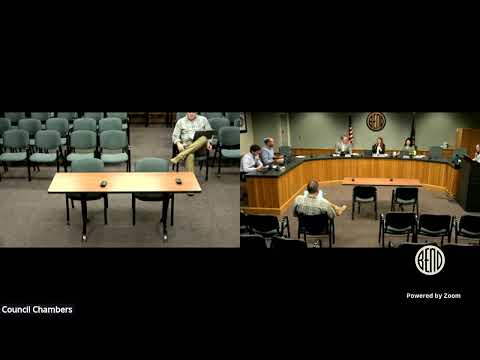
City of Bend staff on April 23 presented a draft People Streets (low‑car district) study to the Community Building Subcommittee, saying the document is a policy and design study rather than a construction plan, while downtown business and arts representatives urged careful steps before any change to parking or car access.
The study, led by the city’s growth management team, examines concepts and design guidance for “people‑centered” streets and includes a Juniper‑to‑Drake Park case study intended to test implementation constraints in an already built downtown. Susanna Jubler of the city’s Growth Management Department told the subcommittee, “This is just a study... nothing is changing to the built environment that we have out there now.” Jubler said the report will inform the city’s Transportation System Plan (TSP) update and the next comprehensive planning cycle.
Why it matters: Jubler said the work responds to new state Climate Friendly Equitable Communities rules that require jurisdictions to plan for low‑car/no‑car street types in appropriate residential or mixed‑use areas. Subcommittee discussion centered on how to balance the state’s direction on land use and mode shift with the concerns of downtown businesses and institutions that depend on vehicle access and short‑term parking.
What staff described
Jubler summarized the study’s scope: a review of national best practices, a draft set of street types for “people streets,” community engagement, and the Juniper‑to‑Drake Park case study to explore utilities, parking relocation, emergency access and other implementation issues. She said the draft final report and cross sections should be available on the project webpage within about a week.
Jubler described three potential implementation paths the city could take as the TSP and the growth plan are updated: a prescriptive approach that maps and designates low‑car districts explicitly, an integrated approach that adds policy and standards into existing zoning and transportation designations, or a minimal approach that adopts standards in the city’s engineering specifications. She emphasized those are policy choices for later phases of planning.
Public comments and business concerns
Three public commenters addressed the subcommittee during the item. Sam Davis, identified as a Deschutes County resident and a member of the Tower Theater board of directors, said he was "concerned about the potential impact on our 71,000 patrons through the year and, potentially, the impacts on the downtown." He urged the city to ensure alternate parking solutions and emergency access before changes to car access.
Rachel O'Rourke, executive director of the Downtown Bend Business Association, said the DBBA supports walkability but warned of “unintended consequences for our small businesses and overall downtown economy.” O'Rourke cited a DBBA survey she described as having responses from more than 1,500 residents and said the majority of respondents drive to downtown—"80% in the summer and 90% in the winter"—and that parking is their top concern. She told the subcommittee that the DBBA’s analysis shows one downtown parking space can be associated with roughly $250,000 in annual economic activity and that removing spaces could harm businesses.
Mike Walker, a 25‑year Bend resident and retired civil engineer who said he had prepared a 62‑page review and 29 recommendations for the feasibility study, criticized the city’s outreach and analysis and said more locally grounded community engagement was needed. Walker concluded his remarks bluntly: “Frankly, the city has blown it.”
Engagement and equity
Jubler outlined outreach for the study: a project steering committee that met three times, an in‑person open house on Nov. 15, a DBBA meeting and survey (90 responses), an online open house, and a classroom project with a COCC youth leadership program (students from local high schools presented design ideas). She said the project used the Government Alliance on Race and Equity (GARE) framework to try to identify groups not routinely engaged in transportation planning.
Next steps and constraints
Jubler and the subcommittee stressed there is no capital funding in current CIP budgets tied to building People Streets beyond the Hawthorne Bridge project, which is proceeding because of a federal grant. She said any future projects in the Juniper‑to‑Drake corridor or elsewhere would require separate public processes, design work, and funding decisions. Jubler also noted state land‑use rules discourage automatic replacement of removed parking and that cities are being asked to adopt parking maximums and other measures to enable mode shift.
Council questions and staff responses
Councilor Mendez and other subcommittee members asked how the city would align future planning with transit providers, shared or unbundled parking policies, and developer requests. Jubler said Cascades East Transit and other providers would be part of future transportation system planning and that code updates to respond to climate‑friendly rules and parking changes are likely but will be phased through the upcoming growth plan and TSP processes.
Where the work stands
Jubler said the draft policy recommendations are being finalized and will feed into the growth plan and TSP updates beginning in 2025–2026. The subcommittee did not take formal action on the study at the meeting; staff requested direction about when to schedule code or policy updates as part of the broader planning work.
Ending
Subcommittee members asked staff to continue outreach with downtown businesses and adjacent neighborhoods and to return with refined materials as the TSP and growth plan move forward. Jubler emphasized the report is intended to create design guidance and policy options, not to immediately change streets in downtown Bend.