Get Full Government Meeting Transcripts, Videos, & Alerts Forever!
Get email alerts on the Affordable Housing topic
No spam. Unsubscribe anytime.
City administration unveils $2 billion HOME housing plan; seeks $800 million in bonds and $1 billion in city land value to build or preserve 30,000 units
Summary
Philadelphia officials told the City Council Committee of the Whole on the record that the Parker administration will seek an $800 million borrowing package and mobilize city land and other funds as part of a $2,000,000,000 Housing Opportunities Made Easy (HOME) initiative aimed at building, preserving and restoring tens of thousands of housing units.
Philadelphia officials told the City Council Committee of the Whole on the record that the Parker administration will seek an $800 million borrowing package and mobilize city land and other funds as part of a $2,000,000,000 Housing Opportunities Made Easy (HOME) initiative aimed at building, preserving and restoring tens of thousands of housing units.
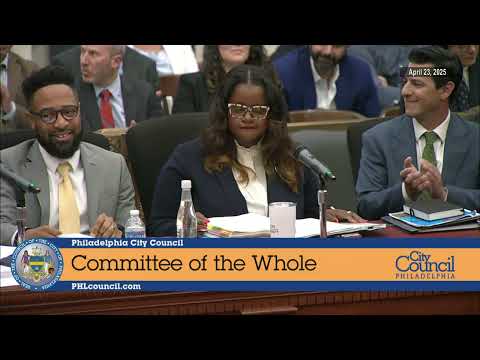
Tiffany Thurman, chief of staff to Mayor Parker, said the administration will pursue a large, fast program and that, "we cannot afford to wait. We cannot hedge our bets against going small." She and agency leaders presented the plan to council members at a public hearing called to consider the proposed fiscal 2026 operating and capital budgets and related ordinances and a revised five‑year financial plan.
The administration described HOME as a multi‑pronged strategy. It includes nearly $1 billion in public sector investment — roughly $800 million in proposed borrowing in the fiscal 2026‑2035 plan and roughly $20 million in other local, state and federal funds — and about $1 billion they attribute to the estimated value of city vacant land and other assets to be contributed to housing production. Greg Heller, a consultant for the city, explained the land‑value estimate is based on ZIP‑code level sales and assessed‑value methods applied to the city’s inventory of vacant parcels and said the sales‑based approach yields a city inventory value “approximately a billion dollars.”
Administration officials and outside consultants set a production and preservation target of 30,000 units over roughly four years (production and preservation totals were described separately). Officials said the package will fund existing programs and launch new ones, including a proposed “One Philly” mortgage program modeled on a Massachusetts product, expansions of the Basic Systems Repair Program (BSRP), and new acquisition and preservation funding administered through the Department of Planning and Development (DPD) and the Philadelphia Housing Development Corporation (PHDC).
Key program details and numbers discussed in the hearing
- BSRP waiting list and capacity: Dave Thomas, president and CEO of PHDC, said the BSRP waiting list stands at about 7,054 households and that the program currently serves roughly 3,500 households per year. He said the city currently does about $1 million a week in repairs and contracts with about 100 contractors.
- Borrowing and debt service: Rob Dubow, the city’s finance director, said total expected debt service after both bond issuances would be about $66 million to $69 million annually depending on market rates, with total debt service over the life of the borrowing estimated at roughly $1.3 billion. He said the bonds would be fixed‑rate and amortized over 20 years and that the approximate annual debt service for every $100 million borrowed is about $8 million to $9 million.
- Land valuation methodology: Greg Heller said the city identified vacant parcels, calculated per‑square‑foot values by ZIP code using assessed value and post‑2021 sales, removed outliers, and applied ZIP‑level averages to the vacant inventory to estimate total land value.
- One Philly mortgage: Ira Goldstein, a consultant from the Reinvestment Fund, said the city would not itself be a mortgage lender but plans to provide a loan‑loss reserve and other supports so private lenders doing business in Philadelphia can make loans without private mortgage insurance; he said the product is modeled on a Massachusetts program that pairs mortgage lending with housing counseling.
Council questions, concerns and administration responses
Council members pressed the administration on several issues: how HOME will prioritize the lowest income households, how many of the planned units will serve households at 30% of area median income (AMI) or below, the pace of spending and bond issuance, worker and contractor diversity and apprenticeship commitments, community engagement on land disposition, and whether the plan risks spurring displacement or favoring certain developers.
- Affordability mix and targets: Administration presenters said preservation and production estimates were informed by updated needs analysis. Officials told council that large shares of production and preservation targets are aimed at households below 50% of AMI; the administration said it would provide a program‑by‑program breakdown requested by council during the hearing. Council members repeatedly requested a clear fiscal and programmatic mapping showing how much HOME funding will serve households at or below 30% AMI.
- Pace and implementation capacity: Council members asked whether the city has the staff and delivery infrastructure to spend bond proceeds without long delays. Administration leaders said they had reviewed prior borrowing lessons and intend to accelerate permitting, land disposition and internal processes to move projects faster than past large bond programs.
- Community engagement and developer pools: The administration described a proposed process to identify a group of pre‑authorized developers for certain public parcels to speed disposition and development while saying that district council members and community organizations would be engaged early. Multiple council members emphasized that community input must be frontloaded and preserved and warned against any appearance of bypassing local review.
- Workforce, contracting and inclusion: Officials said the plan includes workforce development, apprenticeship and supplier‑diversity strategies and that the administration will continue conversations with unions and other partners about investment, jobs, and reporting. Administration witnesses said talks with unions are serious but not yet formal commitments.
Other details and clarifications from the hearing
- The administration said HOME will pair investments with process reforms including zoning text amendments and permitting changes; it expects to transmit legislation to Council in the coming weeks and said fiscal notes will accompany bills.
- The plan’s financing includes federal funding streams such as CDBG, HOPWA and ESG, existing Housing Trust Fund and recording‑fee revenues, leftover proceeds from prior bond programs, and private and philanthropic leverage. Administration presenters said roughly $200 million of the $2 billion is expected from those combined non‑bond sources in addition to the $800 million bond package and $1 billion in land value assumptions.
- The administration described a portfolio of new and expanded programs: One Philly mortgage; expanded Basic Systems Repair and Turn the Key programs; an acquisition fund for public or public‑partner developers; preservation and weatherization programming (some weatherization work will be administered by PHDC); and a single‑front‑door application module for residents to apply for multiple services.
What happened next
No votes were taken; the session was a public hearing and question‑and‑answer session. Council members asked for additional written detail and financial breakdowns and the administration said it would provide more documentation and the legislative package in the coming days.
Ending
Council members and administration officials agreed to continue briefings and to provide the additional program‑level and AMI‑targeting details requested by council. The hearing recessed for a scheduled break and the Committee of the Whole indicated it would reconvene later to continue.