Get Full Government Meeting Transcripts, Videos, & Alerts Forever!
Get email alerts on the Personnel Superintendent Contract topic
No spam. Unsubscribe anytime.
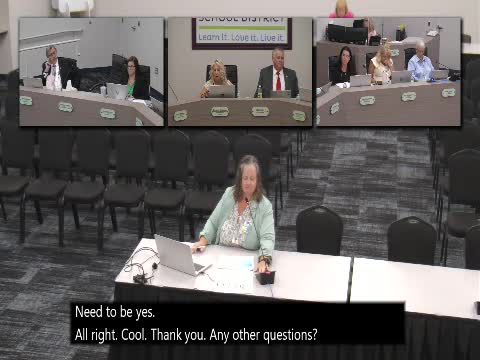
Hernando County School Board gives superintendent positive review, directs negotiation of multiyear contract
Summary
Board members gave Superintendent Ray Pender favorable overall ratings at an April 22 workshop, raised follow‑up concerns (sibling preference, administrator staffing, ESE vacancies), and agreed by consensus to have the board attorney negotiate a multi‑year contract to return to the board for a May 6 vote.
The Hernando County School Board on April 22 completed a performance evaluation of Superintendent Ray Pender and reached consensus to instruct the board attorney to negotiate a multiyear contract and return a proposed agreement to the board for a vote on May 6.
Board members described Pender’s leadership as effective and cited improvements in communication, school visits, staff recognition and student safety measures. Several members commended initiatives the superintendent highlighted, including the district’s Associate Teacher (ATS) program, expanded guardian staffing at schools, and outreach to keep graduates and employees in Hernando County.
At the start of the discussion, Mr. Johnson said most evaluation categories were “outstanding” or “proficient” but noted a shortcoming in follow‑up: several items the board had asked to be returned to workshop did not come back in a timely way. Pender acknowledged the concern, said the sibling‑preference proposal would be brought back in the May workshop, and agreed to work on faster follow‑up reporting.
Board members asked for more detail in several areas. They asked the superintendent to provide a breakdown of administrators and positions to address concerns that the district might be “top heavy.” Pender agreed to return such a report to a future workshop. Members also sought confirmation about how instructional and non‑instructional funds are being allocated; Pender said the instructional‑materials dollars discussed earlier in the meeting are handled within the district’s FEFP general fund allocation and that the district continues to set aside funds for materials.
Several members recommended negotiating a multiyear contract rather than a one‑year extension. The board discussed typical contract lengths (two to three years was mentioned as common) and agreed that any contract should include language addressing a change at the state level, such as a move to an elected superintendent; Pender and board members said contract language would need to protect the district and the superintendent in the event state law changed. No formal vote was recorded at the workshop; board members indicated consensus for the board attorney, Missus Rodriguez, to begin negotiations with legal counsel and Pender’s representative and to return a proposed agreement for a May 6 vote.
Compensation and other terms were discussed in general terms. One board member said, “So I I approve the $10 raise,” but the workshop record does not show a formal motion or vote to set pay; the negotiation process will include compensation benchmarking and comparative district review, the board chair said.
Board members also raised substantive program and policy items during the evaluation discussion. Among those: the board asked for a report on sibling‑preference options for magnet/school‑choice allocation (Pender said he would bring it back in May); members discussed ESE staffing shortages and retention strategies (Pender described using veteran teachers to mentor new staff and allocating additional ESE teachers and paraprofessionals in the budget process but noted filling vacancies remains a challenge); and several members asked for a clearer follow‑up system — one member suggested the board receive a spreadsheet tracking outstanding requests and their status.
Other topics mentioned during the discussion included dress‑code expectations for staff and students (Pender said “professional and appropriate” dress is in current contract language and asked administrators to model and enforce standards), Space Florida partnership updates and an incubator appropriation the superintendent said would be reported in May, and a security technology article on a Terahertz screening product forwarded to district security staff for review.
Next steps: the board authorized, by consensus, the board attorney to negotiate a multiyear contract and return a proposed agreement for board consideration on May 6. Pender said he will work with staff to provide follow‑up reports requested by board members, including sibling‑preference options and a breakdown of administrative positions. No formal vote on a contract or a raise was taken at the workshop.