Get Full Government Meeting Transcripts, Videos, & Alerts Forever!
Get email alerts on the Opioid Settlement topic
No spam. Unsubscribe anytime.
Carroll County hears New Opportunities pitch for peer recovery specialist; board moves settlement funds into 6‑month CD
Summary
New Opportunities requested county support to fund a peer recovery specialist paid in part from opioid settlement funds; the Board agreed to place $200,000 in a 6‑month CD and keep $80,000 available for spending while counties finalize plans.
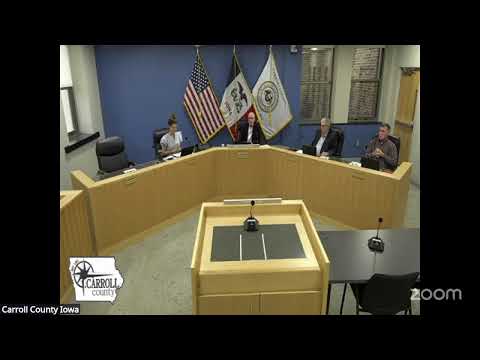
Carroll County supervisors heard a presentation from New Opportunities on Monday about using county opioid settlement funds to support opioid recovery services, and they decided to put most of the settlement dollars into a short-term certificate of deposit while leaving a portion available for initial projects.
Christie (New Opportunities prevention director) told the Board the agency is overseeing settlement funds that have generated roughly $280,000 in interest and principal and that New Opportunities would like Carroll County to consider supporting a peer recovery specialist — a position designed to provide ongoing recovery supports and long-term engagement for people with opioid use disorder. Christie said the peer role helps connect people to services and sustain recovery over time.
"This recovery coach is ... the frosting on the cake that's going to really help a person to get into recovery and stay in recovery long term," Christie said during the presentation.
Christie described the position as potentially sustainable: New Opportunities expects to bill Medicaid and some insurers for the service over time and asked for a one‑fifth share from each county in a five‑county partnership, or about $15,000 per county per year, to support at least one full‑time equivalent (FTE). If only one county participates, the agency said it could hire a part‑time worker (20 or 10 hours per week).
Board members discussed timing given uncertainty at the state level around behavioral health regionalization and recommended pausing broader prevention spending until state plans are clearer. Supervisors also asked for regular reports and emphasized avoiding duplication with existing county and state prevention grants.
On a motion from the Board, supervisors directed the treasurer to place $200,000 into a six‑month certificate of deposit at United Bank of Iowa at 4.4% and leave $80,000 in county accounts available for spending, with the CD term chosen at six months. The motion passed by voice vote.
Supervisors did not take a formal funding commitment for the recovery coach during the meeting; Christie asked for a county endorsement to sign letters supporting related federal programs and for the Board to consider the $15,000 annual contribution if the county opts to join the multi‑county staffing plan.