Get Full Government Meeting Transcripts, Videos, & Alerts Forever!
Get email alerts on the Recovery First Ordinance topic
No spam. Unsubscribe anytime.
Committee forwards amended ‘Recovery First’ ordinance after hours of testimony from medical, recovery and harm‑reduction advocates
Summary
The Public Safety and Neighborhood Services Committee voted to accept amendments and forward Supervisor Matt Dorsey’s Recovery First ordinance, which updates city policy language to make long‑term remission of substance use disorders a primary goal of San Francisco’s treatment policy, to the full Board with a positive recommendation.
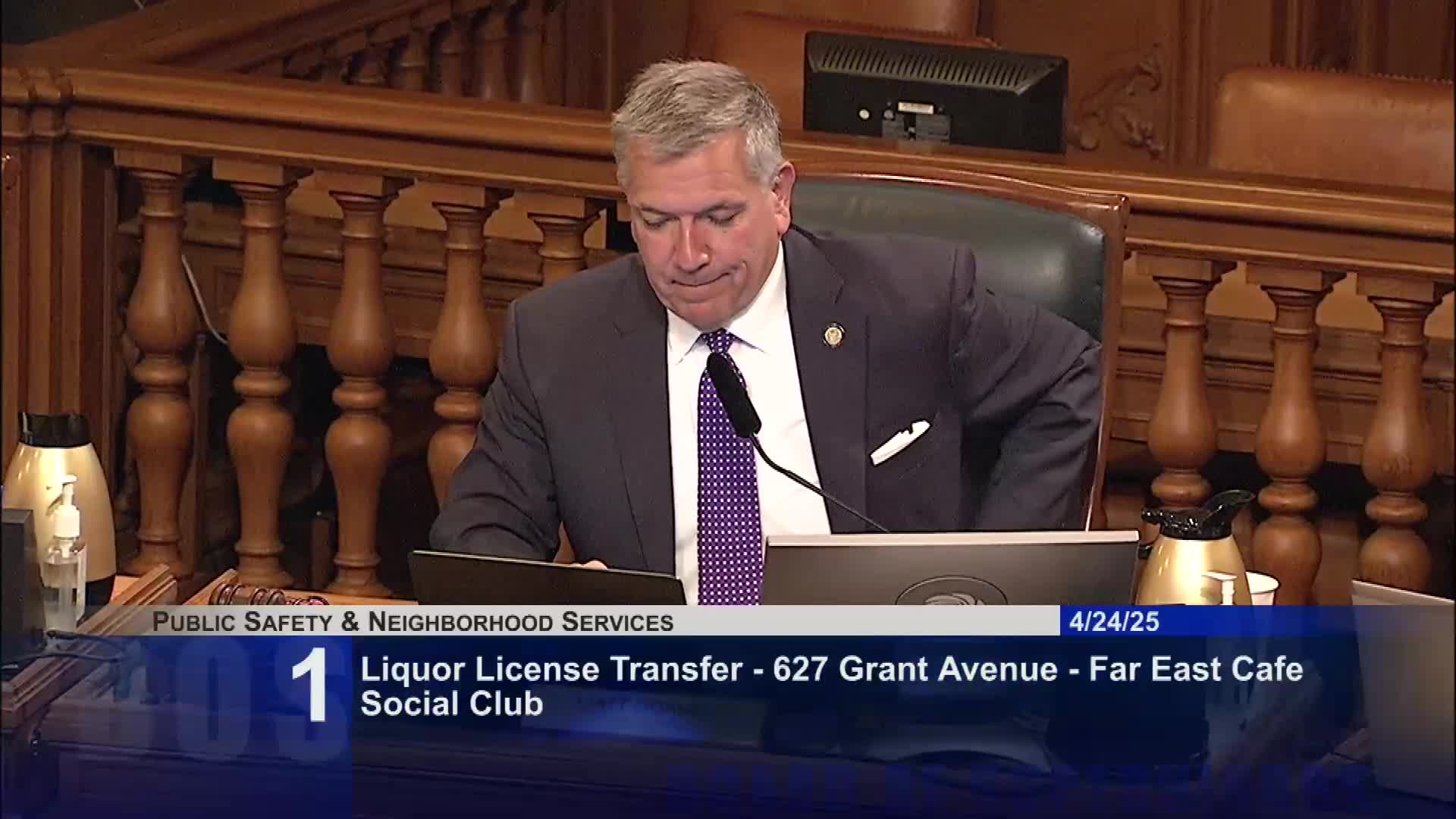
The Public Safety and Neighborhood Services Committee voted on Thursday to accept amendments to Supervisor Matt Dorsey’s Recovery First ordinance and forward the amended legislation to the full Board of Supervisors with a positive recommendation.
Supervisor Dorsey described the measure as an effort to establish “a drug policy North Star” that names the long‑term remission of substance use disorders as the city’s primary treatment goal while continuing to recognize harm‑reduction approaches. Dorsey read into the record a series of edits developed in consultation with the San Francisco Marin Medical Society that revise the ordinance’s title, refine definitions of “remission” and “recovery,” and clarify that recovery “may include participation in a medication assisted treatment program administered by a licensed health care provider… an outpatient or residential substance use treatment program, a contingency management program, or other program determined by the program participant to support their efforts to be in remission.”
Kunal Modi, San Francisco’s chief of health, homelessness and family services, submitted a written statement read into the record saying: “Every day, 2 people are dying of drug overdose in San Francisco. The city's approach has not been working… Our administration is taking a new common sense approach that relies on evidence based practices to help people break cycles of addiction and get on the path of long term recovery.”
Adam Francis, senior advocacy and policy director for the San Francisco Marin Medical Society, told the committee the society supports the amended ordinance and helped thread “a needle” between harm reduction and abstinence‑based treatment approaches, while urging growth in treatment capacity and workforce to make policy meaningful.
Although the committee’s votes to accept the amendments and to forward the ordinance were unanimous (roll calls recorded three ayes), public comment produced a wide range of views. Speakers who identified as members of the recovery community, and representatives of abstinence‑based programs such as Harbor Light/Salvation Army and Positive Directions, urged a policy centered on abstinence and greater funding for long‑term treatment and housing. Others — including physicians, public health providers, and community groups such as the San Francisco AIDS Foundation, Harm Reduction Therapy Center, and multiple Tenderloin arts and peer organizations — warned that narrowing the city’s definition of recovery to abstinence would exclude people who do not initially seek or are not ready for abstinence‑based care and could increase overdose and infectious‑disease risk. Doctors and public health clinicians who testified emphasized that recovery pathways are not one‑size‑fits‑all and cited evidence supporting medication‑assisted treatment and harm‑reduction services as elements of a comprehensive approach.
Supervisor Dorsey acknowledged the intensity of the debate and said he will continue cross‑sector conversations; the committee’s positive recommendation advances the amended ordinance to the full Board for its next vote.