Get Full Government Meeting Transcripts, Videos, & Alerts Forever!
Get email alerts on the Agriculture.nrcs.roofs And Covers topic
No spam. Unsubscribe anytime.
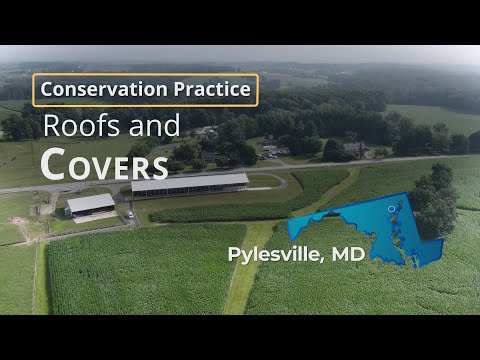
NRCS roofs-and-covers at Rigdons Farm aim to keep feed dry, reduce mud and limit runoff to Chesapeake Bay
Summary
USDA -NRCS staff and the farm owner described a roofs-and-covers installation over a heavy-use area and waste storage facility at Rigdons Farm in Pilesville, Maryland, saying it improves winter feeding, reduces mud and helps limit runoff that reaches the Chesapeake Bay.
At a site visit at Rigdons Farm in Pilesville, Maryland, Robert Weaver, district conservationist with USDA -NRCS, described a roofs-and-covers installation placed over a heavy-use area and a waste-storage facility to support winter feeding and pasture management.
The practice, Weaver said, is designed "mainly for winter feeding when they're feeding the animals," and can also be used "during the summertime for pasture management." He told listeners the roofs-and-covers approach helps "keep clean water clean and [keep] the clean water from rainwater going in through the manure areas."
Andrea McGurk Rigdon, who identified herself as the farm owner, said the covered area has made feeding livestock easier by keeping cattle out of deep mud and keeping feed dry. "The cattle are not standing in deep mud. Their feed stays dry because it's covered," she said, adding that the farm has "about 45, 50 beef cows." Rigdon also said she grows corn and soybeans on the farm and that the cover has helped reduce spoilage in winter storms, which she said saves feed and increases efficiency.
Rigdon connected those on-farm benefits to a broader environmental goal, saying the reduction in mud and manure in the field "cuts down on all the runoff, which our ultimate goal is to save the Chesapeake Bay." Weaver and Rigdon described the installation as technical assistance and guidance provided by USDA -NRCS to tailor the roofed heavy-use area to the farm's needs.
No formal votes, ordinances or funding amounts were discussed in the recorded remarks. Speakers limited their comments to the design and on-farm effects of the roofs-and-covers practice and its intended environmental benefits.