Get Full Government Meeting Transcripts, Videos, & Alerts Forever!
Get email alerts on the Pollinator Habitat Project topic
No spam. Unsubscribe anytime.
Pollinator Partnership outlines preliminary Wildlife Conservation Board grant idea to remove invasive species and plant habitat along the levee
Summary
Miles Dakin of Pollinator Partnership presented a preliminary concept to remove invasive species (including bamboo) and to establish pollinator habitat along the Pacheco Creek levee; the group offered to lead a Wildlife Conservation Board grant application but noted the idea is early and will require site visits and agency coordination
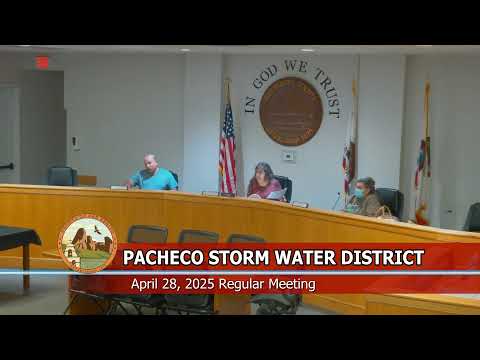
Miles Dakin, co-director of agricultural programs at the Pollinator Partnership, told the Pacheco Stormwater District April 28 that the nonprofit is exploring a preliminary Wildlife Conservation Board grant to remove invasive species and plant native pollinator habitat along the levee.
Why it matters: Vegetation choices and invasive-species removal on levees affect both flood-control infrastructure and ecological functions; a coordinated project could support pollinators while addressing invasive growth that undermines levee access or stability.
Presentation and scope "My name is Miles Dakin. I am I work for Pollinator Partnership, as our co director of agricultural programs," Dakin said, describing an early-stage idea to remove invasive species and install pollinator-friendly plantings along levee banks. He said the Wildlife Conservation Board is accepting pre-proposals now, although he expects funding availability to increase in the fall, and offered the nonprofit's experience leading similar projects in the Central Valley (hedgerows for duck clubs, fish hatcheries and farms).
Dakin told trustees the project would be customized to local needs and could include invasive removal and establishment of riparian or pollinator plantings. "We're here to support, you know, you all as much as we can," he said, offering to lead an application if the district prioritizes the work.
Questions and constraints Property owners and trustees asked practical questions about scope and permitting: whether the district would apply as a single applicant or whether individual landowners should apply, whether the funding figure mentioned roughly $300,000, and whether removal would be a one-time action or require repeated maintenance. Michelle (property owner) raised concerns that excavating deep-rooted bamboo could destabilize a levee and asked whether replacement would be required after removal.
Staff advised caution on equipment access near water. "Technically, we're supposed to be working from the banks, and then we can reach and get with arms and excavators and things, we can reach and and grab the loose debris without a permit. But we're not supposed to go down into below the high water mark ... with equipment without a permit," Steve Blue said, noting that planting activities are treated differently than heavy equipment operations.
Next steps Dakin and Pollinator Partnership said they will continue conversations and offered to have staff visit the site. Trustees and staff agreed the idea is preliminary and that the district must confirm whether a district-level application, individual landowner applications or a combined approach would be most appropriate; they also emphasized the need to confirm agency permit requirements before heavy equipment work below the top of the levee is attempted.
Ending The Pollinator Partnership left a contact email and offered to follow up with a site visit and additional project details; district staff will coordinate with property owners and with Dakin to explore a possible Wildlife Conservation Board pre-proposal if trustees decide to proceed.