Get Full Government Meeting Transcripts, Videos, & Alerts Forever!
Get email alerts on the Public Safety Budget topic
No spam. Unsubscribe anytime.
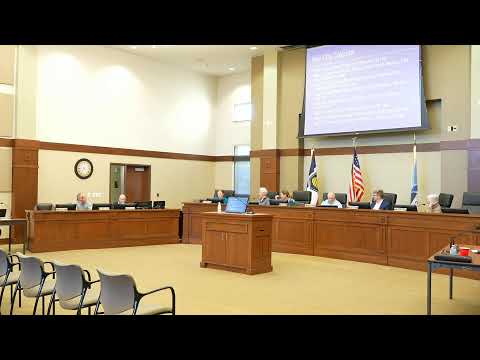
Highland council debates how to cover $408,000 public-safety budget increase
Summary
Council members reviewed a tentative budget update that trims earlier draft costs but still raises public-safety spending, and debated whether to cover the gap with a public-safety fee increase or property-tax revenue.
Highland City Council members heard a detailed update on the public-safety portion of the tentative budget and discussed options to pay for an about $408,000 net increase in public-safety costs.
City staff presented the numbers and asked council to consider whether increases should come from the city's public-safety fee or from property tax and sales-tax revenue. Erin (staff member) told the council the public-safety department "is going to receive a 6%, wage adjustment this year," down from 8% that was in an earlier draft, and that reduced dispatch costs created a roughly $230,000 decrease from the earlier tentative draft while still leaving an overall increase to the department.
The discussion matters because with the current tentative budget the city would need to use an estimated 79% of property and sales tax revenues to cover the portion of public safety costs not paid by fees; council has set an informal target of keeping that share at or below 75%. To hit the 75% target staff gave two revenue options: raising the public-safety fee by about $4 per month (roughly $48 a year) to generate about $285,000, or using property-tax revenue, which staff estimated would equal roughly $77 a year on an average home for the amount discussed.
Chief Beck (Fire Chief) clarified how the staffing request is counted: adding "2 full time and 1 part time" positions in the department is being shown as three hires that together cover one 24/7 full-time-equivalent (FTE) position, because three individuals are needed to staff a position that runs all hours. "It requires 3 individuals to cover 1 position," Chief Beck said, describing how the department would move from eight to nine positions on paper but actually add the staffing to cover each shift.
Council members pressed on fairness and political risk. Several members said they prefer using the public-safety fee to pay for public-safety increases rather than shifting more of the burden into property tax or the general fund. Others said the fee is regressive (a flat charge regardless of property value) and noted ongoing state-level uncertainty about whether public-safety fees will remain allowed; Erin referenced a multi-year effort tied to the so-called "Karen Peterson" bill that has not settled the issue. One council member summarized the trade-offs: raising the fee would be a smaller, predictable monthly charge while a property-tax approach would scale with property values and could trigger a public referral in Highland.
No formal vote was taken. Council members asked staff to keep running the numbers, said they would attend a related work session with Alpine scheduled for May 13 at 7:30 a.m. (in Alpine's chambers) to review staffing and response-time data, and left the decision open for further consideration as the final budget approaches.
Ending: Staff will return with refined numbers and interlocal details after the May 13 work session so council can decide whether to increase the public-safety fee or cover the increase with property-tax revenues.