Get Full Government Meeting Transcripts, Videos, & Alerts Forever!
Assembly committee weighs reauthorization of cap-and-trade revenue, presses for spending priorities and oversight
Summary
A California State Assembly subcommittee heard expert analysis and public comment on reauthorizing the cap-and-trade program and the future of the Greenhouse Gas Reduction Fund (GGRF), focusing debate on revenue volatility, continuous appropriations, affordability measures and priority uses such as natural and working lands, housing and transit.
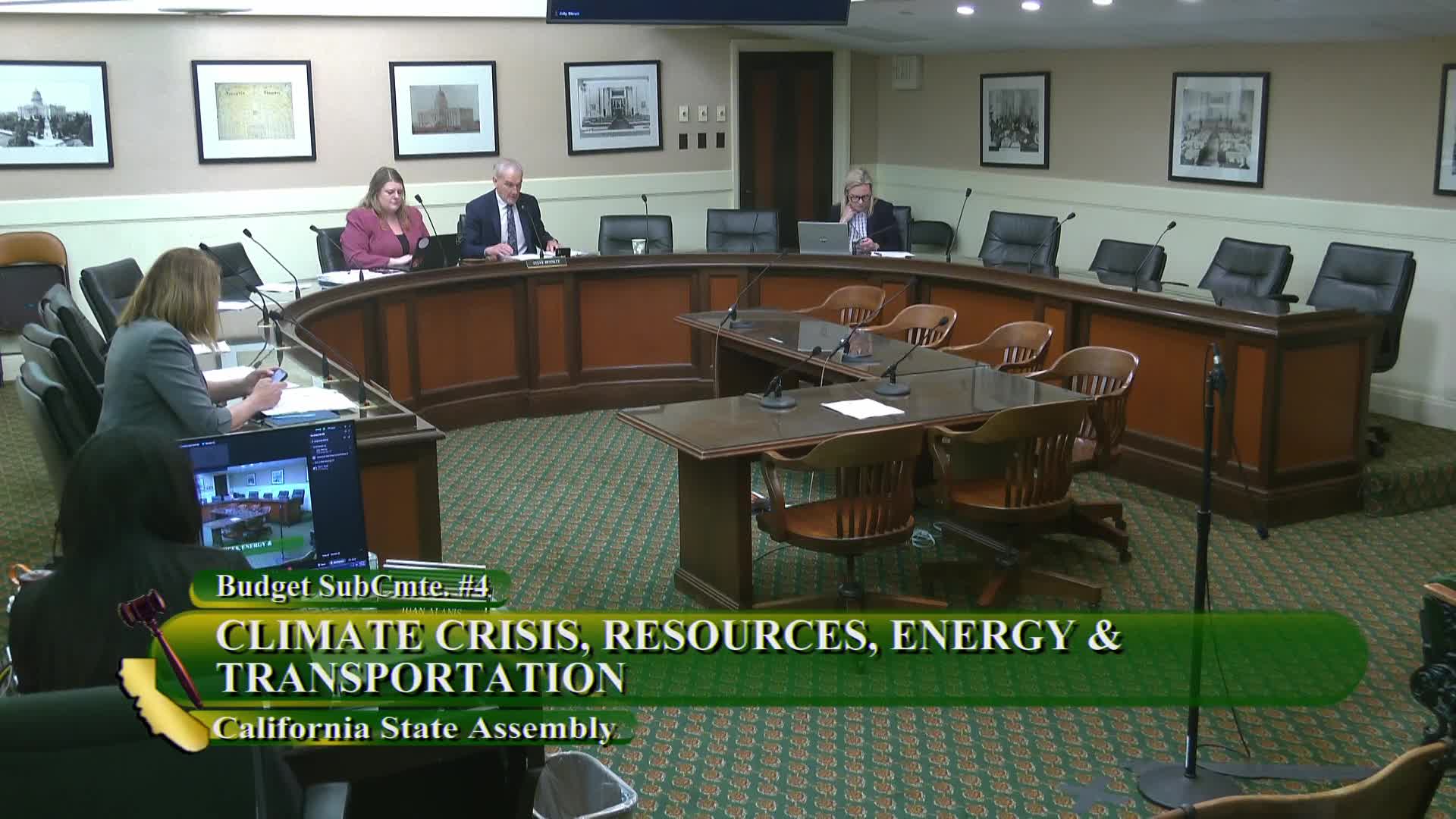
The California State Assembly Budget Subcommittee No. 4 held an extended hearing on reauthorization of the cap-and-trade program and how to allocate revenue deposited into the Greenhouse Gas Reduction Fund (GGRF), hearing presentations from the Legislative Analyst's Office, academic experts and the Air Resources Board and receiving extensive public comment.
The subcommittee chair, Chair Bennett, opened the session saying the hearing was an opportunity "once in a decade" to review GGRF expenditures and explore options for reauthorization, oversight and allocation of continuous appropriations.
Why it matters: GGRF is supported by auction proceeds from California’s cap-and-trade program and has funded programs ranging from high-speed rail and affordable housing to wildfire resilience and low-carbon transportation. Panelists and commenters told lawmakers the program’s revenue can be highly variable and that design choices for the cap-and-trade market will determine future funding levels and stability.
Key findings and expert testimony
- Revenue volatility and magnitude: Helen Kerstein of the Legislative Analyst’s Office said GGRF revenues “vary quite a bit,” with recent annual proceeds ranging roughly from $2 billion to $5 billion. The LAO noted allowance prices historically have been nearer the floor than the ceiling and that revenue depends on market design, supply and demand for allowances and policy uncertainty.
- Market design drives revenues and distribution: Danny Cullenward, a researcher and vice chair of the independent emissions market advisory committee, emphasized that decisions…
Already have an account? Log in
Subscribe to keep reading
Unlock the rest of this article — and every article on Citizen Portal.
- Unlimited articles
- AI-powered breakdowns of topics, speakers, decisions, and budgets
- Instant alerts when your location has a new meeting
- Follow topics and more locations
- 1,000 AI Insights / month, plus AI Chat