Get Full Government Meeting Transcripts, Videos, & Alerts Forever!
Get email alerts on the Wildfire Preparedness topic
No spam. Unsubscribe anytime.
Flagstaff fire officials urge residents to focus on defensible space, home hardening and evacuation readiness
Summary
City of Flagstaff fire specialists said about 60% of wildfires in northern Arizona are human-caused and outlined three priorities for homeowners: maintain a Class A roof and clear debris, create a 5-foot noncombustible zone, and install mesh on vents to block embers.
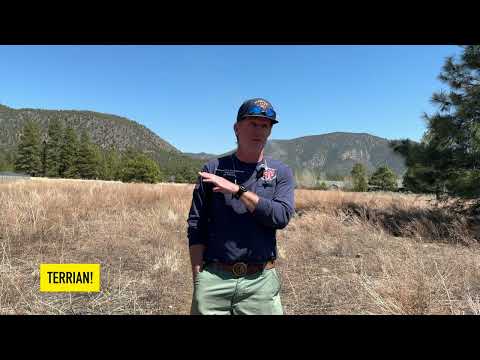
City of Flagstaff fire officials said in an interview that most wildfires in northern Arizona are caused by people and urged homeowners to prioritize defensible space, home hardening and readiness to evacuate.
“About 60% of our fires are human caused,” said Mark Adams, the wildland community risk reduction specialist for the Flagstaff Fire Department, describing abandoned campfires and unsafe open burning as common ignition sources.
Why it matters: wildfire season in the Southwest is becoming more intense and unpredictable, and officials said relatively simple, low-cost measures at individual homes can reduce the risk of ignition and spread to structures.
The officials outlined three primary priorities for residents. Neil Chapman, a wildland fire captain with the Flagstaff Fire Department, said the first priority is roof condition. “Everybody in Flagstaff should have a Class A roof,” Chapman said, and he added homeowners should remove pine needles, pine cones and leaf litter from roof creases and gutters.
The second priority is a narrow, noncombustible buffer around the house. “Make sure you have 5 foot of bare dirt. Nothing combustible,” Adams said, noting that rock, pavers or other nonflammable materials are preferable to mulch or combustible landscaping immediately adjacent to the structure.
The third priority is preventing ember intrusion. Chapman and other specialists advised screening vents with metal mesh small enough to block embers; officials recommended one-eighth inch screening or smaller and said even finer mesh (for example, one-sixteenth inch) is preferable.
Officials also described common household and neighborhood ignition sources during fire season. Adams cited abandoned campfires and unsafe burns, while Noah Baker, the wildfire climate and community health specialist for the Flagstaff Fire Department, said that barbecues, backyard fire pits, cigarettes and vehicles parked on dry grass can all start fires.
Firefighters’ operational challenges were also discussed. Adams pointed to steep, rocky terrain that complicates access and evacuation and the difficulties that arise when a wildfire reaches the wildland-urban interface, where unknown hazards — for example propane tanks or stored materials — increase risk to crews and residents. Baker said changing the community’s suppression-first culture so prescribed fire and beneficial wildfire can be used safely remains a major challenge.
No formal actions or policy changes were announced during the interview. Officials directed residents to the City of Flagstaff website for more information and to the Ready, Set, Go preparedness guidance. “Remember, the best time to prepare for an emergency is before the emergency,” the host said at the close of the conversation.
Additional practical tips repeated by officials included clearing debris from eaves and gutters, keeping flammable items and furniture away from the immediate perimeter of the house, and calling Flagstaff Fire Department for on-site property assessments and parcel-specific advice using the department’s assessment software.