Get Full Government Meeting Transcripts, Videos, & Alerts Forever!
Get email alerts on the Governance Executive Session topic
No spam. Unsubscribe anytime.
Conroe council debate limits virtual attendance in executive sessions to protect attorney–client privilege
Summary
Conroe city council members and the city attorney debated a proposal to require in-person attendance for executive sessions, citing attorney–client privilege and concern about leaked confidential discussions.
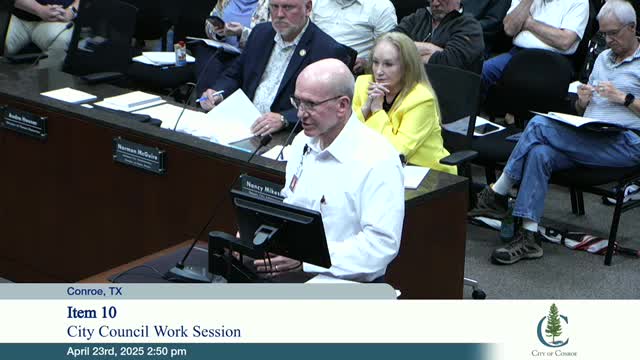
Conroe city attorneys and council members on April 23 debated a proposed resolution that would require council members to attend authorized executive sessions in person rather than by video or phone connection.
City attorney Gary Garner framed the proposal as a confidentiality safeguard tied to attorney–client privilege. "It is so very important to us as attorneys to make sure our conversations are private and confidential," Garner said. He added that in-person meetings reduce misunderstandings that can arise from technological failures and that leaked privileged discussions could undermine the city's legal position.
Supporters said the move is driven by a cluster of pending sensitive matters — including litigation, contractual disputes and other legal risks — where the city’s lawyers have advised that in-person counsel yields more robust confidentiality and clearer communication. "It's not geared towards a particular council member... it's because of the sensitive items that we have coming forward," a council member explained while introducing the agenda item.
Opponents warned that a strict ban on remote attendance could disenfranchise elected members who rely on remote access for health or work reasons. Several council members said they want alternatives, such as secure lines, stronger non‑disclosure measures or schedule adjustments that would allow in-person participation without unduly burdening working council members. "I understand your point too. Maybe a good compromise... is to move this meeting later in the afternoon," one member suggested to increase in-person availability.
Garner said the city had considered other approaches, including non‑disclosure agreements, but council members and staff raised legal and practical questions about those options. He noted that some outside law firms had specifically requested stricter confidentiality measures. "We had 1 of our law firms suggest a nondisclosure agreement, and that was pretty much opposed by members of city council," he said.
Council members also asked whether attorneys could continue to participate remotely; Garner said the statute specifically permits attorney participation by phone or videoconference, and that outside counsel remain bound by the same professional confidentiality obligations.
There was no final vote during the workshop. Council members asked staff and the city attorney to return with options, including potential schedule changes, secure-technology solutions and written procedures that seek to balance confidentiality and access for elected officials.
Ending: The council left the item open for further study. Staff and the city attorney were asked to present alternatives that preserve attorney–client confidentiality while minimizing the risk of disenfranchising council members who need remote access.