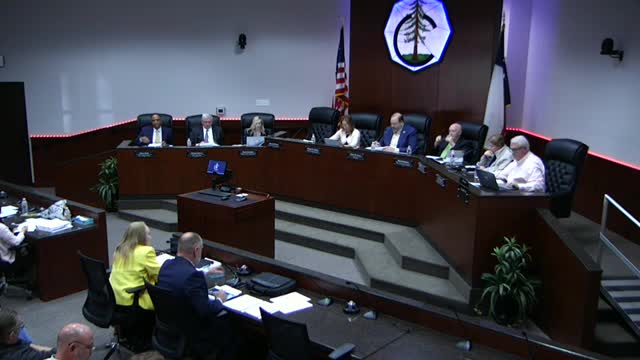
Conroe staff proposes tighter right-of-way permits, insurance and bonds after residents report damage from fiber installs
Loading...
Summary
City staff on April 23 presented proposed changes to right-of-way permitting aimed at reducing property damage from telecom and broadband work.
City staff on April 23 presented a package of proposed changes to Conroe’s right-of-way permitting rules aimed at reducing damage and improving communication after repeated resident complaints about fiber and other utility installations.
The presentation, introduced by a city staff member, covered permit timelines, insurance requirements, performance bonds and inspection and enforcement steps. "These are just the basic insurance requirements that we should have been asking for that were waived by the previous administration. So we're now moving forward and requiring them to submit a certificate of insurance," the staff member said.
The staff presentation said permits would expire after six months, with extensions allowed only in limited circumstances, and that the city would require a certificate of liability insurance and a possible performance bond. Staff said the proposed insurance minimums include $1,000,000 per accident, $1,000,000 per employee, $2,000,000 aggregate and up to $5,000,000 umbrella coverage. Staff also proposed increasing the application fee (from $100 to $500 for an initial application) and adding a reinspection fee and stiffer enforcement including fines and the ability to withhold future permits for companies that fail to pay fines.
Council members and staff emphasized the repeated damage reported in neighborhoods such as Woodlands Hills. "The destruction of our citizens' property has got to stop," the mayor said during the discussion. Staff said inspectors will be assigned to check restorations and the city will charge companies for repairs to public infrastructure. "If they destroy any of our infrastructure and public works has to make those repairs, we are also charging them for those repairs as well," a staff member said.
Representatives of EZ Fiber attended and described company practices and remedies. "If our crews are damaging something and it is not being resolved, then that is 100% a problem, and we will address it very swiftly," said Sean Perry, vice president of engineering for EZ Fiber. Perry offered to provide a certificate of insurance the same day and a performance bond by the end of the week, and described company escalation processes for residents. He also said the company aims to contact a homeowner within an hour for major utility strikes and to establish a repair timeline within 48 hours for lesser damage.
EZ Fiber's director of construction described on-site procedures for significant strikes: field crews are instructed to inform affected residents, coordinate shutoffs as required and, when necessary, provide assistance such as bottled water or hotel rooms during extended outages. EZ Fiber also said it routinely leaves door hangers and mailers before construction and is open to publishing its customer service phone number and SLAs on the city's website to speed problem resolution.
Staff proposed other changes that would be added to the ordinance: requiring the city to be listed as an additional insured on certificates, adding a $500,000 performance bond for public infrastructure (new), requiring companies to notify the public 14 days before work by mail or door hanger, requiring visible markings or magnetic signage on trucks, limiting permit coverage in areas with active city CIP projects, and assessing a reinspection fee of $120 for failed restorations. Staff also said the city would not issue new permits to companies with unpaid fines or outstanding invoices until resolved.
Council members pressed for clarity on how the rules apply to work in private yards versus public right-of-way. Staff said the proposed insurance and enforcement primarily cover work in the public right-of-way; private-property disputes would generally remain civil matters between homeowners and providers but the city will provide contact information and help escalate unresolved issues.
The presentation recommended posting complaint forms and contractor contact information on the city website so residents can file issues directly with the vendor and with city engineering. Staff said they will track complaints and inspect restoration work, and that fines would be due within a set period (staff proposed 30 days, some council members asked for a shorter payment window).
Where the discussion goes next: staff will incorporate council feedback into proposed ordinance language, seek contact and SLA information from vendors, and return with draft ordinance text and implementation details for council consideration.
Ending: City staff and providers agreed to additional communications and documentation: EZ Fiber offered bonds and certificates, and staff said it will publish complaint forms and require company notification to residents. Council directed staff to refine the proposed ordinance language and enforcement steps and return with a final recommendation for formal action.