Get Full Government Meeting Transcripts, Videos, & Alerts Forever!
Get email alerts on the State Budget topic
No spam. Unsubscribe anytime.
Minnesota budget talks stall over state-paid health coverage for undocumented residents
Summary
A legislator said negotiations on the 2025 Minnesota state budget are stalled over a provision expanding MinnesotaCare coverage for people in the state without immigration authorization, with cost and program growth cited as the central obstacle ahead of the May 19 adjournment target.
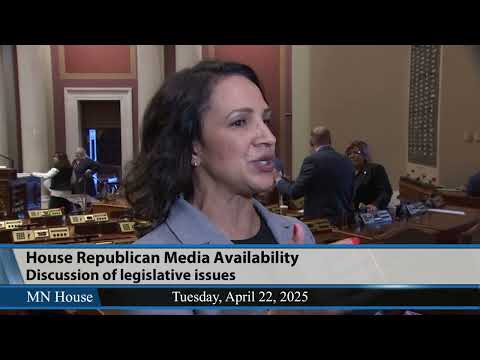
A legislator at a post–Easter/Passover news briefing said negotiations over the 2025 Minnesota state budget are stuck on whether to continue state-paid health coverage for people in the state without immigration authorization.
The legislator said the provision relates to MinnesotaCare, noting that “typically, there's a 90% of that dollar amount paid by the feds, and the state pays the 10%,” but that coverage for people here without federal-authorized status carries “no federal match,” leaving the state to pay the full cost. The lawmaker said it was originally projected “that there would be just over 5,000 people” using the coverage, and that the figure “has almost tripled” to roughly 17,000 people, which the legislator said has increased pressure on the state budget.
Why this matters: The legislator tied the dispute over MinnesotaCare to the broader fiscal picture for the 2025 session, saying lawmakers face a projected $6 billion deficit even after last year’s use of an $18 billion surplus and recent tax and fee increases. The lawmaker said those budget pressures make it difficult to continue unfunded state benefits and warned of potential cuts elsewhere, including nursing homes and disability services.
Discussion details and sticking points The legislator described the coverage for people without authorized status as a recent policy change enacted in the past two years and said it is a central sticking point in negotiations because it carries no federal match and has risen in use. The lawmaker said, “We can't afford it. We know that at this point. It's already tripled, almost tripled.”
The lawmaker also identified K–12 education funding issues as another area of active negotiation, specifically the way unemployment costs for temporary hourly school employees have been handled. The lawmaker said schools are facing “a gap” that is not sustainable for districts and that those costs are different from regular unemployment insurance because schools do not pay into the unemployment trust fund the same way private seasonal employers do.
Timing and outlook The legislator repeatedly invoked the constitutional or calendar adjournment target of May 19, saying “Remember, May 19, that's when we need to be done here.” The lawmaker said the governor's State of the State address scheduled for the next night was an opportunity to “pull everyone together” on the remaining disputes and suggested a special session could be called later only if federal funding cuts materialize after the budget is completed.
On divided government and the conference process, the legislator said the return to divided government after two years of single-party control will require more negotiation but expressed optimism that conference committees can find common ground: “All voices are being heard,” the lawmaker said.
Attribution and forum Remarks came during a brief press exchange after the legislature returned from the Easter/Passover break; reporters asked follow-up questions about federal funding risks, the governor’s stance, and the political dynamics around the State of the State address. Questions in the transcript were labeled generically (Reporter). The transcript does not record any formal motions, votes, or adopted budget language during this exchange.
Ending The lawmaker said the House and Senate remain apart on some numeric targets but expressed confidence negotiations can finish by the May 19 target, while acknowledging a heavy workload and the potential need for follow-up if federal funding changes occur after the session ends.