Get Full Government Meeting Transcripts, Videos, & Alerts Forever!
Get email alerts on the City Budget General Fund topic
No spam. Unsubscribe anytime.
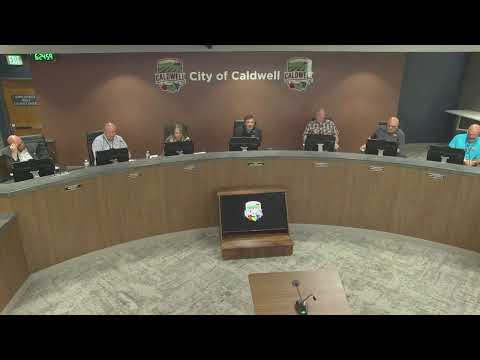
Council workshop: finance staff warn general fund shortfall, police and fire showing negative fund balances
Summary
City finance staff told the City Council at a workshop that the city’s general fund and public-safety accounts are running short of ongoing revenue, requiring either cuts, new revenue or use of one‑time reserves to balance the 2025 and 2026 budgets.
City finance staff told the City Council at a workshop that the city’s general fund will need to cover shortfalls in police and fire operations for fiscal 2025 and that the city must choose between cuts, new revenue or using one‑time reserves to balance the 2026 budget.
Raylyn, a city finance staff member, said her midyear analysis shows large differences between departments’ budgeted expenses and the revenues that support them. "This includes the added rollover POs. And so that's why you'll see that increase in budgeted expenses," Raylyn said, describing how the current-year budget incorporates carryover purchase orders and project obligations.
The presentation flagged roughly $1.8 million of negative fund balance for police and fire operations in fiscal 2025, and staff said that cash to cover those shortfalls would have to come from the city’s unrestricted fund balance. Rochelle, the city treasurer, clarified how public‑safety reserves are treated: "When public safety goes in the negative, we don't give them money to compensate. Essentially, we say you're gonna stay at a negative, and it becomes a borrowing of cash from the general fund that will have to come back to make them whole," she said, describing a restriction placed on those reserves.
Why it matters: ongoing revenue constraints — not one‑time reserves — determine what the city can sustainably fund year to year. Finance staff told the council that some historically growing revenue streams have flattened or declined, including fines, state grants and liquor‑pass‑through revenue, and that those declines have reduced the revenue available to support police and fire operations.
Council members and staff discussed several options. Staff said the choices are broadly to (1) increase ongoing revenue (principally property tax or other tax adjustments), (2) reprioritize and reduce planned expenditures, or (3) use one‑time fund balance to cover the gap knowing that will create a borrowing to be repaid in future budgets. Raylyn said the most likely approach will be a combination of these options.
Council members pressed for immediate managerial action. Councilor Williams stressed that departments are spending only what the council authorized under the adopted budget but urged that department heads begin trimming discretionary spending now so the negative balances do not grow: "They're spending what we authorize them to spend," Williams said, adding that officials should be aware of the long‑term implications of relying on fund balance.
Staff also outlined a set of operational and timing details the council will see during the formal budget process: projected property‑tax revenue is expected to increase (staff estimated roughly $1.5 million in additional property tax base under preliminary numbers), but many cost drivers increase automatically (health insurance, workers’ compensation, retirement contribution increases and other personnel costs). Several council members said merit and performance pay should be structured so that increases reward performance rather than blanket percentage increases across all employees.
Other specifics presented included: a $45 million figure cited as the general fund total on the audit (which includes restricted capital and impact funds), about $5.2 million identified as an unrestricted fund balance, a $14 million package of originally budgeted fund‑balance projects from prior years, an estimated $5 million pool project, and a quiet‑zone railroad project that originally had a larger allocation but now has updated construction estimates closer to $400,000 (staff said only $60,000 is currently under contract this fiscal year).
What the council directed or agreed to: staff should continue detailed budget work for fiscal 2026 and present a balanced budget before final adoption; chiefs for police and fire were told to begin identifying cuts and to work with finance on matching revenues and expenditures for the coming year. No formal council vote or ordinance adoption occurred during the workshop.
The council and staff scheduled more detailed departmental budget discussions in the coming weeks and said appointed department heads will be present for the formal budget hearings.