Get Full Government Meeting Transcripts, Videos, & Alerts Forever!
Get email alerts on the Economic Development topic
No spam. Unsubscribe anytime.
Brookings merger committee unveils draft plan to combine Chamber, BEDC, Visit Brookings and downtown organization
Summary
A volunteer-led committee outlined a proposed merged economic development organization with a central board, a president/CEO and three program "pillars," and asked the council to signal support for funding the new entity in the 2026 city budget.
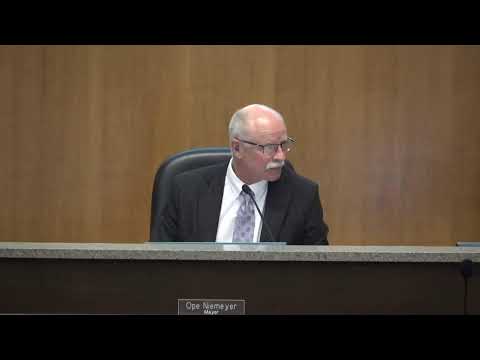
Brookings — A citizen-led committee presented a draft implementation plan Tuesday to merge four local nonprofit economic-development entities — the Brookings Area Chamber of Commerce, Brookings Economic Development Corporation (BEDC), Visit Brookings and Downtown Brookings — into a single organization with a central board and a president and CEO.
The proposal is designed to preserve the existing missions of the four organizations while combining shared services, creating three program pillars (business development, community development and destination development) and centralizing operations such as finance, human resources and marketing. "This is probably the deepest dive we've taken, in these meetings thus far," committee co-chair Nick Wendell told the council.
The committee said the merged entity would seek efficiencies across roughly $1.1 million in current salary and benefit costs for 13 positions, roughly $138,000 in annual office-related costs and about $135,000 in marketing, while coordinating roughly $858,000 in FY25 city funding currently directed at the four organizations. The committee noted about $250,000 of that city support is generated from the city’s lodging (pillow) tax and presently directed to Visit Brookings.
At a public presentation, co-chair Tom Fishback said the group began the work with "a blank page" and conducted interviews with six peer communities in the Upper Midwest that have completed similar mergers. The committee said it studied organizational models, funding approaches and governance structures used elsewhere and convened staff and board forums and two open stakeholder meetings this spring.
Under the draft plan, an initial central board would have 11 voting members plus a nonvoting president/CEO. The proposed selection process calls for a seven-person selection committee to name the first board and would include three partner designees representing the city of Brookings, Brookings County and South Dakota State University. Term language in the draft would allow members to serve up to two four-year terms, with a maximum 10-year cap if selected as officers.
The merged organization’s work would be organized around three outward-facing "pillars": - Business development: advocacy, entrepreneurship support, workforce recruitment and business growth initiatives. - Community development: child care, training and resident-onboarding programs, placemaking and district development. - Destination development: conference and event recruitment, downtown events and tourism promotion, including management of the Visit Brookings brand.
A central shared-services team for sales, data and marketing would support all three pillars, the committee said, and staff positions (office manager, controller and specialists) are proposed but not finalized. "We want to make sure we're vetting those thoroughly, but they are still sort of in that proposal phase," Wendell said.
The committee presented a timeline that calls for a public open house Wednesday, April 30, at McCrory Gardens Visitor Center; formation of an 11-member board by mid-June; an executive search for a president/CEO in the summer; and, if Council affirms the implementation plan, a target launch of the new organization on Jan. 1, 2026. The council will be asked at its May 13 meeting to indicate whether it supports funding a merged entity in the 2026 city budget; the committee said the vote would be an affirmation that the council supports funding the model in the upcoming budget process, not a final sign-off on each staff position or program.
Council members asked about seasonality of work across pillars, the role of advisory councils and how existing projects would transition. Tom Fishback and Wendell said the plan preserves volunteer advisory councils for the three pillars, while shared operational functions (finance, HR) would be staff-led. They also said existing organizations have been asked to fulfill current commitments through the end of 2025 and staff would be expected to continue operations during any transition.
The committee noted that membership and sponsorship revenue currently generates just over $500,000 across the four organizations and that future membership and revenue models would be critical to the merged organization's sustainability.
Next steps: the committee will host the April 30 open house and return to the council on May 13 with a full implementation plan the council can consider for 2026 funding. If the council signals support, the committee expects to name the initial board in June and proceed with a CEO search this summer.