Get Full Government Meeting Transcripts, Videos, & Alerts Forever!
Get email alerts on the Wildfire Mitigation topic
No spam. Unsubscribe anytime.
Residents, council and staff discuss wildfire risk from overhead power lines and SDG&E mitigation plans
Summary
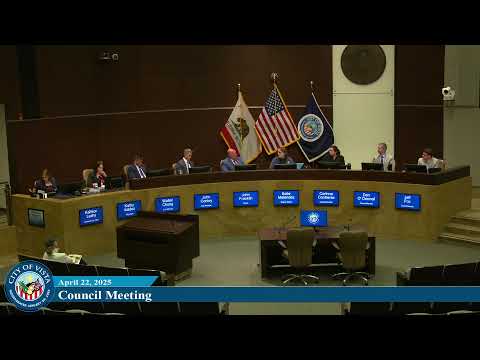
At a Vista City Council meeting, speakers discussed regional coordination, SDG&E’s pole replacement and preemptive shut-offs, thermal cameras and fuel-abatement partnerships with the Vista Fire Protection District.
A public commenter urged the City of Vista to press for regional funding and coordination to reduce wildfire risk posed by overhead transmission lines, and asked whether the city was working with neighboring jurisdictions and elected officials to seek state or federal support.
“A lot of weight” would come from a regional approach, the resident said, naming Oceanside, San Marcos, Fallbrook and Carlsbad and asking whether the city had asked Assemblymember Davies, Senator Blake Spear, Supervisor Desmond or Congressman Levin for funding.
A city staff member responding to the question said the city “work[s] really well with SDG and E” and that San Diego Gas & Electric sponsors the countywide wildland drill. The staff member told councilors that the largest transmission lines use metal poles and that SDG&E is conducting a multi-year program to remove wooden poles in high wildland areas and replace them with metal, though the program is on a schedule and “it’s gonna take time.”
The staff member added that SDG&E operates numerous weather monitors across the county — “probably about over 150” — and that the utility has performed preemptive public-safety power shutoffs when wind and other conditions meet its thresholds. “During the high wind events… they shut down,” the staff member said, and recounted that part of Vista has been shut off during red-flag warnings.
Speakers praised the local partnership with the Vista Fire Protection District. A council member noted the district’s fuel-abatement work outside the city limits and called the district “the key to protecting the city because the fire is gonna come from the East.” Council members and staff also discussed thermal-imaging cameras used to detect fires earlier. One council member said the city’s cameras cover the mountain region between Vista and San Marcos and that additional county and university-operated cameras are used when a call indicates a wildland fire.
The meeting record shows broad support for continued coordination with SDG&E and the fire district, and several council members offered to sign on to efforts to seek more funding or to support regional advocacy. No formal motion to direct staff to pursue specific legislative or funding actions on power-line upgrades appears in the transcript.
Why it matters: Overhead transmission infrastructure, preemptive outages and fuel loads are recurring drivers of wildfire risk. The discussion highlights the city’s reliance on SDG&E’s multi-year pole-replacement schedule, the Vista Fire Protection District’s role in fuel abatement outside city limits, and existing detection tools such as thermal cameras and countywide weather monitors.
What was not decided: The council did not adopt a formal policy or a binding directive during the discussion to request funds from named legislators or to join a regional legislative advocacy campaign. The transcript records offers of support from council members but no formal motion or vote on that next step.
Community context and next steps: Councilors asked staff to follow up with the Vista fire coordinators and SDG&E to obtain timelines for pole replacement and other mitigation steps. The staff member said those timelines could be requested from the fire coordinators, and council members expressed readiness to sign additional support letters if staff identifies formal opportunities.