Get Full Government Meeting Transcripts, Videos, & Alerts Forever!
Get email alerts on the Public Safety Gun Violence topic
No spam. Unsubscribe anytime.
Syracuse mayor l office outlines budget, staffing and plans as grant funding phases out
Summary
City staff told the Syracuse City Council that ARPA funds ended in March and DOJ and DCJS grants will cover staff and programming through varying dates; the office plans a training academy, partnerships with SPD and a possible $11.8 million state contract if the city applies.
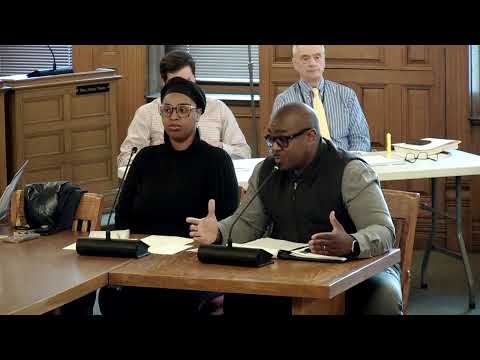
An office representative for the Mayor l Office to Reduce Gun Violence presented the office—s staffing, funding and program plans to the Syracuse City Council during a budget update, explaining why the proposed FY26 budget is larger than FY25 and how expiring grants affect positions.
Anissa Evans, program manager in the mayor—s office to reduce gun violence, said the FY25 adopted budget listed $265,676 and that a main reason the FY26 proposed total is higher is that "the fringe benefits were not accounted for originally in the budget." She said the adopted number increased after fringe benefits for current staff were added to the baseline.
The presentation said federal American Rescue Plan Act (ARPA) funding that supported programming ran out in March and that U.S. Department of Justice (DOJ) grant funds still cover some positions and programming for a limited period. Staff said some DOJ funds will cover certain salaries and fringe benefits through December for one staff member and through April 2026 for another, while other DOJ grant activity will continue later in the year. Staff also identified a Department of Criminal Justice Services (DCJS) grant that funds three part-time "credible messengers."
The office listed specific budget items included in the proposed FY26 figures: $200,000 proposed to be allocated for a trauma-response contract with a vendor identified in the presentation as "Unbelievable," $96,684 to cover salary and fringe for a staffer named Latif, and $74,856 to cover the presenter—s salary and fringe. Staff said a portion of those personnel costs will be covered by DOJ grant funds while they remain active.
The office said it has secured $70,000 in state funding for the credible-messenger positions and is pursuing an additional $50,000 through the state budget process; staff said if the pending state funding is not approved the positions funded by that money could end when the grants expire. On that fundraising path, the presentation identified a separate potential state contract (referred to in the meeting as the SNUG component) with an estimated budget of $11,800,000, and said the city intends to pursue the contract so services would be run by city employees and administered by the mayor—s office if awarded.
Beyond budget figures, staff described program operations and partnerships: three DCJS-funded credible messengers who perform case management and mentoring, regular coalition meetings with county and federal prosecutors and city leaders held the first Thursday of each month for crime-analysis planning, monthly meetings with community-based organizations on the third Thursday, and a planned faith-based convening expected to begin in June for Gun Violence Awareness Month. Staff also described outreach practices that include coordinated notification letters and joint outreach with Syracuse Police Department officers and analysts.
On program outcomes, staff said the ARPA-funded pilot aimed to enroll 50 high-risk individuals. The presenter declined to give an exact total for signed participants but said more than 13 people received therapy through a vendor funded by ARPA and that the office has engaged many of the target individuals for services. Staff said more than 20 people have participated in workforce-development placements or supports (examples given: hires at Upstate hospital, placements moving toward the Carpenters Union through CNY/CMY Works, and jobs with moving companies), and that outreach continued for individuals who declined to sign formal program agreements.
Staff outlined operational changes based on lessons from the pilot: creation of a training and vetting academy for credible messengers, more rigorous interviewing and oversight of organizations receiving city funds, and stronger data collection to connect outputs (activities) to outcomes (shooting reductions or other impact metrics). The office said it is increasing emphasis on a data analyst role to better track shootings and individual outcomes.
Council members asked for clearer breakdowns of participant counts, how long grant funding will cover staff, and the sources that will pay for each line in the proposed budget. Staff replied that ARPA ended in March, DOJ funds cover portions of salaries for limited periods (dates were provided during the presentation), DCJS funds cover three part-time credible messengers, and that pending state funds are being negotiated.
The office did not request new recurring general-fund positions at the meeting; staff said some positions will move to the general fund only after grant funding expires unless additional grant or state funding is secured. The presentation closed with staff saying they would continue to pursue grant opportunities and training partnerships and that they will report additional participant and placement details when available.