Get Full Government Meeting Transcripts, Videos, & Alerts Forever!
Get email alerts on the Housing And Community Development topic
No spam. Unsubscribe anytime.
Draft CDBG budget trims awards across agencies to fund new programs, councilors press for consolidation
Summary
Neighborhood and Business Development staff presented a draft Community Development Block Grant (CDBG) program‑year '51 budget that spreads limited federal funds across existing and several newly added programs, requiring reductions of about 6%–15% to accommodate the new awards.
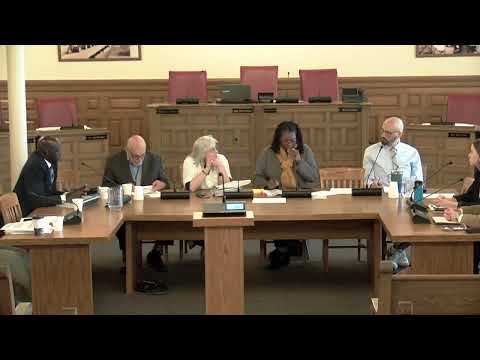
Neighborhood and Business Development staff presented a draft Community Development Block Grant (CDBG) budget for program year '51 at a Syracuse City Council budget review session, outlining across‑the‑board reductions to agency awards so several new programs could be added.
The draft assumes the city will receive about the same combined federal allocation as last year and therefore keeps an estimated total similar to program year 50; staff said the final plan will be revised when the U.S. Department of Housing and Urban Development (HUD) issues an official allocation. Neighborhood and Business Development staff noted HUD rules limit CDBG administrative charges to 20% of an entitlement and cap funding for public‑service activities at 15% of the jurisdiction's annual CDBG allocation.
“To the extent we can within the bounds of the HUD guidelines, we tried to keep everyone at an even place,” a Neighborhood and Business Development staff member said, describing staff's approach to distributing limited dollars. The staff member added: “20% is the most that we are allowed to take from HUD and we generally try to leverage that as much as we can.”
Why reductions were proposed
Staff said several organizations submitted new applications this year and the RFP review committee — composed of foundations, domain experts, neighborhood residents, business owners and council representation — recommended funding the new requests. Given a roughly flat total, staff recommended funding the new programs by taking small reductions across most existing awards: programs run by organizations with a HUD community‑based development organization (CBDO) designation or those classified as housing programs received about a 6% reduction from prior funding levels; programs that do not meet those criteria were proposed to take about a 15% cut.
The staff presentation listed the principal HUD grants that fund the budget: Community Development Block Grant (CDBG, the most flexible of the three), Emergency Solutions Grant (ESG, targeted to homelessness services) and HOME Investment Partnerships (HOME, targeted to housing development for households under 80% of area median income). The staff member said the city operates under a five‑year consolidated plan; program year '51 is the first year in a new five‑year cycle.
New or moved programs in the draft
Staff described several newly added or newly CDBG‑funded programs in the draft budget: - Peace, Inc.: a barrier removal component for weatherization that covers direct costs HUD does not reimburse, intended to leverage other energy‑related funds. - Jubilee Homes: a quadrant neighborhood stabilization program. - Onondaga Earth Corps: a youth conservation corps with workforce training components. - Volunteer Lawyers Project: new legal services and estate‑planning assistance aimed at homeowners. - Blueprint 15: a neighborhood‑based outreach “faith program” to advance independence through homeownership and targeted estate‑planning referrals. - Liberty Resources — DePalmer House: a program shifted from ESG to CDBG to add funding for the Homeless Management Information System (HMIS) reporting costs that the Continuum of Care has requested.
Staff said one Jubilee Homes application (access to housing information) was not funded in this draft.
Councilor concerns and staff responses
Several councilors pressed staff on strategy and impacts. One councilor argued the draft risks spreading scarce dollars too thin and urged the city to explore consolidating overlapping services. Councilors raised specific concerns about cutting long‑standing providers such as Interfaith Works, noting that a 15% reduction can meaningfully affect service delivery to new Americans and others who rely on monthly stipends and resettlement assistance.
Staff responded that the newly included programs are not brand‑new to the community even if they are new to CDBG funding; staff said Peace, Inc.'s weatherization work and Onondaga Earth Corps' workforce programs have prior track records. Staff also said the RFP committee reviewed fiscal eligibility and program merit before recommending awards.
On the distinction between seemingly similar services, staff explained that two separately funded organizations provide different roles: CNY Fair Housing handles investigation and litigation for fair‑housing complaints, while another program focuses on housing‑rights education and tenant outreach. Staff said they encourage coordination between organizations where appropriate but respect agencies' independent governance and mission choices.
Administrative costs, CBDO status and a $100,000 buffer
Staff explained the city typically budgets up to the HUD 20% administrative cap to cover salary and legal/accounting work connected to federal grants; those administrative dollars have previously funded housing positions that were cut when administrative revenue declined. When asked whether the city could reduce its administrative charge to preserve program funding, staff said cutting admin would not change the HUD public‑service cap and would shift costs to local taxpayers.
Staff also called attention to an unallocated $100,000 line in the draft budget and said the council could direct that money to public‑service programs if it wished. Staff said they also encourage agencies to pursue CBDO eligibility because that status allows certain activities to be funded outside the public‑service cap, but that changing board composition or mission is the agencies' decision.
Community ambassadors and coordination
Staff described the Center for Justice Innovation‑run community ambassadors program (four ambassadors plus a lead) as an independent, case‑management‑intensive effort the city does not fund through CDBG. Staff said ambassadors provide neighborhood‑based outreach, weekly case reporting and system‑level debriefs, and make referrals to fair‑housing, tenant networks and legal services when appropriate.
Next steps
Staff emphasized the draft is built on an estimated federal allocation and that the city will revise the budget when HUD issues an official allocation, which staff said they expect within weeks. The draft will return to council with final figures and any required adjustments to keep the budget within HUD rules.
Ending
Neighborhood and Business Development staff closed by asking councilors to continue conversations with agencies and to discuss consolidation possibilities offline with agency boards. Staff said they will return with the official HUD allocation and a finalized funding recommendation for council action.