Lifetime Citizen Portal Access — AI Briefings, Alerts & Unlimited Follows
Russian UN envoy says Ukraine violated 30‑day moratorium on energy strikes, accuses Western backers of inaction
Loading...
Summary
The Russian ambassador to the United Nations told reporters that a March 18 agreement limiting strikes on energy infrastructure has been observed by Russia but repeatedly violated by Ukrainian forces, and that Western countries declined to press Kyiv during Security Council consultations.
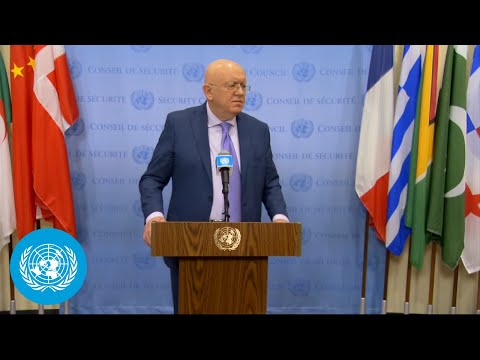
The Russian ambassador to the United Nations (name not given), speaking at a Security Council press briefing, said that a March 18 bilateral understanding establishing a 30‑day moratorium on strikes against energy infrastructure between Russia and Ukraine has been observed by Russia but repeatedly violated by Ukrainian forces.
The ambassador said the moratorium was proposed during a March 18 phone call between U.S. President Donald Trump and Russian President Vladimir Putin and that, in Russia’s view, Moscow gave immediate orders to comply. “Russia has been, from day 1, strictly observing the terms of this understanding,” he said, and added that Ukrainian forces “have conducted over a 20 strikes,” naming energy facilities in Krasnodar, Belgorod, Bryansk, Zaporizhzhia, Kursk and Kherson regions.
The statement came after what the ambassador described as closed consultations at the Security Council about implementation of the moratorium. “Frankly, these were the, the most odd consultations I participated in during my time here. I spoke, US spoke, nobody else spoke,” he said, criticizing Western delegations’ decision to request a closed briefing rather than discuss the issue in open consultations.
Why it matters: the exchange frames compliance with a temporary ceasefire over critical energy infrastructure as a live dispute at the United Nations and undercuts prospects for a broader negotiated cessation of hostilities if the parties and council members do not agree on monitoring and enforcement.
Details and examples cited by the ambassador: he said Russia circulated on April 2 a letter to the Security Council listing alleged violations in March. He pointed to specific incidents, saying Ukrainian forces struck a facility in the settlement he named as Kavkaskia that transfers oil into the Caspian Pipeline Consortium system and that the strike caused a fire covering 1,700 square meters. He also alleged multiple attacks near the Kursk nuclear power plant, sabotage of a gas metering station in the Kursk region, and that on March 28 a station was “completely destroyed using HIMARS rocket systems.” He further accused Ukrainian forces of attacks on the Karinosky compressor station (part of TurkStream infrastructure) and of directing drones at a gas distribution station on April 9. He said a drone was neutralized about 300 meters from the Zaporizhzhia nuclear power plant, near “Building G,” which he described as housing a full‑scale reactor simulator.
The ambassador said Moscow has shared updated reports on Kyiv’s alleged noncompliance with “partners and with relevant international institutions” and that when he asked other delegations whether they would pressure Ukraine to observe the moratorium “there was no clear answer.” He said no new directives had been issued by the Russian president regarding military status.
In a question‑and‑answer session, reporters asked about a possible wider ceasefire, arms transfers and related issues. The ambassador said Russia was skeptical of a comprehensive ceasefire under current conditions, citing past experience with the Minsk agreements and questions about monitoring and verification. He also warned that arms transfers by NATO states, including a contemplated German supply of Taurus missiles to Ukraine, would be a step toward escalation: “If they supply Taurus, that will be another step in the direction of escalation,” he said.
On Iran, the ambassador said he hoped for a political solution between Washington and Tehran and that Iran has the right to peaceful nuclear development; he said Russia would have to assess any specific proposal about uranium stockpiles in the context of how an Iran deal ultimately fares. On Syria, he said there is dialogue between Russia and the transitional Syrian government and that Russian envoys and military contacts have been engaged there.
No Security Council vote or formal council decision on the moratorium or the reported violations was announced during the briefing. The remarks reflect Russia’s position to the council and its claim that Western delegations declined to press Kyiv during consultations.
The ambassador’s allegations were presented as his statements to reporters; the briefing transcript records his assertions and questions from journalists but does not include independent verification of the incidents he described.