Get Full Government Meeting Transcripts, Videos, & Alerts Forever!
Get email alerts on the Emergency Dispatch topic
No spam. Unsubscribe anytime.
Cochise County reviews CECOM budget, staffing and subscriber expansion
Summary
The Cochise County Board of Supervisors on May 1 heard a budget and operations briefing on Southern Arizona Communications (CECOM), the county’s regional public-safety communications partnership, including staffing plans, a proposed subscriber fee model and outreach to new subscribers such as Fort Huachuca and Graham County.
The Cochise County Board of Supervisors on May 1 heard a budget and operations briefing on Southern Arizona Communications (CECOM), the county’s regional public-safety communications partnership, including staffing plans, a proposed subscriber fee model and outreach to new subscribers such as Fort Huachuca and Graham County.
CECOM Executive Director Tammy Jo Wilkins told supervisors the center saw 127,405 incoming calls for service in the most recent year-end reporting, including 45,244 administrative calls and 50,479 calls routed to 9-1-1. “Currently, as of Monday, we are at 66,615 with 17,009 9-1-1 calls,” Wilkins said, adding that the center is “on track to beat these numbers in the next year.”
Wilkins outlined operational improvements and capacity additions made in the last budget cycle. The center added four consoles in November at a cost budgeted at $130,000, and Wilkins said CECOM now has 10 9-1-1 positions in the center with nine fully equipped for radio communications. She said training and staffing have been priorities: the center is hiring and expects to have about 19 dispatchers on staff by July 1, including six trainees.
Wilkins described a change to the subscriber fee model that the JPA recently approved in principle: agencies would be billed $16 per call based on a three-month rolling pull of calls-for-service from the Spillman records system, billed quarterly. She said the fee structure will not take effect until the next fiscal year and that new subscriber contracts will accompany the change so agencies know what services and billing to expect.
CECOM has submitted a state of Arizona 9-1-1 grant application for $295,572 to help fund equipment for 9-1-1 consoles for CECOM and partner sites in Douglas and Benson, and Wilkins said the grant request also includes roughly $24,000 for a VEP data system to support GIS mapping that feeds the 9-1-1 call-routing systems. Wilkins said she manages the grant work with help from Dave Kelso.
Officials outlined outreach to additional subscribers. Wilkins said Fort Huachuca is negotiating an intergovernmental services agreement (IGSA) and could pay roughly $120,000 as a part-time subscriber; she also said Graham County and Santa Cruz County have expressed interest in joining. County staff and speakers noted Douglas currently serves as a backup public-safety answering point (PSAP) and Benson maintains its own PSAP under an existing contract.
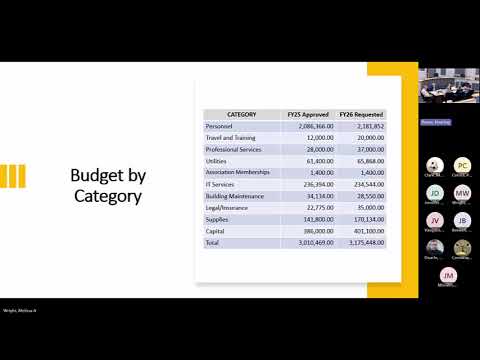
Wilkins requested additional positions in the county budget: one administrative assistant to support finance and recruitment after the county absorbed HR services on Jan. 1, and five additional dispatcher positions to cover potential future demand if Graham County or others subscribe. The dollar amount for that request was unclear in the transcript: Wilkins said “I think the request was $395,000,” and later said “3 60 1,” with the meeting record not providing a single clear final figure.
Board members and other speakers emphasized the regional benefits of a shared dispatch model for rural jurisdictions. Chief Heiser, the operations committee chair, said the model improves interoperability and service delivery. County staff and supervisors discussed the steps required for CECOM to become a separate legal entity under Arizona law and the administrative costs and governance changes that would entail; staff said that transition could take several years and that smaller subscribers could see higher relative costs under a standalone model.
Wilkins said becoming self-sufficient could take “minimum 5 or 6” years and would require subscriber agreements, a larger fund balance and absorption of administrative functions now provided by the county and city. No formal votes were taken during the work session.
The Board of Supervisors scheduled the next meeting (library district) for May 6 at 10 a.m., and the work session adjourned without formal action on the staffing request.