Get Full Government Meeting Transcripts, Videos, & Alerts Forever!
Get email alerts on the Indigenous Rights Climate topic
No spam. Unsubscribe anytime.
Inuit speaker at U.N. forum warns climate change and mineral demand threaten Arctic communities and women's safety
Summary
An Inuit participant at the United Nations Permanent Forum on Indigenous Issues said melting permafrost, coastal erosion and pressure for critical minerals are disrupting livelihoods across the Arctic and urged full implementation of indigenous rights and focused attention on indigenous women and girls.
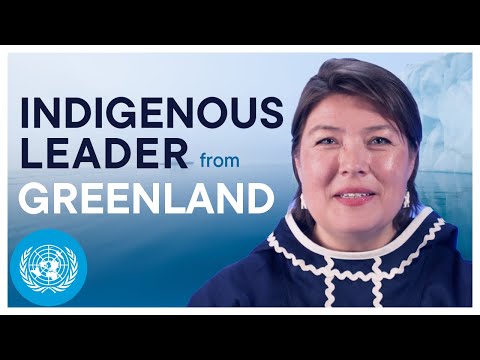
An Inuit participant from Greenland told the United Nations Permanent Forum on Indigenous Issues that climate change and rising demand for critical minerals are threatening Inuit communities across the Arctic, affecting hunting, infrastructure and community safety.
"As an indigenous people, Inuit have occupied, the Arctic for millennia. We mostly live in the areas of the Arctic where there's no trees, no tundra," the participant said. "Having developed highly specialized skills on surviving and thriving in the Arctic, we are about 80,000 in total across the Arctic from Chukotka, Russia, Alaska, Canada, and Greenland where I am from."
The participant said communities are seeing permafrost melt, coastal erosion and changes in sea ice that are altering traditional hunting seasons and access. "We are seeing how permafrost is melting, so our coastal areas are eroding by the sea eating it up. Infrastructure is changing due to thaw of permafrost," the participant said, citing Gellasidnet, Greenland, as an example where sea ice sometimes does not form when it normally would, preventing families who rely on hunting from accessing resources.
The speaker also urged that the global transition away from fossil fuels — and the related surge in demand for critical minerals — not proceed at the expense of indigenous peoples. "We know that more than half of the known deposits are on or near indigenous people's lands. And, we know that this huge pressure to transition away from fossil fuels by the use of critical minerals is going to also put pressure on indigenous peoples," the participant said, calling for processes that "respect the rights of indigenous peoples to be self determining about their own lands and territories and resources."
On rights and safety, the participant welcomed the Permanent Forum's prioritization of indigenous women's rights and flagged high rates of violence against indigenous women, saying Inuit women are "over represented in the statistics on violence against women." The participant referenced existing international instruments as the basis for action, citing the Convention on the Elimination of All Forms of Discrimination Against Women, the United Nations Declaration on the Rights of Indigenous Peoples, and "the very important General Recommendation number 39 on the rights of indigenous women and girls."
"There is basically no negotiation that is not relevant for indigenous peoples. We are affected by all decisions taken in this world and it should be so that we naturally have a seat at the table, that our voices are heard, that our priorities are taken into account, and not least that our rights are upheld in developing new treaties and new agreements and new resolutions," the participant said.
The remarks combined observations about environmental changes already affecting Arctic communities with calls for rights-based safeguards during global policy shifts related to minerals and energy. The participant's testimony emphasized both immediate environmental impacts and the need to include indigenous priorities and protections in international decision-making.