Get Full Government Meeting Transcripts, Videos, & Alerts Forever!
Get email alerts on the Stakeholder Reactions topic
No spam. Unsubscribe anytime.
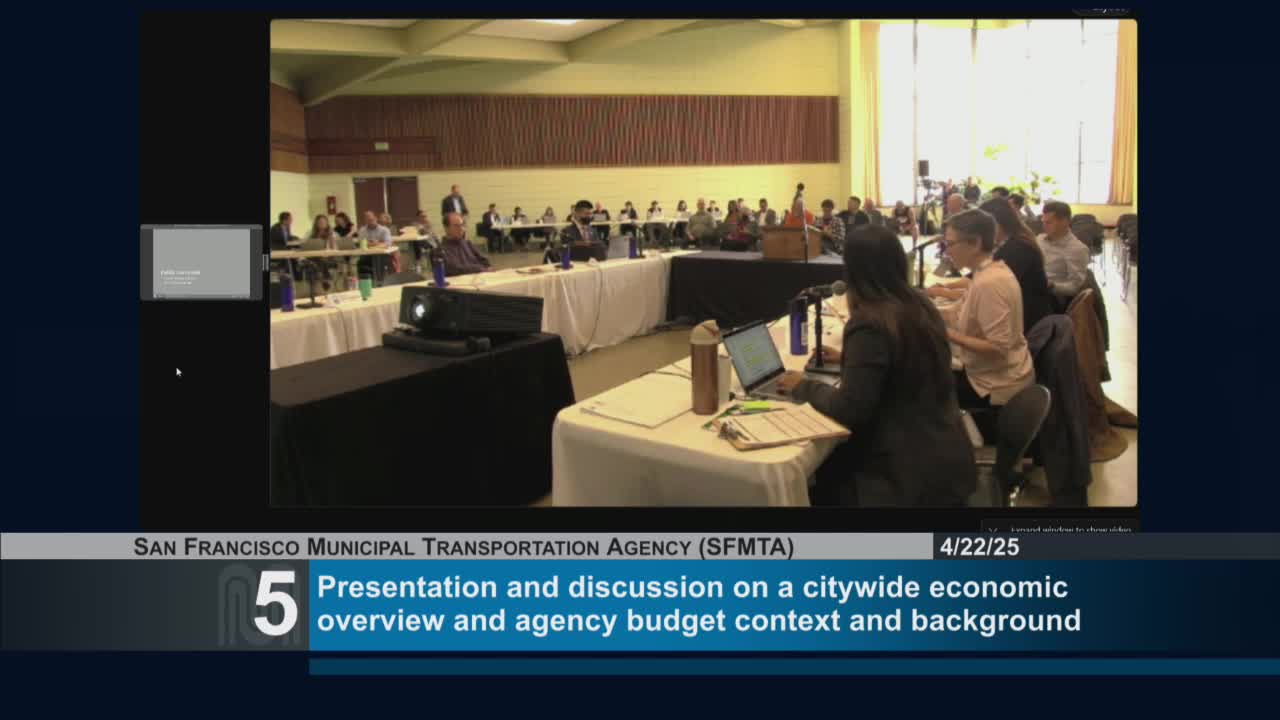
Stakeholders, riders and labor urge revenue-first approach; oppose deep service cuts at SFMTA workshop
Summary
Business groups, labor, rider advocates, youth representatives and community groups told the SFMTA board they prefer revenue and targeted non‑ballot measures over service reductions; safety, youth fares and expanded parking strategies were prominent themes in public comment and a stakeholder panel.
A cross-section of stakeholders at the San Francisco Municipal Transportation Agency workshop told board members they favor options that raise revenue and protect service rather than packages that depend principally on steep service reductions.
Representatives from labor, community advocacy groups, business associations and youth advisory panels said the agency needs a positive, voter-facing vision that shows what improved transit would deliver if funding is approved. "Cuts are off the table," said Emma Hair, representing Supervisor Mirna Melgar's office, summing up her constituents' bottom line for the board.
Stakeholder panelists and public speakers pressed several near-term and ballot-related ideas:
- Parking and pricing changes that the agency controls: multiple speakers urged expanding paid parking hours (evenings and Sundays) and refining residential-permit programs as a locally controlled revenue source. Chinatown advocacy groups and business representatives said any expansion must be designed to limit harm to lower-income residents and small businesses.
- A voter-facing positive vision: transit advocates including Peter Strauss and members of the Transit Riders community said any ballot proposal should pair revenue requests with a clear, tangible vision of what service improvements would look like.
- Safety and reliability investments: labor leaders and operators warned that service reductions would increase crowding and complaints, raise the risk of operator assaults and degrade trust in transit; youth and parent advocates emphasized safety concerns for evening travel and the role of transit in youth mobility.
- Youth fares and equity: youth panelists stressed the value of low- or no-cost youth fares for school and work access. Multiple public commenters and panelists noted that fare subsidies are policy choices with trade-offs: they increase access but are real budget items that must be funded somewhere.
Labor leaders and unions pressed the board to consider the operational impacts of cuts on operators and on service reliability. Anthony Ballester of TWU Local 2 58 and other operators said shorter runs and fewer layovers add stress to staff and increase the likelihood of on-street problems.
Public commenters offered a range of additional suggestions, from airport-based outreach that would steer visitors onto transit to more aggressive station-area merchandising and themed vehicles to increase pride and ridership.
Why this matters: Public support and a broad coalition will be essential if the board pursues local or regional ballot measures to raise long-term revenue. Panelists argued that voters are more likely to back a plan that shows a positive, concrete benefit rather than one framed mainly as preventing cuts. Several speakers also urged the agency to accelerate non‑ballot changes it can implement on its own timetable.
Ending: Board members heard the comments and asked staff to return with refined trade-off analyses, additional detail on parking and non‑ballot options, and clearer public materials the board can use to test voter appetite for particular revenue and policy options. No votes were taken at the workshop.