Get Full Government Meeting Transcripts, Videos, & Alerts Forever!
Get email alerts on the Ems Training topic
No spam. Unsubscribe anytime.
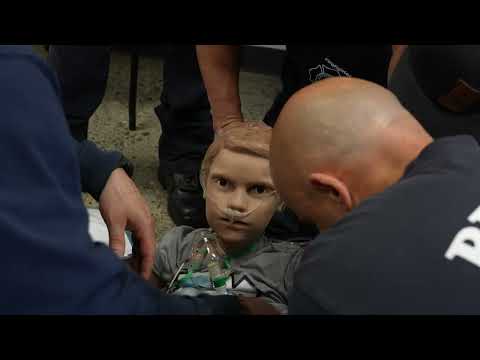
High-fidelity pediatric simulation used to train nearly 400 EMS providers since Jan. 1
Summary
A staff member said a recently launched high-fidelity pediatric simulation program, using a school nurse setting and advanced mannequin features, has trained about 400 emergency medical services providers since Jan. 1. Trainers emphasized practicing seizure response and realistic clinical cues.
A staff member said the agency's high-fidelity pediatric simulation program has trained nearly 400 emergency medical services providers since Jan. 1.
The staff member said the most recent scenario was staged in a school nurse's office and focused on recognizing and managing a continuing seizure in a pediatric patient, a condition the presenter said is often missed.
"We try and form these training scenarios to be the most accurate, most real life as possible," the staff member said. "Today's scenario was in the nurse's office, so the school nurse was here to kind of give them those that extra information. Something that is missed often is the continued seizure in our pediatric kids. It's a dry 99.1. Okay."
Trainers described the mannequin's physiological responses and clinical interfaces used during the simulation. "He is able, if you can kind of see him, his eyes are moving a little bit. He will do eye tracking, so he'll track shadows. His pupils will respond if you put the light up to him," the staff member said, adding that the mannequin exhibits chest rise and fall and produces audible heart and bowel sounds. The presenter also said trainees can practice invasive procedures on the mannequin: "We can do IVs. We can put, you know, IO bone needles in him, give him fluids."
The presentation emphasized hands-on workflow for a seizing child: getting the patient on the ground, positioning on the left side, and monitoring vital signs. "And shaking, we'll call that the seizure for the scenario. Let's get him on the ground. Let's get him on his left side," the staff member said. The trainer requested another blood pressure reading during the demonstration.
The staff member said the program "went live" after Jan. 1 and reported the rough cumulative training count: "we've been able to provide training, I believe, to almost 400 EMS providers so far since the January. It's been pretty incredible." The transcript did not specify the agency operating the program, funding sources, exact dates of individual sessions, or any formal approvals associated with the training rollout.
No formal motions, votes, or policy decisions related to the simulation were recorded in the provided transcript excerpt.