Get Full Government Meeting Transcripts, Videos, & Alerts Forever!
Get email alerts on the Pollinator Habitat topic
No spam. Unsubscribe anytime.
Speakers describe NRCS pollinator-friendly wildlife habitat planting as flexible option for landowners
Summary
Attendees at a public meeting described a USDA Natural Resources Conservation Service practice that adds a pollinator-friendly modifier to wildlife habitat planting to benefit monarch butterflies and honeybees, and said NRCS guidance and a local tree grant helped implementation.
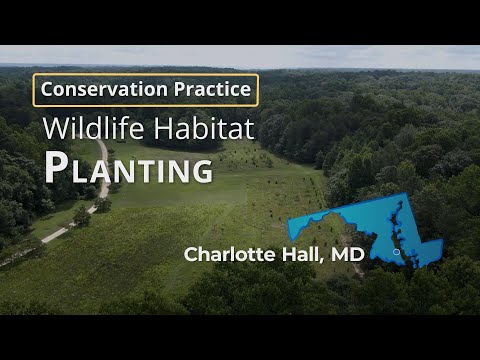
Speakers at a public meeting described a USDA Natural Resources Conservation Service (NRCS) practice that adapts wildlife habitat planting with a pollinator-friendly modifier intended to benefit monarch butterflies and honeybees.
The practice, several speakers said, is meant to provide flexible habitat on farmland without creating a permanent cover that would prevent future crop production, and NRCS staff provided guidance and support during implementation.
Commenter 1, a resident, described the practice as an adaptable planting approach: "The practice is wildlife habitat planting that is more of a standard practice, and then they've added an additional modifier to the practice that makes it more friendly towards pollinators and specifically monarch butterflies. Wildlife habitat planting is a great alternative because it's not a permanent fixture necessarily. So it gives you that flexibility if you're a landowner who wants less maintenance and more conservation habitat." The speaker framed the pollinator modifier as a way to lower long-term maintenance while preserving conservation habitat.
A second speaker said the plantings also supported beekeeping on nearby properties. Commenter 2, a resident, said, "I started doing bees, honeybees. And the first thing we did was the trees, which we got a grant for, and they're indigenous to Maryland, and they've got flowers that come in. But then when we got suggested to do wildflowers for the butterflies, I went, that's perfect for bees. The wildlife habitat planting definitely ticks a lot of boxes for what they wanted to do and then what kind of priority habitat we'd like to help farmers implement on their fields. The wildlife habitat planting helps them maintain the fields in an open environment without putting trees that would be hard to convert back to crop production in the future." The speaker added later, "And then it also provides benefits for their honeybees. We've never grown anything until now. Now we're growing wildflowers and putting up habitats." These remarks linked a local tree grant and the choice to establish wildflowers to both monarch and honeybee habitat goals.
Commenter 3, a resident, reported direct experience with agency assistance: "Working with NRCS has been fine. it it they were very informative in the beginning, explained a few things. Once we started into it, it's it's been a treasure." The speaker attributed the positive experience to NRCS outreach and guidance.
The transcript provided contains only public remarks and practical descriptions; no formal motion, vote, or decision about adopting or funding the practice appears in the provided excerpts. The remarks centered on landowner flexibility, pollinator benefits (monarchs and honeybees), and NRCS technical support and outreach.
No formal actions or votes on the practice were recorded in the provided transcript.