Get Full Government Meeting Transcripts, Videos, & Alerts Forever!
Get email alerts on the Public Safety Fire Protection topic
No spam. Unsubscribe anytime.
Kershaw County Council approves first reading to require fire hydrants for minor subdivisions after contested debate
Summary
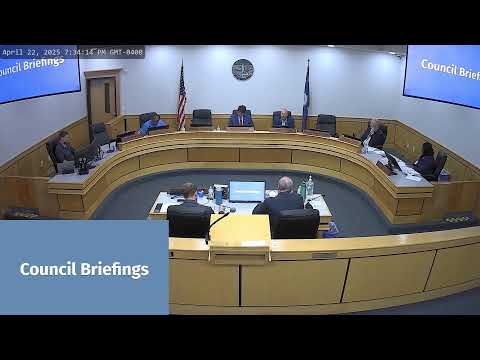
After extended discussion about costs and administrative burdens, Kershaw County Council voted 3-2 to approve first reading of an ordinance that would require installation of fire hydrants for minor subdivisions where existing public water infrastructure can sustain fire flow.
Kershaw County Council voted 3-2 on April 22 to approve the first reading of an ordinance that would require developers to install fire hydrants for minor subdivisions when existing public water infrastructure can sustain the necessary fire flow.
Proponents said the change is aimed at improving fire protection in developing areas; opponents warned it could burden small local builders and create administrative complexity. The ordinance will return for a second reading and any additional amendments before final adoption.
Councilman Shumate proposed the reading and led off supporters’ arguments, saying the county ultimately pays more when neighborhoods lack adequate water for firefighting. “I think it's necessary, and the reality is we end up having to pay these prices down the road if we don't have adequate fire systems,” he said during the meeting.
Fire officials and staff outlined how the rule would work in practice. Chief Bullard said the requirement applies only when water infrastructure and sufficient flow already exist; hydrants would be required where no other exemption applies and where a new subdivision would not be within 500 feet of an existing hydrant. “If the infrastructure’s there, the hydrants would be required,” Chief Bullard said, describing the 500-foot coverage rule that guides many hydrant-placement decisions.
Several council members pressed for operational details. Council members asked who would contract and pay for hydrant installation; Chief Bullard and county staff said the current draft places the installation responsibility on the developer and that most water districts work directly with developers to install hydrants. When asked how much a hydrant costs, a county official replied, “About $6,000.”
Opponents emphasized impacts on smaller, local builders. “When we apply the same rules across the board, we hurt the little man,” Councilman Bridal said, urging clearer protocol for small-scale subdivisions. Councilman Jones and others asked whether the county could accept payment from developers and coordinate installation with water providers to avoid projects stalling while individual property owners navigate multiple utilities. Staff and the county attorney cautioned that shifting the county into a role of facilitating installations could create operational and administrative burdens.
Council members who supported the reading said the item can be refined between readings. Deputy county counsel noted a public hearing was advertised as required by the code and said the council could hold input sessions or return the ordinance with amendments prior to a final vote.
The council recorded the reading vote as 3 in favor (Councilmen Shumate, Tucker and Cato) and 2 opposed (Councilmen Bridal and Jones). The ordinance proceeds to a second reading where staff has been asked to provide clearer protocol and options for collection/coordination of installation costs.
The debate highlighted a policy tradeoff between increasing fire protection and keeping subdivision rules proportionate for small, local developers. Council members asked staff to return with more detail on: whether the county can collect funds and contract installations; typical hydrant and installation costs; how water providers handle minor subdivision requests; and the likely administrative workload for staff if the county took on coordination duties.