Get Full Government Meeting Transcripts, Videos, & Alerts Forever!
Get email alerts on the Motor Carrier Preemption topic
No spam. Unsubscribe anytime.
Council moves to appeal federal court ruling that limits city—s authority over truck restrictions
Summary
After a city attorney briefing on a federal court decision that found federal law can preempt local truck-route and weight restrictions, the council voted to urge the state attorney general to appeal and to sponsor state legislation to restore local authority.
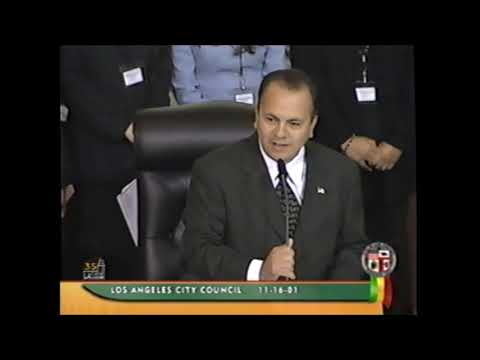
The Los Angeles City Council voted Friday to seek state and federal remedies after a federal district court ruling, following a Ninth Circuit decision, narrowed municipalities— ability to regulate motor carriers and related truck restrictions on city streets.
Deborah Gonzalez of the city attorney—s office told the council the ruling followed an earlier Ninth Circuit opinion and held that federal law preempts state statutes to the extent those statutes delegate authority to municipalities to regulate motor carriers. "The court found that the federal act preempts the state in a number of areas," Gonzalez said during a council briefing on the case and its implications.
The ruling, the city attorney said, significantly reduces local regulatory authority over vehicle weight limits, routes and other restrictions when vehicles meet the federal definition of a motor carrier. Gonzalez told the council that enforcement of local ordinances regulating the movement of property by truck could be preempted if those vehicles fall within the federal motor-carrier definition.
Council members pressed for next steps. Several members said the decision could strip cities of tools used to protect residential streets and neighborhoods from heavy truck traffic. Councilmember Zine asked whether the city—s 6,000-pound weight-limit ordinances could be preempted; the city attorney replied, "If it falls within the definition of motor carrier that is covered by the federal law, yes. We would be preempted." Gonzalez said the city has been coordinating with other California cities and the League of California Cities— legal committee and that the committee voted to urge the state attorney general to appeal.
The council approved two related measures. In item 18a the council resolved to continue urging the state attorney general to appeal the decision and to include a request in the city—s legislative program to seek authority for local regulation. The council also approved item 18b to sponsor state legislation to give cities the explicit ability to prohibit certain types of vehicles from specific city streets.
City staff described practical consequences the ruling could have for local enforcement. Gonzalez told the council that municipal weight limits and route restrictions could be vulnerable: "Any restriction on trucks that are carrying property or goods is not permissible by municipalities, waste or otherwise," she said in explaining the court—s reading of the federal statute. She added that the state still retains authority to regulate safety issues, and that one approach would be to seek federal legislative change clarifying municipal authority.
The council voted to ask the attorney general to appeal and to seek legislation at the state level; both actions passed in roll calls later in the meeting. The final vote on the package of legislative steps was recorded as 13-0. The city attorney and staff said they would coordinate with other affected cities and the League of California Cities on an amicus strategy and on drafting proposed state legislation.
The council—s actions do not alter current city code immediately; they authorize legal and legislative steps to attempt to restore or preserve local control. Councilmembers repeatedly emphasized the need for a coordinated legal and legislative response to preserve neighborhood protections and public safety authorities.