Get Full Government Meeting Transcripts, Videos, & Alerts Forever!
Get email alerts on the Eldercare Emergency Plans topic
No spam. Unsubscribe anytime.
House commission reviews Senate Project 149 to tighten emergency-planning requirements for licensed eldercare facilities
Summary
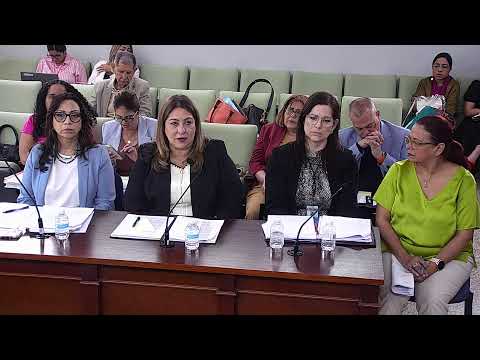
The House of Representatives Commission on Older Adults and Social Welfare on Friday, May 2, 2025, heard testimony on Senate Project 149, which would amend Law No. 94 (June 22, 1977) to require licensed long‑term care facilities in Puerto Rico to submit annual, department‑approved contingency plans for hurricanes and other emergencies.
The House of Representatives Commission on Older Adults and Social Welfare on Friday, May 2, 2025, heard testimony on Senate Project 149, which would amend Law No. 94 (June 22, 1977) to require licensed long‑term care facilities in Puerto Rico to submit annual, department‑approved contingency plans for hurricanes and other emergencies. No committee vote was taken at the hearing.
The measure would add details for contingency plans — including provisions to operate without electricity or potable water and protocols for supplies, medications, staffing and resident movement — and, as drafted, calls for planning for up to 30 days of disruption. That proposed 30‑day planning horizon prompted discussion about possible conflicts with existing law and the capacity of facilities to comply.
Susan Roy, Secretary of the Department of the Family, told the commission that the department has begun an islandwide census of licensed homes and is visiting each facility "para validar la ubicación geográfica de este hogar como cisternas y generadores eléctricos" and to document what residents depend on electrical devices. "El día de ayer inició un censo a nivel isla de todos los hogares licenciados para adultos mayores por el departamento de la familia," Roy said, adding the exercise is intended to produce an updated inventory and to accelerate compliance checks ahead of hurricane season.
Francis Vidal Rodríguez, appearing for Yolanda Varela, the procuradora for the Office of the Procurador for Older Persons (OPEA), said the OPEA annually sends advisories and a needs‑assessment form to long‑term care homes and follows up on complaints. Vidal told the commission that OPEA inspections in the most recent fiscal year found 110 homes with expired emergency plans out of 1,409 visits, a 7.81 percent rate: "Para el año fiscal pasado ... la OPEA encontró 110 hogares con planes de emergencia vencidos," she said.
Officials and advocates at the hearing described three practical issues the bill must address before it becomes law: (1) whether municipal emergency offices or the central Negociado para el Manejo de Emergencias y Administración de Desastres (NMEAD) should certify facility plans, (2) the possible conflict between the bill's 30‑day text and existing statutory or regulatory timeframes (current law and regulations include a 5‑day cistern requirement and a 20‑day generator/fuel expectation), and (3) how to enforce standards in under‑resourced facilities.
Omar Arias Nieves of the Department of Public Safety and Gisela Rosario of the NMEAD emphasized that municipal emergency offices have primary responsibility for validating local plans and urged that the bill be amended to require endorsement or certification by the municipal office where each facility is located. Rosario said the NMEAD will continue to train and support facilities through its regional offices but cautioned that certification is a local function: "La responsabilidad de adiestrar y de orientar y de realizar planes ... es de la oficina municipal para el manejo de emergencia," she said.
Witnesses noted potential inconsistency between the bill and existing requirements. Testimony cited Law No. 88 of 2018 and implementing regulations that currently require cisterns and fuel to support operations for specified days after an event. Francis Vidal and other witnesses asked sponsors and staff to reconcile the bill’s 30‑day language with the existing statutory/regulatory text to avoid contradictory obligations.
Department of the Family officials described enforcement procedures: the department conducts routine visits (inspections at least once every three months under current regulatory language) and said an initial census visit will be "de cortesía" with a short corrective window; subsequent enforcement visits may lead to corrective plans, fines or, if necessary, license suspension or closure. Roy said the initial census visits give facilities five days to present a corrective plan, after which follow‑up action occurs.
Several legislators raised concerns about capacity and timing. Representative Alicia Burgos, the project's floor sponsor, and other members asked whether small facilities can meet certification, staff‑training and stockpiling requirements without financial or technical assistance. Some members suggested including mandated training (the bill’s Section 4(c) references workshops) and questioned how many trainings and what content would be required; the NMEAD and OPEA said they already coordinate annual general training and regional, facility‑specific validation.
Committee members also asked for additional documentation. The OPEA agreed to provide, within five days, a breakdown of the 110 expired‑plan findings by licensing agency (Department of the Family, Department of Health, and other accreditors) and by region. Members asked the committee staff to obtain written comments from the Puerto Rico Federation of Mayors and the Association of Municipalities on whether municipal emergency offices can take on the proposed certification role.
No amendments were adopted at the hearing and no final committee vote was recorded. The commission scheduled no further floor action at the hearing's close; staff and witnesses were asked to submit written materials and statistics to the committee for its ongoing review.
For the record, witnesses and officials who testified or were recognized at the hearing include Susan Roy (Secretary, Department of the Family); Francis Vidal Rodríguez (representing procuradora Yolanda Varela, Office of the Procurador for Older Persons); Omar Arias Nieves (Department of Public Safety); Gisela Rosario (Negociado para el Manejo de Emergencias y Administración de Desastres); and Representatives Alicia Burgos, Lendi González, Junior Pérez Ortiz and Lourdes Ramos, among others.
The hearing focused on aligning statutory language, clarifying which office certifies plans, and identifying practical steps to help smaller or underfunded homes comply before the 2025 hurricane season. The commission requested supplemental data and written opinions before advancing the bill further.