Get Full Government Meeting Transcripts, Videos, & Alerts Forever!
Get email alerts on the Police Mental Health Wellness topic
No spam. Unsubscribe anytime.
Eugene subcommittee approves annual report, weighs new mental‑health tools and programs for police
Summary
The Eugene Police Commission subcommittee approved its annual report and discussed a draft law‑enforcement mental health and wellness policy that would formalize peer support, temporary duty options, concussion protocols, EMDR‑based ASAP treatment and potential use of cranial electrotherapy devices and a comfort canine program.
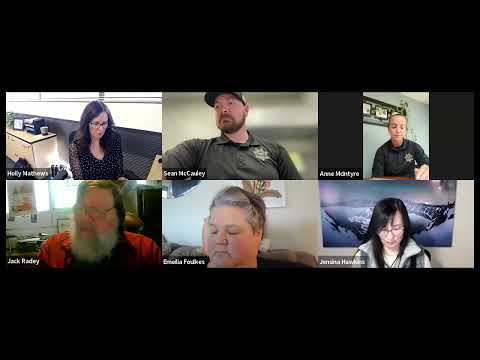
At a meeting of the Eugene Police Commission subcommittee on law enforcement mental health and wellness, members approved the subcommittee’s annual report and discussed a draft departmental policy and programs aimed at officer mental health and resiliency.
The session included two formal presentations: Sergeant Jacqueline McIntyre summarized takeaways from a regional wellness conference and how Eugene’s peer support and critical‑incident response practices compare to other agencies, and Sergeant Sean McCauley reviewed a draft policy intended to unify existing wellness programs and to add new procedures such as an EMDR‑based acute stress adaptive protocol (ASAP) and consideration of cranial electrotherapy devices (CES/Alpha Stim).
The draft policy is intended to be an umbrella that points to separate procedures for specific programs, including peer‑support resiliency team operations, selection and training, temporary duty assignments for officers showing signs of stress, concussion monitoring after force or injury, and administrative time‑off options. McCauley said the subcommittee’s goal is to convert multiple informal practices into written procedures. “I have draft policies created for acute stress adaptive protocol and cranial electrotherapy devices,” he said. He added that the department already uses trained peer supporters and outside clinical advisers for more advanced treatment.
McIntyre highlighted conference discussions on peer support, field training‑officer burnout and community engagement practices used by other cities. “I do think Oregon is leading and I do think our agency is leading with our peer support and response team,” McIntyre said, describing how supervisors and a peer‑support team are activated after critical incidents and how confidentiality is managed.
Committee members asked for specifics the policy should capture: the standard six‑month limit on ad hoc subcommittees and the city council’s decision to authorize the group for two years; how selection, funding and ongoing training will be handled; and where responsibility sits for implementation and oversight. Commissioners asked staff to assemble or point to existing procedures that define how each program is accessed, how many uses are allowed, who approves time off, and how use is logged.
On several program details, presenters gave clarifications rather than final commitments: McCauley said ASAP is an EMDR‑based therapy that can be delivered confidentially by trained peer supporters and external clinicians; CES/Alpha Stim is a medical device with contraindications (for example, pregnancy and pacemakers) and needs clinical oversight and contracting; a proposed comfort canine program is currently a placeholder in the draft, pending funding, union discussions and procedural work. He also described temporary duty assignments used elsewhere as voluntary six‑month details — sometimes tied to family stressors or critical incidents — intended to keep officers working in reduced roles rather than removing them entirely.
On operational safety, McIntyre described tightened narcotics handling and testing protocols since the region’s fentanyl surge: the department has reduced ad hoc roadside field testing, moved testing into controlled hoods and evidence rooms and uses a mobile testing device with photographic records to limit exposure. Commissioner Hawkins asked specifically about Narcan and exposure; McIntyre said officers typically ensure they are not alone during handling and that the department maintains protective procedures and equipment.
The subcommittee unanimously approved its agenda, a motion to adopt minutes with the chair’s suggested edit, and the one‑page report to submit to the full commission and city manager. Commissioners and staff agreed to continue refining the draft policy, to gather existing procedures for officer time‑off and administrative leave, and to explore funding and contract requirements for CES devices, ASAP training and any canine program. McCauley and other staff were asked to provide draft procedures and training plans for future review.
The meeting closed after members agreed to follow up by meeting with staff and returning revised language to the committee for further consideration.