Get Full Government Meeting Transcripts, Videos, & Alerts Forever!
Get email alerts on the Zoning And Land Use Reform topic
No spam. Unsubscribe anytime.
Senate committee declines A1 amendment to statewide zoning reform after hours of testimony
Summary
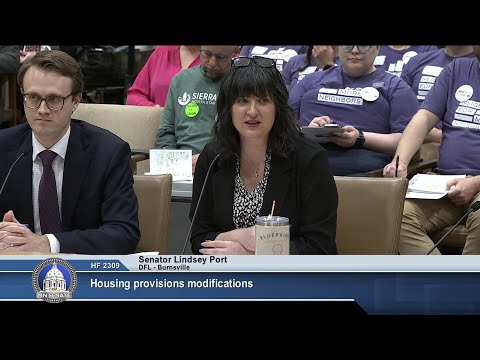
The State and Local Government Committee heard more than a dozen testifiers for and against a narrower version of a statewide zoning and land-use preemption package; the A1 amendment to House File 2309 failed on a 5-6-1 roll call.
A proposed A1 amendment to House File 2309 that would limit some local land-use rules failed on a roll call in the Minnesota Senate State and Local Government Committee on Thursday, May 1, after more than an hour of testimony from builders, municipal officials and housing advocates.
The amendment was moved at the start of the hearing; the committee recorded five ayes, six noes and one pass and the chair announced, “There being 5 ayes and 6 noes and 1 pass, the amendment is not adopted.”
Committee authors and supporters said the narrower “DE” amendment before the panel seeks to reduce costs and speed approvals for new homes by limiting homeowners association mandates, capping parking at one space per residential unit in many projects, prohibiting certain local aesthetic mandates and directing cities to create clearer administrative approval processes. “This DE ends some HOA restrictions by preventing local governments from requiring homeowners associations and adding unnecessary features which require common management,” Senator Port said in the bill introduction. Senator Rasmussen, a co‑author, described the package as “pro property rights” and framed it as a market‑based response to Minnesota’s housing shortage.
Opponents — including municipal managers and city planners from Greater Minnesota and metro cities, the League of Minnesota Cities, Metro Cities and the Coalition of Greater Minnesota Cities — said the bill is too broad even after narrowing and would undercut local control over infrastructure, parking and design standards. “Public hearings aren’t red tape, they’re a vital part of democratic planning,” Susan Arntz, city manager for Mankato, told the committee. Daniel Lightfoot of the League of Minnesota Cities said the measure, as written, could eliminate hearings and push parking onto streets “not designed for high density parking.”
Testimony reflected a split among local officials and practitioners. Bloomington City Council member Sean Nelson described local reforms his city adopted — an “Opportunity Housing Ordinance” and streamlined approvals — that he said produced more than the Met Council goal for new units and supported reduced parking and alternative exterior materials as tools developers have used. Tony Weiner, vice president of Cardinal Home Builders, and Bradley Sheppey, a former Minnetonka council member, urged the committee to remove aesthetic mandates they say add tens of thousands of dollars to new homes.
Advocates for the bill and housing groups emphasized statewide demand and affordability metrics cited by authors: the speakers said the median new single‑family home price in Minnesota is about $540,000 and that the income needed to afford that home was roughly $98,000; supporters warned that current local rules make building entry‑level homes difficult. Anne Mavity of Minnesota Housing Partnership, representing a coalition called Yes to Homes, said the state faces “a hundred thousand unit shortage of homes in Minnesota.” Move Minnesota presented research linking parking minimums to land use, cost and carbon impacts.
Committee members debated tradeoffs between local control and statewide action. Senator Gustafson, among those who opposed the amendment, said the bill shifts decision‑making toward developers and away from residents and local officials and raised concerns about infrastructure and displacement. Senator McQuade and other supporters pushed back that the proposal does not alter zoning maps and that cities can still deny projects for infrastructure, safety or general welfare concerns. “There's nothing that forces density in this proposal,” Rasmussen said in response to questions about zoning.
The roll call on the amendment recorded: Chair Jeong — yes; Vice Chair Gustafson — no; Vice Chair McQuade — aye; Senator Lang — aye; Senator Barr — pass; Senator Carlson — no; Senator Swadzinski — no; Senator Jaskowski — aye; Senator Fatai — aye; Senator Johnson Stewart — no; Senator Corean — no. The chair announced the amendment was not adopted.
What happened next: with the A1 defeated, committee members moved on to the next agenda item. Supporters said they will continue negotiating and refining proposals; opponents said the committee should preserve local planning authority. The authors, Port and Rasmussen, said they intend to continue work on housing reforms regardless of the outcome of this amendment.
Ending note: The hearing included detailed local examples — from Eagan’s concerns about private streets and stormwater maintenance to Bloomington’s claim of surpassing regional housing goals — showing the range of municipal experience that shaped testimony. Lawmakers will carry those viewpoints as the session continues and as the authors revise the package or pursue other measures addressing housing affordability.