Get Full Government Meeting Transcripts, Videos, & Alerts Forever!
Get email alerts on the Wildfire Biomass Bioenergy topic
No spam. Unsubscribe anytime.
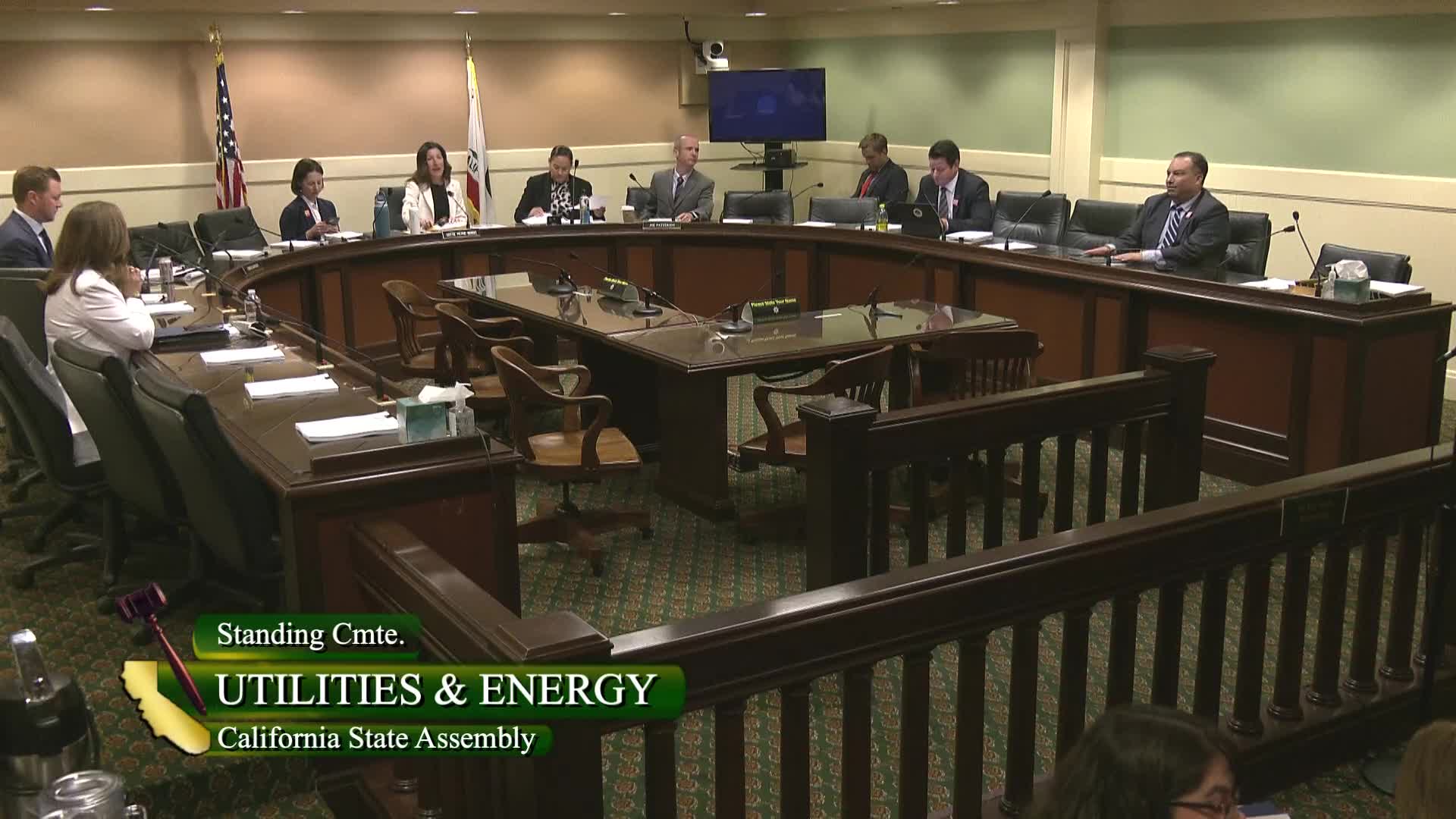
Assembly committee hears bill to fund sustainable use of forest biomass from wildfire mitigation
Summary
Assemblymember Cecilia Aguiar-Curry presented AB 706, a measure to create a fund supporting projects that convert forest biomass waste from wildfire mitigation into usable energy and materials.
Assemblymember Cecilia Aguiar-Curry presented AB 706, saying the measure would create a fund to support projects that sustainably use forest biomass waste generated by wildfire mitigation work. "This bill is about making sure we have the resources to use forest waste in ways that are beneficial to the environment and our communities trying to protect themselves from wildfires," the assemblymember said.
In testimony, Julia Levin, executive director of the Bioenergy Association of California, and Christiana Darlington of the Placer County Air Pollution Control District (who arrived later) described the bill as limited to forest and organic waste removed for wildfire mitigation and forest restoration in high-hazard zones. Darlington cited emissions comparisons and said that, for the organic waste covered by the bill, "the emissions from bioenergy of particulate matter, carbon monoxide and methane are 98% lower than pile and burning the waste".
Supporters at the hearing included representatives of the forest products labor-management coalition, Humboldt Redwood Company, Mendocino Redwood Company, the California Biomass Energy Alliance, and California water agencies. Testimony emphasized two dimensions: (1) using material removed for wildfire mitigation would reduce open burning and greenhouse-gas releases from pile burning or decay, and (2) bioenergy projects can provide firm renewable power that helps communities at risk of outages.
No witnesses appeared in opposition in the hearing room. The committee chair said the measure would be voted at the appropriate time because the subcommittee lacked a quorum at the outset.
Why it matters: Wildfire mitigation is expected to generate tens of millions of tons of forest biomass waste; the bill aims to support projects that create beneficial uses from that material while requiring projects to meet existing environmental permitting and siting rules. Proponents said the measure would help avoid open burning while providing energy reliability in high-risk communities.
Votes and next steps: The committee did not take a final vote during the initial presentation and testimony; officials indicated the bill would be scheduled for a vote when the committee has a quorum.