Get Full Government Meeting Transcripts, Videos, & Alerts Forever!
Get email alerts on the Board Governance topic
No spam. Unsubscribe anytime.
Salt Lake City School District holds board training on oversight, norms and communications
Summary
Board members and Utah School Boards Association trainers discussed oversight vs. overreach, chain-of-command for complaints, agenda timing, communication norms (including a suggested "reply-all" practice), and a baseline board evaluation at an April 30 training session.
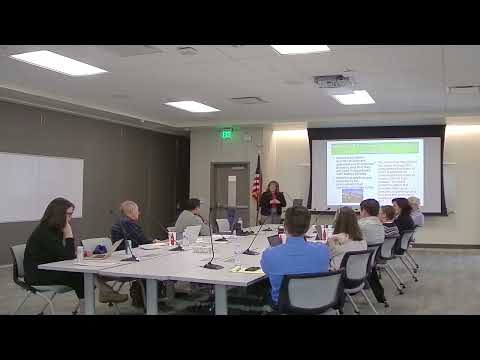
Salt Lake City School District board members met April 30 for a board training session focused on oversight, overreach and establishing operating norms, trainers from the Utah School Boards Association said.
The training, led by Richard Stoll of the Utah School Boards Association and trainers Terry (CASH board president) and Mark Clement (former Alpine board president), covered how individual board members should use the chain of command for personnel and procurement concerns, when to escalate issues to a majority of the board, and practical steps for improving agendas, study sessions and board-to-staff communications.
Board members said the discussion matters because unclear norms have contributed to repeated questions in public meetings, uneven preparation across members and friction between board members and district staff. "We're going to talk about oversight or overreach as board members," Terry said during the presentation, framing the night's examples in personnel and procurement.
Trainers emphasized the distinction between oversight (policy, management systems, accountability) and overreach (directing day-to-day staff actions). Mark Clement and Richard Stoll used real-world scenarios to show options for board members who believe a principal or district vendor acted inappropriately: raise concerns privately first with the superintendent or relevant committee, bring documentary evidence when available, and, if a majority of the board agrees, pursue action through the president or a closed session when the law allows.
Participants discussed several specific operating practices that boards around the state have used to reduce surprise and improve decision making. Those ideas included a regular study-session/business-session structure (study session(s) to review materials and ask questions, then action at a subsequent business meeting), a "three-must-agree" leadership channel (president + two others meet with the superintendent so minority concerns are heard), and use of an online feedback or "contact us" form for routine constituent questions.
Superintendent Dr. Grant and Business Administrator Alan (both participating through the training) described the staff workload required to respond to board questions and cautioned that some requests require multi-department work over several days. Richard Stoll cited Utah open-meetings guidance and state code when participants asked whether purely operational, non-action discussions can be held off the public agenda; he referenced "53 g" and "52 4 1 0 3 5 b of the Utah code" during that exchange.
A recurring operational point that drew broad agreement was a communications norm: when an individual board member sends a question to the superintendent or business administrator about an agenda item, the superintendent/BA should, at their discretion, copy ("reply all") the full board with the response when the information would inform other members prior to the meeting. Several board members said they want to avoid situations in which one member arrives at a meeting having heard dozens of constituent emails while others had no notice.
Participants also agreed to start a baseline board self-evaluation facilitated by USBA. Richard Stoll said USBA's standard evaluation instrument can be customized and administered anonymously; trainers recommended an outside facilitator present results to the full board to reduce defensiveness and to help identify priorities.
No formal board actions or votes were recorded during the training. Trainers and board members discussed turning the night's conversation into a short list of norms for later formal adoption: clearer roles and responsibilities documents tied to policy, a calendared agenda skeleton for the year, a practice for circulating substantive questions and answers to the whole board in advance, and a timetable for study-session review before action votes.
Board members and trainers closed by scheduling follow-up steps: board leadership will draft a proposed set of norms and circulate them to the full board, the superintendent and BA agreed to use discretion to reply-all on substantive questions going forward, and USBA will provide its board-evaluation questionnaire for the board to review and finalize.