Get Full Government Meeting Transcripts, Videos, & Alerts Forever!
Get email alerts on the Consumer Safety Menstrual Products topic
No spam. Unsubscribe anytime.
Lawmakers consider testing and disclosure for menstrual products after academic study finds metals in tampons
Summary
Sen. María Á. Durazo's SB 754 would require manufacturers to test disposable menstrual products for certain toxic metals and disclose results; supporters including health scientists and advocacy groups pushed for transparency while manufacturers expressed concern about duplicative regulation and possible consumer confusion.
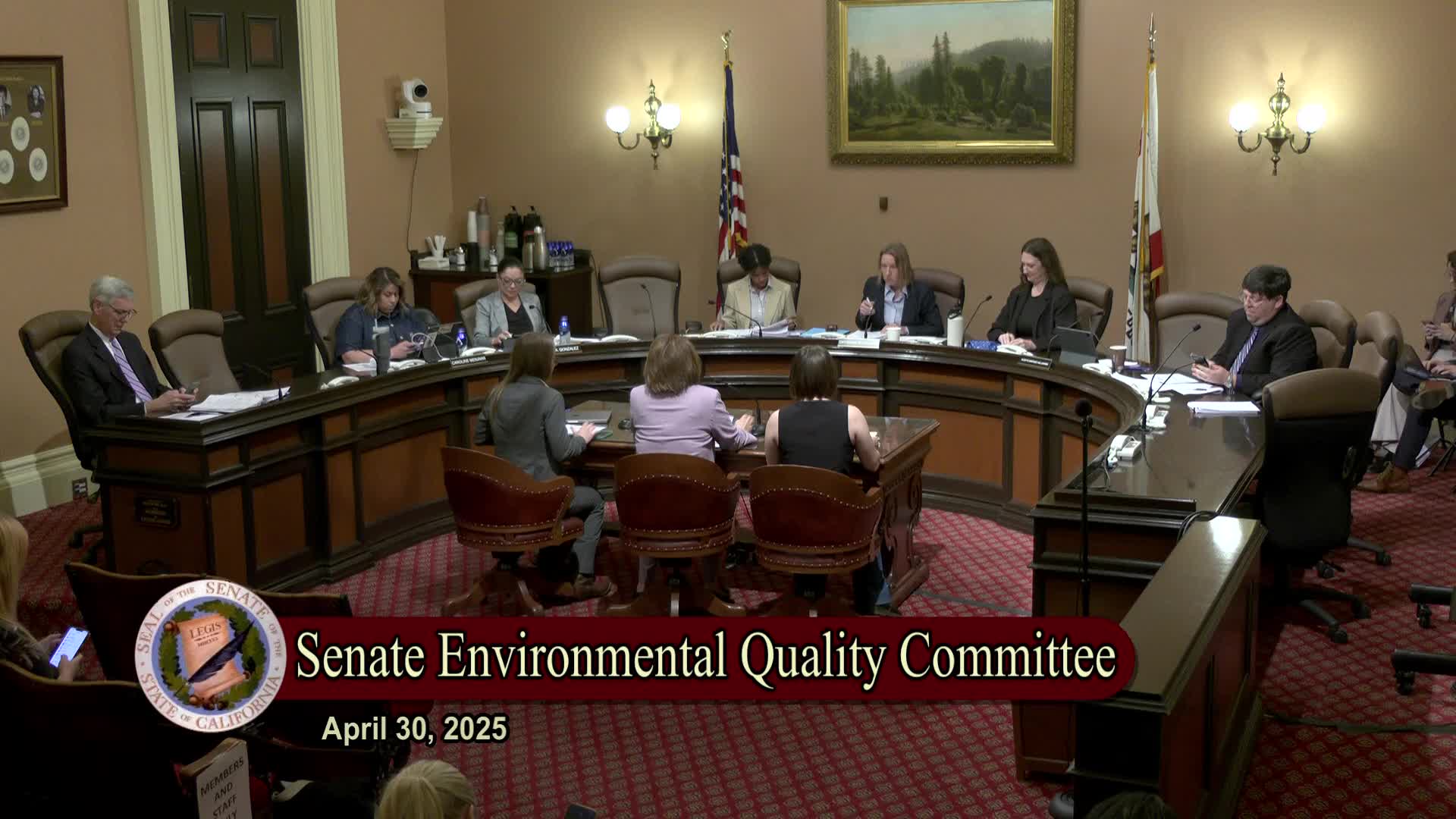
Sen. María Á. Durazo presented SB 754 to the Senate Committee on Environmental Quality, proposing mandatory testing and public disclosure of concentrations of selected contaminants in disposable menstrual products.
"Recent science makes clear this gap is dangerous," Durazo said, citing a peer‑reviewed study led by Dr. Jenny Shearston that found toxic metals, including lead, in tampons. Durazo argued for transparency because menstrual products are used frequently and by people starting at a young age.
Dr. Jenny Shearston (University of Colorado Boulder) testified the peer‑reviewed study she led found multiple metals present across tested products and emphasized the potential for higher systemic absorption through vaginal tissue: "Given this consistent long term use of menstrual products, the exposure potential to harmful chemicals through these products is quite high," she said. Dr. Shearston recommended systematic data collection to evaluate health impacts.
Supporters from public‑health and consumer groups — including the American College of Obstetricians and Gynecologists (ACOG), Breast Cancer Prevention Partners and Planned Parenthood Affiliates of California — urged adoption, saying disclosure would empower consumers and clinicians.
Manufacturers and trade associations opposed unless amended. Don Kapke (California Manufacturers & Technology Association) and representatives of hygiene-product trade groups told the committee that menstrual products are regulated as medical devices by FDA and by the state Department of Public Health; they raised concerns about duplicative testing requirements, publication of raw lab data without context and the potential for misleading consumers to avoid prenatal or hygiene products that remain safe. Industry representatives proposed narrower disclosure tied to Proposition 65 thresholds rather than the broad testing and public-posting scheme in the bill.
Committee members acknowledged the public‑health importance and emphasized working with stakeholders. Durazo accepted committee amendments and asked for an informational vote; members encouraged further negotiation to refine testing methods, reporting formats and public‑posting safeguards to avoid misinterpretation.