Get Full Government Meeting Transcripts, Videos, & Alerts Forever!
Get email alerts on the Water Reuse topic
No spam. Unsubscribe anytime.
Senate panel hears bipartisan push to expand recycled-water uses in SB 31
Summary
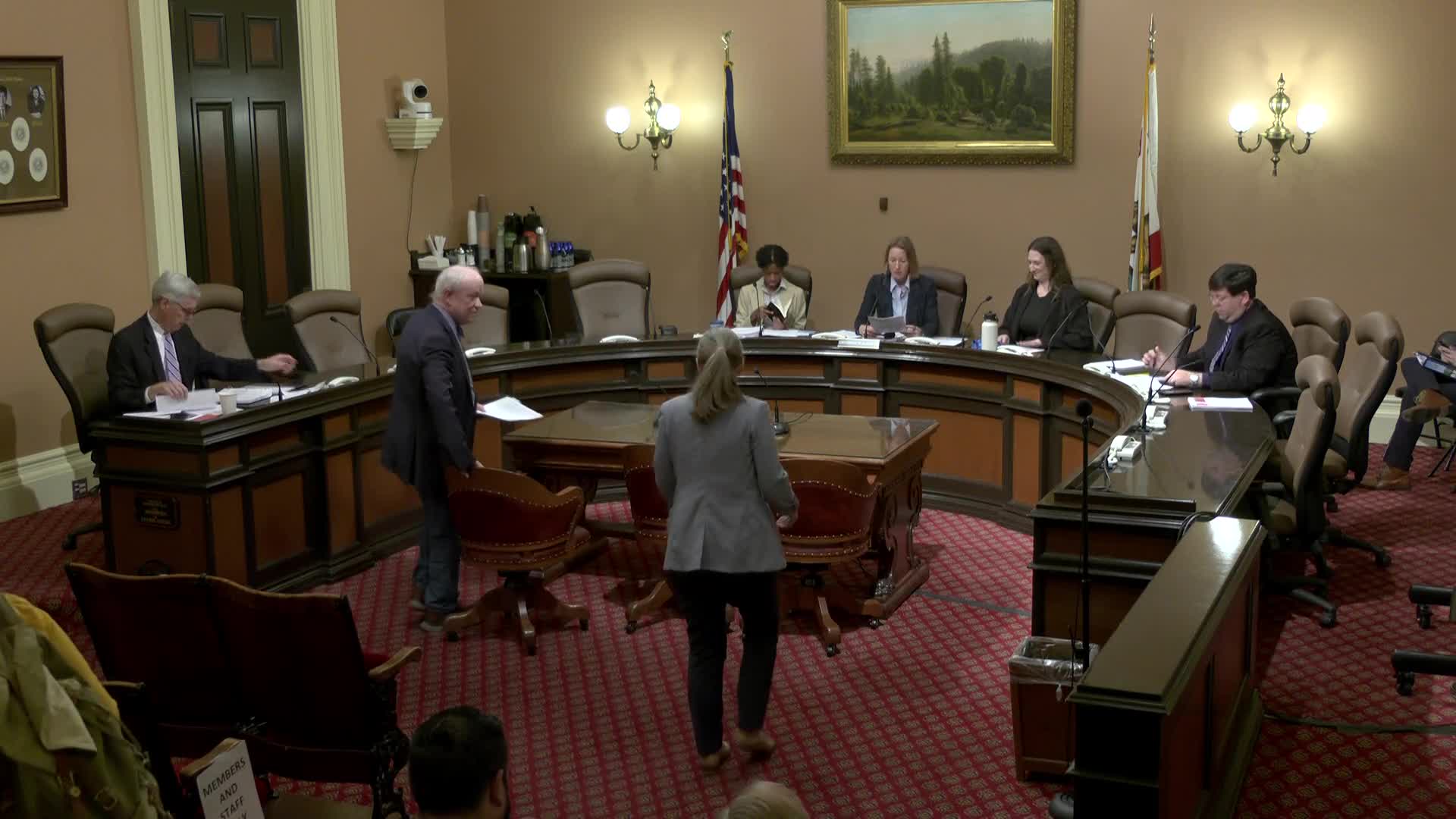
Sen. Jerry McNerney and WaterReuse advocates told the Senate Committee on Environmental Quality that SB 31 would make it easier to use recycled water for outdoor irrigation and other nonpotable uses amid concern over projected declines in California’s water supply.
Sen. Jerry McNerney, appearing before the Senate Committee on Environmental Quality, said SB 31 would expand allowable uses of recycled water as California grapples with shrinking supplies.
“The state's water supply strategy sets an ambitious target for the use of recycled water, aiming to reuse 1,800,000 acre feet by the year 02/1940,” McNerney said during his presentation, urging the committee to “expand opportunities to safely use recycled water.”
The bill’s lead sponsor witness, Beth Alonzo of WaterUse California, told committee members the State Water Resources Control Board has not comprehensively updated Title 22 — California's nonpotable recycled-water regulations — in about 20 years. She pointed to newer irrigation technologies and updated local ordinances as reasons the code should be modernized now. “In the past 20 years we have made significant progress in other regulations and in technology,” Alonzo said, citing drip irrigation and the 2025 Model Water Efficient Landscape Ordinance updates.
Supporters from local water districts and trade groups lined up at the microphone: Irvine Ranch Water District, Metropolitan Water District of Southern California, East Bay Municipal Utility District, the Dairy Institute of California, the California Association of Sanitation Agencies and others said SB 31 would help meet governor and state targets for water recycling and “drought-proof” communities by expanding nonpotable outdoor uses such as parks, golf courses, homes and businesses.
No lead opposition witnesses came forward during the hearing. Committee members praised the bill’s practical approach to increasing reuse. Committee Chair (Senate Committee on Environmental Quality) recommended an “I” (informational) vote and thanked the author for bringing the measure forward.
The hearing focused on aligning regulations and tools — not on emergency mandates; proponents repeatedly said SB 31 is intended to be a near-term statutory fix to allow increased nonpotable reuse while the Water Board completes a broader Title 22 update.
SB 31 drew widespread support from utilities and regional water agencies who said more permissive nonpotable uses could be implemented safely with existing irrigation standards and public-health oversight.
The committee did not record a final floor vote during the hearing; members indicated the bill would be returned when quorum allowed.