Get Full Government Meeting Transcripts, Videos, & Alerts Forever!
Get email alerts on the Opioid Overdose Fentanyl Naloxone topic
No spam. Unsubscribe anytime.
Michigan health official urges wider naloxone access as fentanyl involved in majority of overdose deaths
Summary
Dr. Natasha Bagdasarian told a House Oversight subcommittee that fentanyl now contributes to about 72% of overdose deaths in Michigan and urged expanded naloxone distribution, while lawmakers asked about trends, costs and opioid settlement spending.
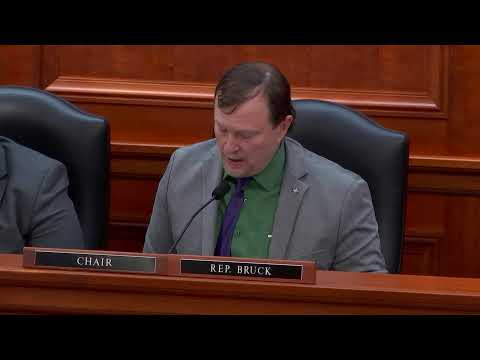
The House Oversight Subcommittee on Homeland Security and Foreign Influence heard from Dr. Natasha Bagdasarian, chief medical executive for the state of Michigan, on efforts to reduce overdose deaths and expand access to naloxone, a medication that reverses opioid overdoses.
Bagdasarian told members that fentanyl has become the dominant drug in overdose fatalities. “It’s now involved in 72 percent of overdose deaths,” she said, and noted a recent decline in overall overdose deaths while cautioning that the state still expected roughly 2,000 fatalities in 2024.
Bagdasarian described actions the state has taken to increase naloxone availability: a standing order issued in 2017 to allow wider access without a prescription, an online naloxone portal that mails kits, distribution to community sites and use of opioid settlement funds to buy kits. “Naloxone is a medication that directly reverses overdoses,” she told the committee, and said the nasal-spray form is easy to use and stable in hot or cold conditions.
Why it matters: Committee members focused on whether current efforts are reaching people at highest risk and on the fiscal stewardship of opioid settlement money. Bagdasarian said roughly 1,000,000 naloxone kits have been distributed in Michigan and that state-collected feedback indicates about 29,000 reported overdose reversals from those kits. She also gave lawmakers cost comparisons between the 4 mg intranasal naloxone the state distributes and newer, higher-priced products marketed by manufacturers.
Most important details
- Naloxone access and distribution: Bagdasarian said the state widened access after a 2017 standing order and operates a naloxone portal and multiple pick-up sites. She recommended placing naloxone “everywhere” people might experience an overdose, likening it to a fire extinguisher.
- Contaminants and emerging drugs: The chief medical executive warned that fentanyl is often mixed with other substances, including xylazine and metatomidine (a veterinary tranquilizer). She said those non-opioid additives are not reversed by naloxone but, in many overdose cases so far, are mixed with fentanyl — so naloxone can still provide a life-saving window for treatment.
- Data and trends: Bagdasarian showed state data indicating a long-term rise in overdose deaths tied in part to fentanyl’s emergence around 2013, followed by a decline in recent years. She said the state still projects around 2,000 overdose deaths in 2024 and that Michigan fell from the 14th-highest to the 29th-highest fatal overdose rate nationally (a relative ranking improvement).
- Cost and product choices: Bagdasarian told the committee the 4 mg intranasal naloxone the state distributes costs about $29 per unit based on recent purchasing; she said an 8 mg product (marketed as Cluxado in testimony) is about $80 per unit and another marketed product (Opvie in testimony) is about $100 per unit. She said paramedic dosing data show average titrated intravenous doses equivalent to roughly the 4 mg intranasal dose and warned against routinely using higher doses because excessive naloxone can precipitate severe withdrawal.
- Use of opioid settlement funds: Bagdasarian said Michigan’s opioid settlement is roughly $1.6 billion over 18 years, split between state and counties, and that settlement funds continue to support naloxone distribution and other prevention, treatment, harm reduction and recovery activities.
Questions from lawmakers focused on: whether naloxone can be safely given to people who are not overdosing (Bagdasarian: negligible downside), how quickly fentanyl can act depending on route of exposure, where precursors originate (she said law enforcement reports point to precursors from China and processing in other countries), and geographic variation (some counties report more methamphetamine, others more fentanyl).
Committee action and procedural notes
At the start of the meeting Representative Conlon moved to approve the minutes of April 25; the chair declared the minutes approved without objection.
Ending
Bagdasarian urged continued emphasis on the four pillars the state’s opioid response uses — prevention, harm reduction, treatment and recovery — and recommended targeting messages to young people and older adults, expanding naloxone access in community sites and supporting workforce expansion for substance-use treatment. The committee closed after questions and thanked Bagdasarian for her testimony; the meeting then adjourned.