Get Full Government Meeting Transcripts, Videos, & Alerts Forever!
Get email alerts on the Alcove Palo Alto topic
No spam. Unsubscribe anytime.
Alcove Palo Alto reports steady youth use; supervisors ask for sustainability, partnerships and expanded clinical hours
Summary
Behavioral Health Services told the Health & Hospital Committee Tuesday that Alcove Palo Alto remains actively used by local youth and reported high satisfaction, while supervisors directed staff to produce a September sustainability plan and to expand partnerships and clinical hours.
Santa Clara County’s behavioral‑health department presented an update Tuesday on Alcove Palo Alto, the youth‑designed mental‑health and wellness center that serves ages 12–25. Staff reported steady use, high satisfaction, outreach activities with local schools, and continuing work to diversify community partnerships and funding.
Program data: Department staff said 362 youth visited Alcove in calendar year 2024, 222 completed intake, and 376 attended workshops. Survey responses (77 respondents) showed 93% would recommend the center and 95% felt heard and respected by staff.
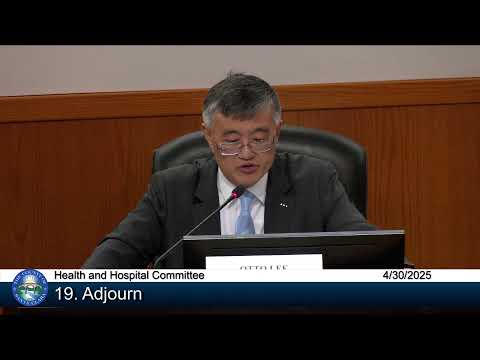
Concerns from supervisors and the public: Supervisors, particularly those representing North County, raised questions about the center’s per‑participant cost and long‑term funding. Supervisor Margaret Abe‑Koga and Chair Otto Lee urged department staff to develop strategies to reduce reliance on Mental Health Services Act (MHSA) innovation funding and to explore alternative revenue including expanded medical billing, multi‑payer scheduling, foundation/community benefit funding and additional memoranda of understanding with local organizations.
Board direction: The board asked Behavioral Health Services to return in September with three deliverables: (1) a sustainability plan that reduces reliance on MHSA innovation funding and identifies alternative funding streams; (2) a plan to increase the number of MOUs with community agencies for outreach and marketing; and (3) options to expand adolescent physical‑health and psychiatry hours (staff noted prior utilization modeling had reduced hours and agreed to reexamine demand). Supervisors indicated the deliverables should include financial modeling to reduce cost per participant and options for co‑location or partnership to improve access.
Why it matters: Alcove is part of the county’s prevention and early‑intervention strategy for youth behavioral health. County staff cautioned that the MHSA funding category used to support Alcove has been under pressure as state priorities shift toward housing and intensive services, requiring local sustainability planning.
Next steps: Behavioral Health Services committed to return to the board in September with the requested sustainability, partnership and service‑hour proposals; staff also said they will pursue deeper outreach to Asian American, Black/African American and neurodiverse communities and continue coordination with other Alcove grantees.
Votes: Supervisors moved and seconded a request for staff to return with the September plan; the committee voted to receive the department report and to direct staff on the three deliverables.