Get Full Government Meeting Transcripts, Videos, & Alerts Forever!
Get email alerts on the K12 Education Finance topic
No spam. Unsubscribe anytime.
Senate advances K‑12 finance bill that pauses inflation link, shifts charter funding and trims nonpublic aid
Summary
The Minnesota Senate Finance Committee advanced Senate File 2255 on April 29, a K‑12 education finance omnibus that delinks the basic formula allowance from inflation for fiscal years 2028–29, shifts a $132 per‑pupil charter payment into general education, eliminates certain nonpublic supports beginning in FY26 and adds $100 million for school unemployment aid.
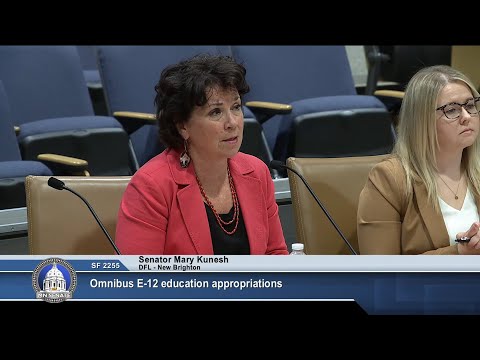
The Minnesota Senate Finance Committee on April 29 advanced Senate File 2255, the K‑12 education finance omnibus, after hours of debate and several amendments that altered allocations for charter schools, libraries, special education and school unemployment funding.
Committee materials and a nonpartisan fiscal presentation by Jenna Hofer show the bill delinks the basic formula allowance from inflation for fiscal years 2028 and 2029 and holds the formula allowance at $7,705 per pupil for fiscal years 2027 and later. Hofer told the committee that holding the allowance at that level reduces general education aid by $611,325,000 in the 2028–29 biennium compared with the February forecast base.
Other major changes in the bill include: moving the $132 per‑pupil long‑term facilities maintenance (LTFM) allocation for charter schools into general education aid (a shift described by staff as appropriate because the per‑pupil amount is not limited to facilities use); elimination of nonpublic pupil aid and nonpublic pupil transportation beginning in fiscal year 2026 (Hofer identified estimated reductions of roughly $50 million and $54.9 million in the 2026–27 biennium, respectively); an additional $100 million deposit into the school unemployment aid special revenue account for 2026–27 to cover unemployment costs for hourly school workers; and formula adjustments to special education cross‑subsidy and compensatory revenue.
Sponsor and committee debate centered on tradeoffs required to hit a $0 target for the 2026–27 biennium and a large general‑fund reduction in 2028–29. Senator Kunis (bill sponsor) and others argued the bill preserves priority student programs while targeting reductions to areas the committee judged less essential. Some members pushed back, arguing the bill shifts burdens onto families and local districts and undermines long‑standing supports for private, parochial and home‑schooled students who rely on district services such as transportation, health services and library access.
The committee adopted multiple amendments. Senator Friend moved and the committee adopted A31, which clarifies technical fixes including fully funding charter-school LTFM long term and offsetting library‑aid reductions and restored several smaller items (special‑education apprenticeship funding, library telecommunications aid). The committee also adopted A30, which clarifies treatment of inflation in the basic education formula (the delink through 2029 and relink later). A36 (a proposal to require schools to sell a second meal) was offered by Senator Draheim and accepted as a friendly amendment. Senator Pratt offered A35 to restore nonpublic pupil aid and nonpublic pupil transportation; that amendment was defeated on a roll call (6 ayes, 6 nays). The committee then advanced the bill to the floor; members recorded the committee roll call and the motion to recommend passage prevailed.
Supporters said the bill protects core classroom investments and provides targeted operating adjustments to several state agencies, while opponents said delinking the formula from inflation and eliminating nonpublic aids and transportation would harm students and local districts and could produce unanticipated local costs. Jenna Hofer’s fiscal packet and the committee discussion document detailed the line‑by‑line changes, including the effects on tribal contract schools, library aid, and long‑term facilities maintenance.
The committee’s recommendation moves SF 2255 forward to the Senate floor with the adopted amendments; members and agency staff said they expect continued conversation during floor action and possible conference negotiations.