Get Full Government Meeting Transcripts, Videos, & Alerts Forever!
Get email alerts on the Planning Budget topic
No spam. Unsubscribe anytime.
Committee reviews Planning Department budget; rent misallocation and defunded positions noted
Summary
The Providence Committee on Finance reviewed the Planning Department’s FY2026 budget on April 24, 2025, including a 8.5% overall budget increase largely driven by benefits, salary adjustments for principal planners, defunding of some vacant positions, and a correction to a rent allocation misallocation.
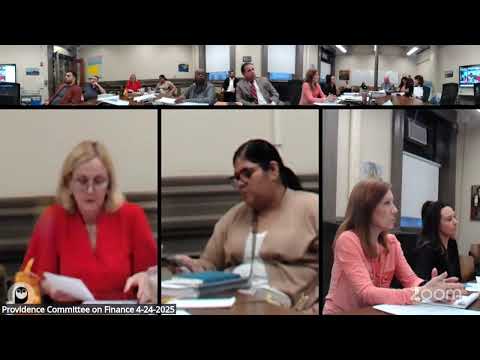
The Providence City Committee on Finance on April 24, 2025 considered the Planning Department’s proposed FY2026 operating budget. Department presenters told the committee Planning is not revenue-generating and that the department’s proposed budget reflects revised salary steps, benefits increases and corrections to prior-year cost allocations.
The department reported total salaries rising to about $1.7 million in FY2026 from approximately $1.6 million in FY2025. The increase was attributed to cost-of-living and step adjustments and to correcting an underbudgeted principal planner classification. Staff said one principal planner classification was adjusted upward to reflect the correct top-step salary in the nonunion grade table.
Budget materials show the Planning Department defunded at least two vacant positions while keeping other essential roles posted: a customer service associate previously partially grant-funded (yielding a line-item savings of about $20,000) and a defunded vacant senior real estate officer position (approximately $125,000). Committee members asked that the administration flag, in future materials, which positions are actually filled and which are defunded or vacant.
Committee members also discussed fixed and discretionary costs. The department’s primary fixed cost is building rent, cited at about $234,000; staff explained a portion of the apparent increase resulted from a reallocation correction after Housing and Human Services had been split from Planning in an earlier budget cycle. The department described discretionary costs that include loan-processing software, copier and plotter maintenance, postage for public notices, professional memberships and occasional consultant contracts for studies.
Members asked about the large professional-services line in recent years, which the department tied in part to work on the comprehensive plan and to state approval steps and supplemental design work once the plan is approved. Staff said a significant professional-services allocation in prior years reflected planning studies and the ongoing comprehensive-plan process; the department said it expects some carryover and additional design/printing costs tied to final plan publication and state review.
Council members asked about neighborhood-engagement capacity and whether the department would supplement a neighborhood liaison position with more community-engagement support as the incumbent advances. The department said it plans to seek additional community engagement capacity and noted that some planning salaries are grant- or program-funded, creating multi-department funding splits.
Deputy Planning Director Robert Hayes (identified during the meeting) and other planning staff answered procedural and line-item questions but no budget votes or formal committee actions were taken during this session. The committee asked staff to return with clarified staffing tables and corrected totals for services and supplies in preparation for the next budget hearing.