Get Full Government Meeting Transcripts, Videos, & Alerts Forever!
Get email alerts on the Unarmed Crisis Response topic
No spam. Unsubscribe anytime.
Council celebrates one-year anniversary of unarmed crisis response teams; city presenters cite 6,000 calls and lower police referrals
Summary
Council members and community partners marked the one-year anniversary of the city's unarmed crisis response program, which presenters said has answered more than 6,000 calls at an average cost of about $35 per response and required police backup in roughly 4% of cases.
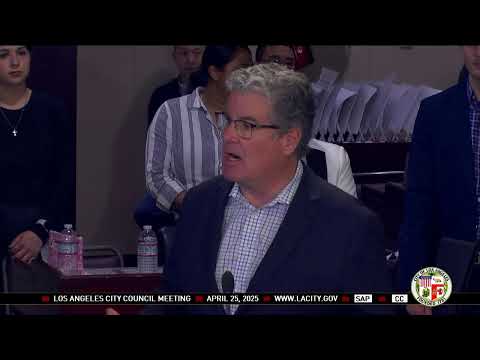
The Bannize City Council on April 25 marked the one-year anniversary of the city's unarmed crisis response teams, with council members, nonprofit partners and program responders outlining early results and urging continued support.
Councilmember Bloomenfield and co-sponsors said the program grew from a 2020 council motion to develop alternatives to armed police responses for certain nonemergency calls. Vanessa, a city administrative presenter, introduced multiple nonprofit partners who described day-to-day operations.
Why it matters: Council members framed the program as a public-safety and public-health approach meant to reduce violent outcomes and direct specialized resources to people experiencing mental-health or substance-related crises rather than sending armed officers as the default first response.
Program details and results - Program launch: panelists said the pilot launched in March 2024. - Call volume and diversion rate: Kiara Long, a crisis response specialist, said the teams had been dispatched to more than 6,000 calls in the first year and that only about 4% of those calls were diverted back to police for an armed response. - Cost per response: speakers described the average cost per unarmed response as about $35. - Budget context: Ashley (identified as a coordinator for the response teams) told the council the program's annual budget is about $14,000,000, which presenters contrasted with the Los Angeles Police Department budget figure cited as roughly $3.4 billion.
Partners and field accounts Representatives from nonprofit partners described the range of calls the teams handle, from a routine welfare check to life-or-death crises. A Penny Lane team member recounted responding to a veteran living on the sidewalk with symptoms of schizophrenia and emphasized de-escalation and mediation in a neighborhood setting. Kiara Long described both routine and high-stakes calls: "Vamos ahora a salvar una vida," she said, summarizing responders' mindset when they dispatch (translated: "We are now going to save a life").
Council reaction and next steps Councilmember Eunice Fernandez, Councilmember Bloom enfield and others praised the program as saving lives and reducing costs. Multiple council members encouraged expanding the model across more neighborhoods and continuing to fund the nonprofit partners that staff the teams.
The presenters asked the council to sustain funding and staffing; no formal new appropriation was proposed on the dais during the presentation. Councilmembers signaled support and noted this was the first-year celebration rather than a moment to change policy.
Ending Speakers closed the presentation by recognizing partner organizations (named in the transcript as Penny Lane, Excetis/Excites Recovery and the CAT Center) and asking continued council and community support as the program moves into year two.