Get Full Government Meeting Transcripts, Videos, & Alerts Forever!
Get email alerts on the Hb356 Redistricting topic
No spam. Unsubscribe anytime.
Residents, council split over House Bill 356 redistricting plan after late‑session passage
Summary
House Bill 356, enacted near the close of the Utah legislative session, directs counties like Summit to replace at‑large council seats with geographic districts and to form a county districting commission; public comment at the council meeting showed deep disagreement over the change.
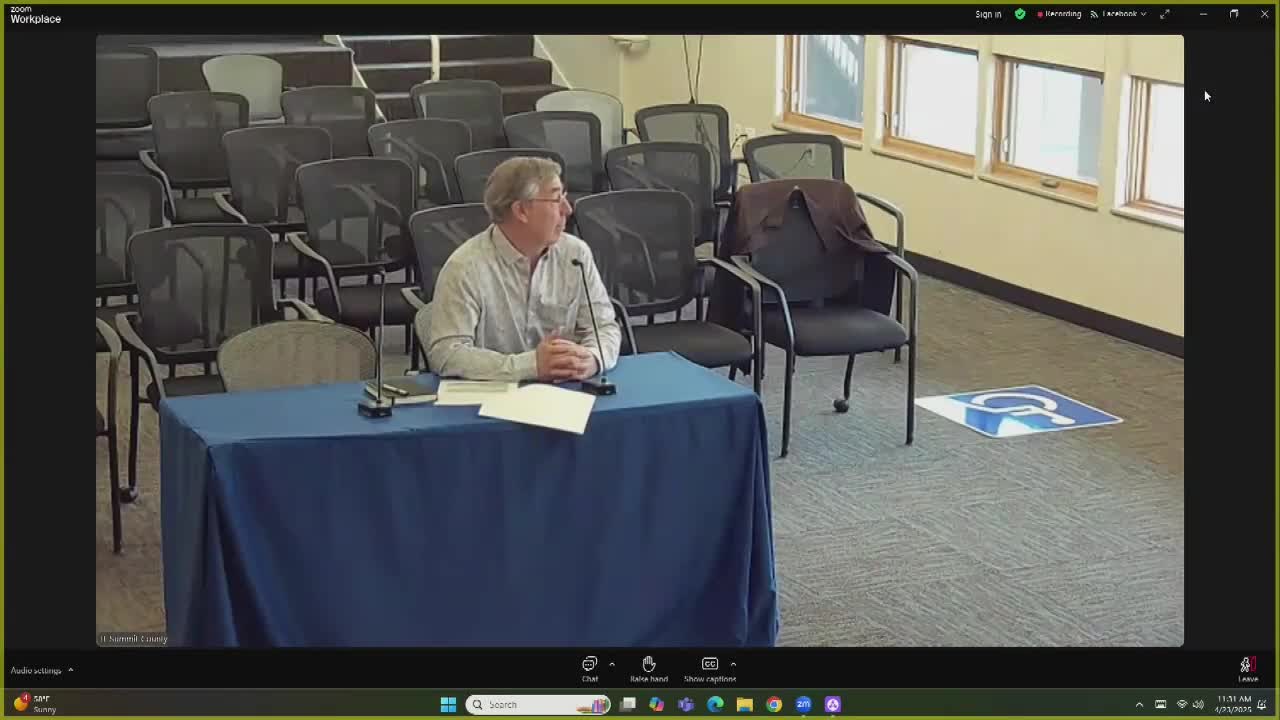
Summit County residents packed the council chamber Thursday to weigh in on House Bill 356, a recently enacted state law that requires many Utah counties to replace at‑large council seats with geographic districts and to form a county redistricting commission.
What the law does: Under the new statute, counties that meet the population threshold and operate under a county manager form of government must divide council representation into districts rather than elect all council members at large. The law also creates a county districting commission that the statute describes as composed of municipal elected officials and a member representing unincorporated areas; the commission draws proposed district lines and submits them to the council for approval after a public hearing. Existing council members would be randomly assigned to the newly drawn districts for the transition period.
Why it matters: Summit County currently elects council members at large, meaning every voter can vote for each council seat. The change would mean voters would cast ballots only for the one council member who represents their new district. Proponents said districts would give smaller communities a more direct voice. Opponents said the law was imposed without adequate local input and warned about the risk of parochialism and potential gerrymandering.
Public testimony: Speakers took opposing positions. Several residents from unincorporated and eastern parts of the county said they feel underrepresented by the current at‑large system and supported the bill as a way to ensure a direct representative for their communities. Others from Park City and other areas said the measure was forced on the county late in the legislative session without sufficient local engagement and argued it could reduce the breadth of representation for voters who now vote for multiple council members.
Council response and next steps: Council members acknowledged strong feelings on both sides. Some members said they would support districting if the mapmaking process and the membership of the districting commission provided fair representation for unincorporated areas; others voiced concern about the late‑session process that produced the law. Council pledged to bring the public comments into follow‑up conversations with the county's legislative delegation and to seek clarifying changes during the legislature's special session.
Ending: The county did not adopt any binding local change at the meeting. Council members encouraged residents on all sides to continue engaging with their mayors and state representatives; staff said it would collect public comments and brief the council on possible technical edits and approaches for the special session.