Get Full Government Meeting Transcripts, Videos, & Alerts Forever!
Get email alerts on the Ems Health topic
No spam. Unsubscribe anytime.
EMS and health department present 2024 annual reports; county moves toward community paramedic program
Summary
Dickinson County EMS and public‑health officials presented their 2024 annual reports at a work session and outlined a planned community paramedic program intended to reduce unnecessary ambulance transports and ER visits.
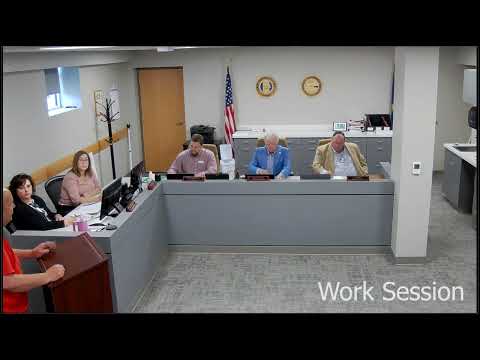
Dickinson County heard annual reports from EMS and public‑health officials at a work session, with EMS leadership outlining call patterns, staffing changes, training and plans to roll out a community paramedic program aimed at reducing some ambulance transports and emergency‑department visits.
John Holcomb, EMS director, reviewed 2024 operational data and workforce developments, saying several staff advanced certifications during the year and that the county provided 1,469 vaccinations through public‑health services. “We provide those. On the next page is community outreach programs that we teach,” Holcomb said, summarizing outreach for stop‑the‑bleed, car‑seat installation and hands‑only CPR.
Why it matters: Officials said a community paramedic program could reduce low‑acuity ambulance transports and ER visits, conserve ambulance availability and cut costs for patients and payors. Commissioners were also briefed on station coverage, response‑availability metrics (status‑1 and status‑0), and the operational impacts of hospital access changes.
Key points from EMS and health‑department reports
- Staffing and training: Holcomb reported multiple promotions and certifications. He noted paramedic and advanced‑EMT certifications for local staff (including a named staff member who recently passed a national paramedic exam) and described ongoing recruitment for public‑health nursing and foot‑care positions.
- Call volume and case mix: EMS recorded approximately 337 total responses last year with the most common dispatch reasons being falls, sick person/medical, traffic accidents and breathing problems. The largest patient age cohort was 60 and older.
- Transport destinations and care pathways: With regional hospital services in flux, Holcomb described how ambulances triage patients to appropriate facilities. For example, patients with STEMI (heart attack) are sometimes transported directly to a cath lab in Salina to expedite care, bypassing closer but less‑specialized facilities.
- Status‑1/0 availability risk: Holcomb reported periods when all ambulances were on calls (status‑0) and described plans to mitigate coverage gaps. He said the planned community paramedic supervisor vehicle could provide weekday coverage and first‑response capability while ambulances are engaged.
- Community paramedic (CP) program: Holcomb said the CP program will flag enrolled patients in dispatch so a CP can travel with responding crews or respond to certain calls; CPs would be trained and may provide “treat‑in‑place” services for conditions such as hypoglycemia, reducing the need for transport in some cases. He said the MIH/CP vehicle decals will be completed in June and additional equipment purchases and training remain in progress.
Financial and operational notes
Holcomb said the county will bill for some CP services (treat‑in‑place) and aim to capture base ambulance reimbursements where applicable, but he cautioned the program is not primarily a revenue source; the goal is to reduce unnecessary transports and downstream hospital spending. The county is working to obtain required certifications and equipment and to arrange ride‑time training with an established community‑paramedic program in the Kansas City area.
Quotes
“We will if they’re flagged as a CP patient, dispatch will see that and then we’ll send our CP out with them as well,” Holcomb said when explaining how dispatch would handle community‑paramedic patients.
“We’ll… push the button from their inside their house, and they’ll shoot that 12 lead to Salina to the ER. And the doctor there will read and say, yeah, this person’s got a STEMI,” Holcomb said, describing bypass protocols for heart‑attack patients.
Ending
Commissioners encouraged staff to continue recruitment and training and to return with operational details, expected certification timelines, and a plan for dispatch flags and billing protocols for the CP program. Health‑department vacancies for clinical nursing and foot‑care services remain open and were described as a recruiting priority.